
The process of aggregating the estimated costs of individual activities or work packages to establish an authorized cost baseline is:
Determine Budget.
Baseline Budget.
Control Costs.
Estimate Costs.
According to the PMBOK® Guide, specifically within the Project Cost Management knowledge area, the process of Determine Budget is defined as the process of aggregating the estimated costs of individual activities or work packages to establish an authorized cost baseline.
Aggregation Hierarchy: The process follows a specific " bottom-up " flow. Cost estimates for individual activities are aggregated into work package estimates. These work packages are then aggregated into control accounts, which ultimately form the cost baseline.
The Cost Baseline: This is the approved version of the time-phased project budget, excluding any management reserves, which can only be changed through formal change control procedures. It is used as a basis for comparison to actual results (Earned Value Management).
Funding Requirements: A key output of this process is the Project Funding Requirements, which are derived from the cost baseline. Since the baseline is time-phased (often shown as an S-curve), the organization needs to know when the money will be spent to ensure cash flow is available.
Comparison with Other Options:
Baseline Budget (B): While " baseline " is a term used in project management, " Baseline Budget " is not the name of a formal PMBOK® process. The process that creates the baseline is Determine Budget.
Control Costs (C): This is the process of monitoring the status of the project to update the project costs and managing changes to the cost baseline. It occurs during the Monitoring and Controlling phase, after the budget has already been established.
Estimate Costs (D): This process involves developing an approximation of the monetary resources needed to complete project work. It focuses on the cost of individual activities; it is the input to Determine Budget, whereas the aggregation happens in Determine Budget.
Which of the following types of a dependency determination is used to define the sequence of activities?
Legal
Discretionary
Internal
Resource
According to the PMBOK® Guide, specifically within the Sequence Activities process, dependencies are categorized to define the logical relationship between project tasks. There are four primary types of dependency determination: Mandatory, Discretionary, External, and Internal.
Discretionary dependencies (also known as " preferred logic, " " preferential logic, " or " soft logic " ) are established based on knowledge of best practices within a particular application area or a specific aspect of the project where a specific sequence is desired, even though there are other acceptable sequences.
Expert Choice: These dependencies are defined by the project team based on experience. For example, a team might decide to complete the internal electrical wiring before installing the drywall because it is a " best practice, " even though it is technically possible to do parts of them simultaneously.
Scheduling Flexibility: During schedule compression (like Fast Tracking), discretionary dependencies are the first to be reviewed and potentially removed or overlapped to shorten the project duration.
Risk: While they reflect the preferred way of working, they can sometimes limit scheduling options if not clearly documented as " discretionary. "
A. Legal: While legal requirements (like obtaining a permit before building) create dependencies, they are classified under Mandatory Dependencies (Hard Logic). " Legal " is a reason for the dependency, not the PMI-defined category name for the determination type.
C. Internal: Internal dependencies involve a precedence relationship between project activities and are generally within the project team’s control. While this is a valid type of dependency, the question asks which is used to " define the sequence " based on choice or best practice, which points specifically to the logic type (Discretionary) rather than the project boundary (Internal).
D. Resource: Resource constraints can influence a schedule (Resource Leveling), but they are not one of the four formal types of Dependency Determination used in the Sequence Activities process.
In the PMI framework, every dependency has two attributes. It is either:
Mandatory (Required by law or physical limitations) OR Discretionary (Based on best practices).
External (Involves parties outside the team) OR Internal (Under the team ' s control).
A procurement management plan is a subsidiary of which other type of plan?
Resource plan
Project management plan
Cost control plan
Expected monetary value plan
According to the PMBOK® Guide, specifically within the Plan Procurement Management process, the Procurement Management Plan is defined as a component of the Project Management Plan.
Integration: The Project Management Plan is the primary document used to manage a project. It is composed of several subsidiary plans and baselines. The Procurement Management Plan describes how a project team will acquire goods and services from outside the performing organization.
Content: It typically includes details such as the types of contracts to be used, risk management issues, whether independent estimates will be used as evaluation criteria, and how procurement will be coordinated with other project aspects (like scheduling and performance reporting).
Relationship to other plans: While procurement involves resources (Choice A) and costs (Choice C), it is not a " subsidiary " of those specific plans. Instead, all of these—the Resource Management Plan, Cost Management Plan, and Procurement Management Plan—are equal-level subsidiary components that integrate upward into the comprehensive Project Management Plan.
Analysis of other choices:
Choice A (Resource plan): This is a separate subsidiary plan that focuses on physical and team resources, not the legal and commercial process of external acquisition.
Choice C (Cost control plan): Cost control is a function within the Cost Management Plan; it is not the parent container for procurement.
Choice D (Expected monetary value plan): Expected Monetary Value (EMV) is a statistical technique used in Quantitative Risk Analysis, not a formal type of project plan.
Requirements documentation, requirements management plan, and requirements traceability matrix are all outputs of which process?
Control Scope
Collect Requirements
Create WBS
Define Scope
According to the PMBOK® Guide, the Collect Requirements process is the process of determining, documenting, and managing stakeholder needs and requirements to meet project objectives. This process is foundational because the project ' s success is directly tied to how well the requirements are captured and managed.
Requirements Documentation: This output describes how individual requirements meet the business need for the project. It can range from a high-level list to very detailed descriptions including business, stakeholder, solution, project, and quality requirements.
Requirements Management Plan: This is a component of the project management plan that describes how requirements will be analyzed, documented, and managed throughout the project lifecycle.
Requirements Traceability Matrix (RTM): This is a grid that links product requirements from their origin to the deliverables that satisfy them. It ensures that each requirement adds business value and that all requirements are tracked through the execution and validation phases.
Analysis of Other Options:
A. Control Scope: This is a monitoring and controlling process. Its primary outputs include work performance information, change requests, and updates to the project management plan or documents.
C. Create WBS: The primary output of this process is the Scope Baseline, which consists of the Project Scope Statement, the WBS, and the WBS Dictionary.
D. Define Scope: The primary output of this process is the Project Scope Statement, which provides a detailed description of the project scope, major deliverables, assumptions, and constraints.
Which of the following is used as an input to prepare a cost management plan?
Expert judgment
Lessons learned
Cost estimates
Project management plan
According to the PMBOK® Guide for the Plan Cost Management process, the Project Management Plan is a primary input. To develop a cost management plan, the project manager must review other components of the overarching management plan to ensure consistency and alignment.
The specific components of the Project Management Plan used as inputs include:
Health and Safety Management Plan: Provides information regarding safety requirements that may impact costs.
Quality Management Plan: Outlines the quality levels and standards that will require specific funding and resource allocation.
Project Life Cycle Description: Establishes the phases the project will go through, which dictates how costs will be estimated, tracked, and controlled.
Development Approach: Defines whether the project uses a predictive, adaptive, or hybrid approach, which significantly influences how the cost management plan is structured.
Analysis of other options:
A. Expert Judgment: This is a Tool and Technique, not an input. It is used to process the inputs to create the plan.
B. Lessons Learned: While past information is helpful, the formal input from the organizational level is categorized as Organizational Process Assets (OPAs). A " Lessons Learned Register " is usually an output of the Manage Project Knowledge process and an input to later planning phases, but the Project Management Plan is the foundational document required here.
C. Cost Estimates: These are an output of the Estimate Costs process. You cannot have formal cost estimates before you have created the Cost Management Plan, which defines the " how-to " for estimating those costs.
As per PMI standards, the Plan Cost Management process occurs early in the planning phase to establish the policies, procedures, and documentation for planning, managing, expending, and controlling project costs. Therefore, it relies on the high-level framework already established in the Project Management Plan.
What does a CPI value greater than 1.0 indicate?
Cost right at the estimated value
Cost under the estimated value
Cost right at the actual value
Cost over the estimated value
According to the PMBOK® Guide, the Cost Performance Index (CPI) is the most critical Earned Value Management (EVM) metric for measuring the cost efficiency of a project.
The Formula: $CPI = \frac{EV}{AC}$ (Earned Value divided by Actual Cost).
Interpreting a CPI > 1.0: A value greater than 1.0 indicates that for every dollar spent on the project, more than one dollar ' s worth of work was actually accomplished. This means the project is performing more efficiently than planned and is currently under budget (cost under the estimated value).
Benchmarking Performance:
CPI = 1.0: The project is exactly on budget (Cost = EV).
CPI < 1.0: The project is over budget (Cost > EV).
CPI > 1.0: The project is under budget (Cost < EV).
Analysis of Other Options:
A. Cost right at the estimated value: This would result in a CPI of exactly 1.0.
C. Cost right at the actual value: This is a tautology; actual cost is always the actual value spent, but CPI measures that against the value earned.
D. Cost over the estimated value: This would result in a CPI of less than 1.0 (e.g., 0.85), indicating cost inefficiency.
Which of the following is an input to Direct and Manage Project Execution?
Requested changes
Approved change requests
Work performance information
Implemented defect repair
According to the PMBOK® Guide, the Direct and Manage Project Work process (formerly referred to as Direct and Manage Project Execution in older editions) is the process of leading and performing the work defined in the project management plan and implementing approved changes to achieve the project ' s objectives.
Approved Change Requests: These are a critical input to this process. Once a change request is processed through the Perform Integrated Change Control process and receives formal approval, it is sent back to the Direct and Manage Project Work process to be implemented.
Types of Changes: These can include corrective actions, preventive actions, or defect repairs.
Execution: The project team carries out the work associated with these approved changes alongside the originally planned project activities.
Other Key Inputs:
Project Management Plan: Provides the " blueprints " for all project work.
Project Documents: Such as the requirements documentation, project schedule, and risk register.
Organizational Process Assets (OPAs) and Enterprise Environmental Factors (EEFs).
Comparison with other options:
A. Requested changes: These are an output of various processes (including Direct and Manage Project Work itself) when the team identifies that a change is necessary. They do not become an input to execution until they have been " Approved. "
C. Work performance information: This is typically an output of the Control processes (like Control Schedule or Control Costs). The Direct and Manage process produces Work Performance Data (raw observations), which is then processed into Information by the controlling functions.
D. Implemented defect repair: This is an output of the Direct and Manage Project Work process. It represents the result of taking action on an approved change request regarding a defect.
A project team member is estimating the cost of activity and is checking documentation from previous similar projects. Which estimation method is the project manager using to complete this task?
Bottom-up estimating
Three-point estimating
Analogous estimating
Parametric estimating
According to the PMBOK® Guide, specifically the Estimate Costs and Estimate Activity Durations processes, project managers choose from several estimation techniques depending on the available data and the required level of precision.
Analogous Estimating (Choice C): This technique uses values or attributes—such as scope, cost, budget, or duration—from a previous, similar project as the basis for estimating the same attribute for the current project. It is often used when there is a limited amount of detailed information available about the current project (e.g., in the early phases). It is generally less costly and time-consuming than other techniques but also less accurate. Because the team member is specifically " checking documentation from previous similar projects, " they are performing an analogy.
Bottom-up Estimating (Choice A): This involves estimating the cost of individual work packages or activities with the greatest level of specified detail. These costs are then summarized or " rolled up " to higher levels. This requires a detailed WBS and is much more granular than looking at past projects.
Three-point Estimating (Choice B): This technique improves accuracy by considering estimation uncertainty and risk. It uses three estimates (Most Likely, Optimistic, and Pessimistic) to calculate an expected cost. It does not inherently rely on " previous similar projects " as its primary source, though historical data can inform the three points.
Parametric Estimating (Choice D): This uses a statistical relationship between historical data and other variables (e.g., square footage in construction, lines of code in software development) to calculate an estimate. While it uses historical data, it applies a mathematical algorithm or model rather than a direct comparison to one specific previous project.
By using Analogous Estimating, the project manager can quickly develop a high-level estimate based on the organization ' s Organizational Process Assets (OPAs) and historical knowledge, provided the previous projects are truly similar in nature to the current one.
Which piece of information is part of the WBS Dictionary?
Responsible organization
Change requests
Validated deliverables
Organizational process assets
According to the PMBOK® Guide, the WBS Dictionary is a document that provides detailed delivery information about each component in the Work Breakdown Structure (WBS). It supports the WBS by providing the narrative description of the work required to produce the deliverable.
Content of the WBS Dictionary: Because the WBS itself is usually a graphic hierarchy with limited text, the dictionary captures the specific details for each " work package. " Key elements typically include:
Code of account identifier (linking the WBS to the accounting system).
Description of work.
Responsible organization (the department or unit accountable for the work).
List of schedule milestones.
Associated schedule activities.
Resources required and Cost estimates.
Quality requirements and Acceptance criteria.
Technical references and Contract information.
Purpose: It prevents " scope creep " by clearly defining the boundaries of each work package. If a task is not described in the WBS Dictionary, it is considered out of scope.
Comparison with Other Options:
Change requests (B): These are formal proposals to modify any document, deliverable, or baseline. While a change request might result in an update to the WBS Dictionary, it is not a component of the dictionary itself.
Validated deliverables (C): These are an output of the Control Quality process. They are the actual completed products that have been inspected and found to be correct. The dictionary defines how to make them, but is not the deliverable itself.
Organizational process assets (D): These are the plans, processes, policies, procedures, and knowledge bases used by the performing organization. The WBS Dictionary may be archived as an OPA at the end of a project, but OPAs are an input to the creation of the dictionary, not a piece of information contained within it.
The primary benefit of the Plan Schedule Management process is that it:
provides guidance to identify time or schedule challenges within the project.
tightly links processes to create a seamless project schedule.
guides how the project schedule will be managed throughout the project.
creates an overview of all activities broken down into manageable subsections.
According to the PMBOK® Guide, Plan Schedule Management is the process of establishing the policies, procedures, and documentation for planning, developing, managing, executing, and controlling the project schedule.
Primary Benefit: The key benefit of this process is that it provides guidance and direction on how the project schedule will be managed throughout the project life cycle. It ensures that all stakeholders have a clear understanding of the rules of engagement for scheduling.
The Schedule Management Plan: The output of this process is the Schedule Management Plan, a subsidiary of the Project Management Plan. It defines:
Project schedule model development.
Level of accuracy and units of measure.
Organizational procedure links (WBS alignment).
Project schedule model maintenance.
Control thresholds and performance measurement rules.
Reporting formats and frequency.
Comparison with other options:
A. Guidance to identify challenges: While a well-managed schedule helps identify challenges, the primary benefit of the planning process itself is the overarching framework for management, not just the identification of specific risks.
B. Tightly links processes: While the plan does define how processes (Define Activities, Sequence Activities, etc.) relate, the term " seamless " is not the formal PMI definition of the process benefit.
C. Overview of all activities: This more accurately describes the Work Breakdown Structure (WBS) or the Activity List, which are outputs of different processes (Create WBS and Define Activities, respectively).
Which scenario is most desirable during the execution phase of a project?
Apply and use quality controls to ensure expectations are met throughout the project
Communicate quality failures to the sponsor for feedback
Conduct all quality inspections at the end of the project
Only correct quality issues found if it will keep you within the budget
According to the PMBOK® Guide, quality should be built into the project during the execution phase rather than inspected in at the end. This aligns with the core philosophy of " Prevention over Inspection. "
Continuous Quality Assurance: The most desirable scenario is to apply quality controls and manage quality throughout the entire lifecycle. This ensures that the work being produced consistently meets the stakeholder expectations and requirements defined in the Quality Management Plan.
Early Detection: By using quality controls throughout the execution, the project team can identify variances early, implement corrective actions, and reduce the overall " Cost of Quality " (CoQ) by avoiding expensive rework later in the project.
Managing Expectations: Regular quality activities provide transparency to stakeholders, demonstrating that the project is on track to deliver the promised value and results.
Why other options are incorrect:
Option B: Communicate quality failures to the sponsor for feedback: While transparency is important, simply reporting failures is a reactive approach. The goal of the project manager is to prevent failures and manage them through defined processes (like the Quality Management Plan) rather than relying on the sponsor to provide a solution for every failure.
Option C: Conduct all quality inspections at the end of the project: This is highly undesirable. If quality issues are only discovered at the end, the cost of rework is at its highest, and the risk of project failure or significant delay is extreme. This contradicts the principle of iterative verification.
Option D: Only correct quality issues if it will keep you within the budget: This is a dangerous approach. Quality is a constraint equal to cost and schedule. Failing to meet quality requirements usually leads to higher costs in the long run (failure costs) and can result in the product being completely unusable, regardless of whether it stayed " on budget. "
If the most likely duration of an activity is five weeks, the best-case duration is two weeks, and the worst-case duration is 14 weeks, how many weeks is the expected duration of the activity?
One
Five
Six
Seven
According to the PMBOK® Guide, specifically within the Estimate Activity Durations process, the Three-Point Estimating technique is used to improve the accuracy of activity duration estimates by considering estimation uncertainty and risk.
There are two commonly used formulas for three-point estimating. Unless otherwise specified, the PERT (Program Evaluation and Review Technique) or Beta Distribution is typically used in PMP exams:
Optimistic ($O$): 2 weeks (best-case scenario)
Most Likely ($M$): 5 weeks (realistic scenario)
Pessimistic ($P$): 14 weeks (worst-case scenario)
The Beta Distribution (PERT) Formula:
$$E = \frac{O + 4M + P}{6}$$
Step-by-Step Calculation:
Multiply the Most Likely duration by 4: $4 \times 5 = 20$
Add the Optimistic and Pessimistic durations: $2 + 20 + 14 = 36$
Divide the total by 6: $36 / 6 = 6$
The expected duration ($E$) is 6 weeks.
Note on Triangular Distribution:
If the question had asked for a simple average (Triangular Distribution), the formula would be $(O + M + P) / 3$.
Calculation: $(2 + 5 + 14) / 3 = 21 / 3 = 7$ (Choice D). However, PMP standards favor the weighted Beta/PERT average because it places more weight on the " Most Likely " outcome, making it more statistically accurate for most projects.
Analysis of choices:
Choice A (One): Incorrect calculation.
Choice B (Five): This is just the " Most Likely " value, not the weighted expected duration.
Choice C (Six): Correct based on the PERT formula.
Choice D (Seven): Incorrect as it represents the simple Triangular average rather than the standard PERT estimate.
When alternative dispute resolution (ADR) is necessary, which tool or technique should be utilized?
Interactive communication
Claims administration
Conflict management
Performance reporting
According to the PMBOK® Guide, specifically within the Control Procurements process of the Project Procurement Management knowledge area, Claims Administration is the formal tool and technique used to handle contested changes and potential constructive changes.
Definition of Claims: A claim is a request, demand, or assertion of rights by a seller against a buyer, or vice versa, for consideration, compensation, or payment under the terms of a legally binding contract.
Alternative Dispute Resolution (ADR): When the buyer and seller cannot reach an agreement on a claim (a " disputed change " ), it is handled through the claims administration process. The preferred method of settling all claims is through negotiation. If negotiation fails, the parties may use Alternative Dispute Resolution (ADR), such as mediation or arbitration, as defined in the contract ' s terms and conditions.
Hierarchy of Resolution: The PMBOK® emphasizes a specific order: 1. Negotiation (Preferred), 2. ADR (Mediation/Arbitration), and 3. Litigation (Legal action in court, the least desirable).
Why the other options are incorrect:
A. Interactive communication: This is a Communication Method used in Project Communications Management. While it involves multidirectional exchange of information, it is not the formal legal/contractual framework used for settling procurement disputes.
C. Conflict management: This is a Tool and Technique used in Manage Team and Manage Stakeholder Engagement. While ADR is a form of resolving conflict, " Conflict Management " in PMI terms refers to the general interpersonal skills (e.g., Withdraw/Avoid, Smooth/Accommodate, Collaborate/Problem Solve) used with team members and stakeholders, not the specific contractual administration of claims.
D. Performance reporting: This is a process (or part of Manage Communications) that involves collecting and distributing performance information. It provides the data that might lead to a claim, but it is not the technique used to resolve the dispute.
Which activity may occur at project or phase closure?
Acceptance of deliverables
Change requests
Project management plan updates
Benchmarking
According to the PMBOK® Guide, the Close Project or Phase process involves the finalization of all activities across all of the Project Management Process Groups to formally complete the project, phase, or contractual obligations.
Acceptance of Deliverables: While formal " Validated Deliverables " are confirmed through the Control Quality process and " Accepted Deliverables " are obtained during the Validate Scope process, the Close Project or Phase process involves the final transition and formal sign-off of these deliverables to the customer or sponsor. This includes ensuring that all delivery requirements have been met and obtaining formal written acknowledgment that the project or phase is complete.
Administrative Closure: This activity ensures that the project has met all the requirements for completion. It includes gathering all project records, analyzing project success or failure, documenting lessons learned, and archiving project information for future use by the organization.
Transfer of Product: A key component of closure is the formal transfer of the final product, service, or result (the deliverable) to the production or operations department or to the customer.
Analysis of Other Options:
B. Change requests: These typically occur during the Executing and Monitoring and Controlling phases. By the time the project reaches formal closure, all changes should have been processed and implemented.
C. Project management plan updates: Updates to the plan occur throughout the project as a result of the Direct and Manage Project Work or Monitor and Control Project Work processes. In the closing phase, the plan is a reference for completion rather than a document being actively updated with new planning data.
D. Benchmarking: This is a tool and technique used during Plan Quality Management or Collect Requirements to compare planned or actual practices to those of comparable organizations to identify best practices or provide a basis for measuring performance. It is a planning and performance tool, not a closing activity.
If you are using an Ishikawa diagram to determine the root cause of problems, which process are you engaged in?
Plan Quality Management
Control Quality
Risk Management
Plan Scope Management
According to the PMBOK® Guide, the Ishikawa diagram (also known as a cause-and-effect, fishbone, or root-cause diagram) is a key tool used within the Quality Management knowledge area. Specifically, it is most frequently utilized during the Control Quality process.
Control Quality: This process involves monitoring and recording the results of executing quality activities to assess performance and ensure the project outputs are complete, correct, and meet customer expectations. When a defect or a performance issue is identified, the Ishikawa diagram is used to break down the potential causes of that specific problem into categories (such as Manpower, Methods, Machinery, Materials, Media, and Management) to find the root cause.
Root Cause Analysis: The diagram helps the project team look beyond the symptoms of a problem to identify the underlying reason why the problem occurred, which is a primary objective of the Control Quality process to prevent future occurrences.
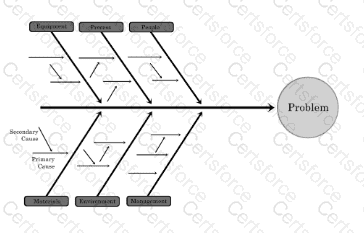
Analysis of other options:
A. Plan Quality Management: While you might define which tools you will use during this planning phase, the actual act of using the diagram to analyze a specific problem happens during execution and monitoring.
C. Risk Management: Although root cause analysis is used in Identify Risks, the Ishikawa diagram is most formally associated with the quality tools and techniques defined by PMI.
D. Plan Scope Management: This process focuses on defining how the scope will be defined, validated, and controlled; it does not typically involve cause-and-effect modeling for defects.
In summary, per PMI standards, the Ishikawa diagram is a diagnostic tool used in Control Quality to link the observed effect (the problem) to its potential causes.

As the project takes place and some issues arose, the project manager (Joe) finds out that some team members were not 100% committed to the project, and some of them were underperforming.
What should the project manager have done to avoid this situation?
Coupled inexperienced team members with individuals having extensive knowledge in the required field
Had open and transparent planning that engages internal and external stakeholders
Held regular meetings more often with team members to check on their progress and obstacles
Diversified more of the project team to capture a broad range of experiences
According to the PMBOK® Guide (6th and 7th Editions) and the PMI Talent Triangle, the root cause of low commitment and underperformance often traces back to the Planning Process Group and Resource Management.
Why Choice B is correct: Commitment is directly linked to Stakeholder Engagement and Resource Management. When team members are involved in the planning process (using a bottom-up approach), they develop a sense of ownership and accountability for the tasks they helped define. Open and transparent planning ensures that team members understand the " why " behind the project and their specific role in its success. By engaging them early, the Project Manager can identify potential resource conflicts (such as members being over-allocated to other projects, as shown in your image) and secure their buy-in, which prevents underperformance caused by a lack of motivation or clarity.
Analysis of other options:
A (Coupled inexperienced team members...): This is a technique for Knowledge Transfer or mentoring. While helpful for skill gaps, it does not solve the fundamental issue of commitment or being stretched across multiple projects.
C (Held regular meetings more often): This is a Monitoring and Controlling activity. While it might catch underperformance after it happens, the question asks what should have been done to avoid the situation initially. Increasing meetings can sometimes decrease morale if the underlying commitment isn ' t there.
D (Diversified the project team): Diversity is excellent for innovation and problem-solving, but it is not a direct solution for a lack of commitment or poor individual performance.
In the context of the provided image, where a team member states they are " working on another project as well, " this highlights a failure in Resource Acquisition and Negotiation. Transparent planning would have revealed these competing priorities during the planning phase, allowing the Project Manager to negotiate for dedicated time or adjust the schedule accordingly.
The following is a network diagram for a project.
The total float for the project is how many days?
3
5
7
9
According to the PMBOK® Guide, Total Float (TF) is the amount of time that a schedule activity can be delayed or extended from its early start date without delaying the project finish date or violating a schedule constraint.
Calculating Total Float: Total Float is calculated using the formula:
$$TF = LS - ES$$
or
$$TF = LF - EF$$
(Where $LS$ = Late Start, $ES$ = Early Start, $LF$ = Late Finish, and $EF$ = Early Finish).
Analysis of the Network Diagram (Standard PMI Question Set 279-280):
Based on the previous analysis of this network, the Critical Path is A-C-F-G with a total duration of 27 days.
To find the total float for the project ' s non-critical paths, we compare them to the critical path duration.
Consider Path A-B-D-G, which has a duration of 22 days.
The float for this path is calculated as the difference between the Critical Path and this specific path: $27 - 22 = 5$ days.
Interpretation: This means the activities on the non-critical path (B and D) can collectively slip by up to 5 days without pushing the final completion date of Activity G beyond day 27.
Comparison with other options:
A. 3: This value often represents a specific activity duration or a " Free Float " value for a single segment of the diagram rather than the total path buffer.
C and D. 7 or 9: These values would correspond to paths with durations of 20 or 18 days. Based on the standard durations provided in this diagram set (A=5, B=5, C=9, D=8, E=4, F=10, G=3), no path results in a gap of 7 or 9 days relative to the 27-day critical path.
According to the PMI Talent Triangle. leadership skills relate to the ability to:
understand the high-level overview of the organization
tailor traditional and agile tools for the project
work with stakeholders to develop an appropriate project delivery
guide, motivate, and direct a team to reach project goals
According to the PMI Talent Triangle®, the project management profession requires a balance of three key skill sets. While the names of these sides were updated in 2022 to reflect the evolving nature of work, the core competencies remain central to the PMI standards.
Power Skills (formerly Leadership): This domain encompasses the ability to guide, motivate, and direct a team. It focuses on " soft skills " or interpersonal skills required to help an organization achieve its business goals. Key components include:
Emotional Intelligence: Managing one ' s own and others ' emotions.
Influence and Negotiation: Working with stakeholders to find common ground.
Vision and Motivation: Inspiring the team to align with the project ' s objectives.
Conflict Management: Resolving disputes to maintain team productivity.
The Other Two Sides:
Ways of Working (formerly Technical Project Management): Knowledge, skills, and behaviors related to specific domains of Project, Program, and Portfolio Management (e.g., tailoring agile or waterfall tools).
Business Acumen (formerly Strategic and Business Management): Knowledge of the industry and organization that enhances performance and better delivers business outcomes.
Analysis of Other Options:
A. understand the high-level overview of the organization: This falls under Business Acumen. It involves understanding the strategic drivers and how the project fits into the broader organizational context.
B. tailor traditional and agile tools for the project: This falls under Ways of Working. It refers to the technical mastery of project management methodologies and the ability to adapt them to a specific project.
C. work with stakeholders to develop an appropriate project delivery: While this involves leadership, it is more specifically related to the Ways of Working (selecting the delivery model) and Business Acumen (ensuring it delivers value). Option D is the most direct and complete definition of the " Leadership " (Power Skills) side of the triangle.
What type of change requires the submission of a change request?
Changes in assigned resources
Changes in a technical solution
Changes in status reporting
Changes in the project ' s scope
According to the PMBOK® Guide, specifically within the Perform Integrated Change Control process, any change to a project baseline (Scope, Schedule, or Cost) must be formally documented and processed through a change request.
Formal Change Control: The Scope Baseline consists of the Project Scope Statement, the WBS, and the WBS Dictionary. Because this baseline represents the approved version of the project work, any modification to it—whether it is adding a new feature or removing a requirement—requires a formal Change Request (CR).
The Process:
Impact Analysis: The project manager evaluates how the scope change affects cost, time, quality, and risk.
Submission: A formal change request is submitted to the Change Control Board (CCB) or the Project Sponsor.
Approval/Rejection: The change is either approved, deferred, or rejected.
Update: If approved, the Scope Baseline and Project Management Plan are updated to reflect the new reality.
Preventing Scope Creep: Requiring formal change requests for scope modifications is the primary defense against Scope Creep, which is the uncontrolled expansion of product or project scope without adjustments to time, cost, and resources.
Analysis of Other Options:
A. Changes in assigned resources: Minor shifts in resource assignments are often handled by the project manager within the Manage Team or Acquire Resources processes. Unless the change impacts the budget or schedule baseline, it typically does not require a formal CR.
B. Changes in a technical solution: While a technical solution change might eventually lead to a scope change, the technical " how-to " is often managed by the project team or experts. If the technical change stays within the existing scope and budget, a formal baseline change request may not be necessary.
C. Changes in status reporting: Changing how or when status is reported is a change to the Communications Management Plan. While the plan might be updated, this is generally considered a management adjustment rather than a formal change to a project baseline requiring CCB intervention.
Which activity is an input to the Conduct Procurements process?
Organizational process assets
Resource availability
Perform Integrated Change Control
Team performance assessment
According to the PMBOK® Guide, the Conduct Procurements process is the process of obtaining seller responses, selecting a seller, and awarding a contract.
Organizational Process Assets (OPAs): These are internal to the organization and serve as a primary input to the Conduct Procurements process. They provide the framework and historical data necessary to execute the procurement successfully.
Specific Examples: OPAs include a list of preferred sellers (vetted vendors), specialized procurement policies, established templates for contracts or evaluation criteria, and historical information from previous procurement activities that can help in selecting the right bidder.
Other Key Inputs:
Project Management Plan: Includes the procurement management plan and scope baseline.
Project Documents: Such as the lessons learned register, project schedule, and requirements documentation.
Procurement Documentation: Including the bid documents (RFP/RFQ), Statement of Work (SOW), and independent cost estimates.
Seller Proposals: The formal responses from vendors being evaluated.
Comparison with other options:
B. Resource availability: This is typically an output of the Acquire Resources process (representing the physical or human resources assigned to the project). While procurement involves external resources, " Resource Availability " as a specific document/status is not a formal input for Conducting Procurements.
C. Perform Integrated Change Control: This is a process, not an input. While change requests from Conduct Procurements are sent to this process, the process itself is not an input to procurement activities.
D. Team performance assessment: This is an output of the Develop Team process. It measures the effectiveness of the project team ' s performance and is not used as a criterion or input for selecting external sellers during procurement.
What benefit does the Manage Stakeholder Engagement process offer?
Allows the project manager to increase support and minimize resistance from stakeholders
Maintains or increases the efficiency and effectiveness of stakeholder engagement activities as the project evolves and its environment changes
Provides an actionable plan to interact effectively with stakeholders
Enables the project team to identify the appropriate focus for engagement of each stakeholder or group of stakeholders
According to the PMBOK® Guide, the Manage Stakeholder Engagement process is the process of communicating and working with stakeholders to meet their needs and expectations, address issues, and foster appropriate stakeholder engagement in project activities throughout the project life cycle.
The key benefit of this process is that it allows the project manager to increase support and minimize resistance from stakeholders. This is achieved by:
Ensuring stakeholders clearly understand the project goals, objectives, benefits, and risks.
Addressing any risks or potential concerns related to stakeholder management and anticipating future issues.
Negotiating and communicating with stakeholders to manage their expectations.
Analysis of other options based on PMI Standards:
Option B: This describes the key benefit of Monitor Stakeholder Engagement, which is the process of monitoring project stakeholder relationships and tailoring strategies for engaging stakeholders through the modification of engagement strategies and plans.
Option C: This describes the key benefit of Plan Stakeholder Engagement, which is providing an actionable plan to interact with stakeholders effectively.
Option D: This describes the key benefit of Identify Stakeholders, which enables the project team to identify the appropriate focus for engagement for each stakeholder or group of stakeholders.
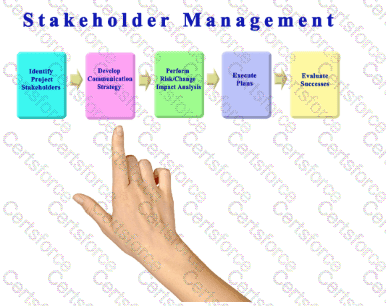
Per the PMI standards, while " Planning " creates the strategy, Manage Stakeholder Engagement is the active execution of that strategy to ensure stakeholders remain aligned with the project ' s success.
The basis of identification for current or potential problems to support later claims or new procurements is provided by:
A risk urgency assessment.
The scope baseline.
Work performance information.
Procurement audits.
According to the PMBOK® Guide (Project Procurement Management), specifically within the Control Procurements process, a Procurement Audit is a structured review of the procurement process from the Plan Procurement Management process through Control Procurements.
The objective of a procurement audit is to identify successes and failures that warrant recognition in the preparation or administration of other procurement contracts on the project, or on other projects within the performing organization.
Support for Claims: By identifying where the procurement process may have deviated from the contract or plan, these audits provide the necessary documentation and basis of identification for current or potential problems. This documentation is essential for supporting contested changes and potential constructive changes (claims).
New Procurements: The lessons learned from these audits are used to improve the process for future or new procurements, ensuring that the same mistakes are not repeated.
Relationship to OPA: The results of these audits are archived as part of the Organizational Process Assets (OPAs).
Analysis of Distractors:
A. A risk urgency assessment: This is a tool used in Perform Qualitative Risk Analysis to prioritize risks based on how soon they may occur. It does not provide a basis for procurement claims.
B. The scope baseline: While the scope baseline defines what is to be done, it is a planning document. It does not " identify problems " in the execution or administration of a contract in the way an audit does.
C. Work performance information: This is data collected from various controlling processes, analyzed in context, and integrated based on relationships across areas. While it might indicate a problem, it is the audit that provides the structured " basis of identification " and formal documentation required for claims and procurement improvement.
Sharing good practices introduced or implemented in similar projects in the organization and/or industry is an example of:
quality audits
process analysis
statistical sampling
benchmarking
According to the PMBOK® Guide, specifically within the Plan Quality Management and Collect Requirements processes, Benchmarking is a key tool and technique used to establish a basis for performance measurement.
Definition of Benchmarking: It involves comparing actual or planned project practices to those of comparable projects to identify best practices, generate ideas for improvement, and provide a basis for measuring performance.
Source of Data: These comparable projects can exist within the performing organization (internal benchmarking) or outside of it (industry-wide benchmarking). By sharing and adopting these " good practices, " a project team can avoid " reinventing the wheel " and ensure their project meets or exceeds established standards.
Application in Quality: In the context of quality management, benchmarking is used to see how other projects handle quality assurance and control, allowing the current project to adopt superior processes that have already been proven effective elsewhere.
Comparison with other options:
A. Quality audits: These are structured, independent reviews to determine whether project activities comply with organizational and project policies, processes, and procedures. While they identify non-compliance, they are an internal " check " rather than a comparison against external " good practices. "
B. Process analysis: This follows the steps outlined in the process improvement plan to identify needed improvements. It looks at the technical and organizational aspects of a process to find waste or bottlenecks, but it doesn ' t necessarily involve comparing to other projects.
C. Statistical sampling: This is a technique used in Control Quality where a part of a population is selected for inspection (e.g., testing 10 out of 100 manufactured parts). It is a mathematical method for quality control, not a method for sharing organizational best practices.
Which process is conducted from project inception through completion and is ultimately the responsibility of the project manager?
Control Quality
Monitor and Control Project Work
Control Scope
Perform Integrated Change Control
According to the PMBOK® Guide (Project Management Body of Knowledge), specifically within the Project Integration Management knowledge area:
Perform Integrated Change Control (Option D): This is the process of reviewing all change requests; approving changes and managing changes to deliverables, organizational process assets, project documents, and the project management plan; and communicating their disposition. PMI explicitly states that this process is conducted from project inception through completion and is ultimately the responsibility of the project manager. While a Change Control Board (CCB) may be responsible for approving or rejecting changes, the project manager oversees the entire integrated process to ensure that no change is made in isolation without considering its impact on all project constraints.
Monitor and Control Project Work (Option B): While also performed throughout the project, this process is focused on tracking, reviewing, and reporting the overall progress to meet the performance objectives defined in the project management plan. It is the " parent " process that identifies the need for a change, but the formal management of that change happens in Perform Integrated Change Control.
Control Quality (Option A): This process is focused on monitoring and recording results of executing the quality management activities to assess performance and ensure the project outputs are complete, correct, and meet customer expectations.
Control Scope (Option C): This is the process of monitoring the status of the project and product scope and managing changes to the scope baseline. It is a specialized control process, whereas Integrated Change Control covers all baselines.
In the PMI framework, Perform Integrated Change Control is the central " funnel " through which all change requests must pass, ensuring the integrity of the project ' s baselines from the day the project is chartered until the day it is closed.
What should a project manager consider to address the full delivery life cycle for large projects?
A range of techniques utilizing a plan driven approach, adaptive approach or a hybrid or both
Only techniques of an agile/adaptive approach in large organizations
Change the role of the project manager to managing pro|ci I in adaptive nuviionin-
Splitting larger projects into two or more smaller project is which can be addressed in an adaptive method
According to the PMBOK® Guide and the Agile Practice Guide, modern project management emphasizes that there is no " one size fits all " approach, especially for large and complex projects.
Hybrid and Multi-Modal Approaches (Choice A): To address the full delivery life cycle, a project manager must be versatile. Large projects often contain sub-components with different levels of certainty. For example, the hardware setup might follow a Plan-driven (Predictive) approach, while the software development follows an Adaptive (Agile) approach. Using a Hybrid model allows the project manager to select the most effective technique for each part of the project to ensure successful delivery.
Agile/Adaptive Only (Choice B): While Agile is powerful, it is not always the best fit for every component of a large project. Highly regulated industries or projects with fixed physical requirements (like construction) often still require predictive elements.
Changing the Role of the PM (Choice C): While the PM ' s style might shift (e.g., toward servant leadership in adaptive environments), the core responsibility of integration and delivery remains. The role doesn ' t fundamentally " change " its purpose; it adapts its methods.
Splitting Projects (Choice D): While decomposing large projects into smaller ones is a valid management strategy, it does not inherently address the life cycle requirements. A project manager must be able to handle the life cycle regardless of the project ' s size.
The PMBOK® Guide encourages Tailoring, which is the deliberate act of selecting the appropriate processes, inputs, tools, techniques, and life cycle phases to manage a project. For large projects, this almost always involves a blend of methodologies to balance control with flexibility.
Requirements documentation will typically contain at least:
Stakeholder requirements, staffing requirements, and transition requirements.
Business requirements, the stakeholder register, and functional requirements.
Stakeholder impact, budget requirements, and communications requirements.
Business objectives, stakeholder impact, and functional requirements.
According to the PMBOK® Guide, specifically the Collect Requirements process, requirements documentation describes how individual requirements meet the business need for the project. Requirements may start at a high level and become progressively more detailed as more information is known.
Components of Requirements Documentation: While the format and level of detail vary, typical components include:
Business requirements: These describe the higher-level needs of the organization as a whole, such as business objectives, business and project rules, and guiding principles.
Stakeholder requirements: These describe the needs of a stakeholder or stakeholder group, including the stakeholder impact and their specific expectations.
Solution requirements: These describe features, functions, and characteristics of the product, service, or result. They are further grouped into functional requirements (the behaviors of the product) and non-functional requirements (the environmental conditions or qualities required for the product to be effective).
Project requirements: These describe the actions, processes, or other conditions the project needs to meet (e.g., milestone dates, contractual obligations, constraints).
Transition and readiness requirements: These describe temporary capabilities, such as data conversion and training requirements, needed to transition from the current state to the future state.
Comparison with other options:
A. Staffing requirements: While " transition requirements " are included, " staffing requirements " are typically part of the Resource Management Plan, not the product/project requirements documentation.
B. Stakeholder register: This is a separate project document that identifies stakeholders and their contact info. It is an input used to find the requirements, but it is not a part of the requirements documentation itself.
C. Budget requirements and communications requirements: These are components of the Cost Management Plan and Communications Management Plan, respectively. They define how the project will be managed rather than the specific functional or business needs the project must satisfy.
What is the key benefit of the Monitor Stakeholder Engagement process?
Ensures that the informational needs of the project and its stakeholders are met through implementation and the development of artifacts
Ensures that the project includes all the work required and only the work required—to complete the project successfully
Increases the probability and/or impact of positive risks, and decreases the probability and/or Impact of negative risks or issues
Maintains or increases the efficiency and effectiveness of stakeholder engagement activities as the project evolves
According to the PMBOK® Guide, Monitor Stakeholder Engagement is the process of monitoring project stakeholder relationships and tailoring strategies for engaging stakeholders through the modification of engagement strategies and plans.
The Key Benefit: The primary value of this process is that it allows the project manager to maintain or increase the efficiency and effectiveness of stakeholder engagement activities. As a project progresses through its lifecycle, the stakeholder community changes, and their interest or influence may shift. This process ensures that the engagement strategies remain relevant and effective in the face of these changes.
Process Nature: This is a Monitoring and Controlling process. It involves comparing actual stakeholder engagement against the planned engagement (as documented in the Stakeholder Engagement Plan) and taking corrective action if there is a variance.
Analysis of other options:
Option A: This describes the key benefit of the Manage Communications or Monitor Communications process, which focuses specifically on the flow of information and meeting informational needs.
Option B: This is the definition of the key benefit of Project Scope Management. It focuses on work containment, not stakeholder relationships.
Option C: This describes the key benefit of Project Risk Management, specifically the Plan Risk Responses and Implement Risk Responses processes.
Per PMI standards, while " Managing " engagement is about doing the activities, " Monitoring " engagement is about evaluating the results of those activities and adjusting the approach to ensure stakeholders remain supportive and project-aligned.
The process of confirming human resource availability and obtaining the team necessary to complete project activities is known as:
Plan Human Resource Management.
Acquire Project Team.
Manage Project Team.
Develop Project Team.
According to the PMBOK® Guide and the Standard for Project Management, the process of confirming resource availability and obtaining the team necessary to complete project activities is Acquire Resources (referred to in previous editions as Acquire Project Team).
This process is part of the Executing Process Group. As per PMI standards, the key benefit of this process is outlining and guiding the selection of resources and assigning them to their respective activities. The internal and external resources required to complete the project are identified and secured during this stage.
The other options are incorrect based on the following PMI definitions:
Plan Human Resource Management: (Now Plan Resource Management) This is the process of defining how to estimate, acquire, manage, and use team and physical resources. It is a Planning process that creates the strategy but does not perform the actual acquisition.
Manage Project Team: (Now Manage Team) This is the process of tracking team member performance, providing feedback, resolving issues, and managing team changes to optimize project performance. It occurs after the team has been acquired.
Develop Project Team: (Now Develop Team) This is the process of improving competencies, team member interaction, and the overall team environment to enhance project performance. Like managing, this happens after the team is already in place.
As per the PMI Lexicon of Project Management Terms, the acquisition of resources often involves negotiation with functional managers and external vendors to ensure the project has the specific skill sets required for success.
Which of the following must be included in the risk register when the project manager completes the Identify Risks process?
List of identified risks, potential risk owners, list of potential risk response
List of identified risks, list of causes, list of risk categories
Short risk titles, list of potential risk owners, list of impacts on objectives
List of activities affected, list of potential risk responses, list of causes
According to the PMBOK® Guide and standard PMI practice for the Identify Risks process, the primary output of this process is the Risk Register. At the completion of this initial identification phase, the register is populated with specific foundational information that will be refined during subsequent qualitative and quantitative analyses.
The components required at this stage include:
List of identified risks: A detailed description of individual project risks, often formatted as a risk statement (e.g., Event may occur, leading to Impact).
Potential risk owners: While a formal owner is confirmed during the Plan Risk Responses process, the Identify Risks process often identifies a person best suited to monitor the risk or provide further detail.
List of potential risk responses: During identification, the project team often identifies obvious or immediate actions that could be taken to address a risk; these are captured now to inform the later Plan Risk Responses process.
Analysis of other options:
B and D: While " list of causes " and " risk categories " are important, they are often part of the risk breakdown structure (RBS) or added during analysis. Option A represents the most complete " standard " output specifically cited by PMI for the initial population of the register.
C: " Short risk titles " are not a formal requirement; PMI emphasizes comprehensive risk descriptions to ensure clarity of the threat or opportunity.
This documentation ensures that the Risk Management Plan transitions effectively into active tracking and prepares the team for Perform Qualitative Risk Analysis.
A project has a current cost performance index (CPI) of 1.25. To date, US$10,000 have been spent on performing the project work. What is the earned value of the work completed to date?
US$S000
US$9500
US$10,000
US$12,500
According to the PMBOK® Guide, specifically within the Control Costs process, the Cost Performance Index (CPI) is a measure of the cost efficiency of budgeted resources, expressed as the ratio of earned value to actual cost.
The Formula: The formula for CPI is:
$$CPI = \frac{EV}{AC}$$
Where:
EV (Earned Value): The value of the work actually performed expressed in terms of the approved budget assigned to that work.
AC (Actual Cost): The total cost actually incurred and recorded in accomplishing work performed for an activity or work breakdown structure component.
The Calculation:
Given the values from the question:
$CPI = 1.25$
$AC = \$10,000$
We rearrange the formula to solve for EV:
$$EV = CPI \times AC$$
$$EV = 1.25 \times 10,000$$
$$EV = 12,500$$
Interpretation: A CPI of 1.25 means that for every dollar spent on the project, the project has earned $1.25 worth of work. Since the CPI is greater than 1.0, the project is currently under budget (performing efficiently).
Comparison with Other Options:
A. US$8,000: This would be the result if the CPI were 0.8 ($0.8 \times 10,000$). A CPI less than 1.0 indicates the project is over budget.
B. US$9,500: This would be the result if the CPI were 0.95.
C. US$10,000: This would be the result if the CPI were 1.0 ($EV = AC$), indicating the project is exactly on budget.
D. US$12,500: This is the correct mathematical result of the provided CPI and Actual Cost.
Which type of analysis systemically gathers and analyzes qualitative and quantitative information to determine which interests should be taken into account throughout the project?
Product
Cost-benefit
Stakeholder
Research
According to the PMBOK® Guide, specifically within the Identify Stakeholders process, Stakeholder Analysis is the primary technical tool used to systematically gather and analyze information to determine whose interests should be considered throughout the project.
Qualitative and Quantitative Data: This analysis involves gathering both qualitative data (e.g., stakeholder expectations, relationships, and influence) and quantitative data (e.g., the level of financial interest or resource control they have over the project).
Key Objectives of the Analysis:
Identify Interests: Determining what each stakeholder wants or expects from the project.
Assess Influence: Understanding the power each person or group has to affect project outcomes (positively or negatively).
Determine Impact: Evaluating how the project ' s success or failure will affect each stakeholder.
Prioritization: The results of this analysis allow the Project Manager to prioritize stakeholders using models like the Power/Interest Grid or the Salience Model. This prioritization is essential for developing the Stakeholder Engagement Plan, ensuring that the project manager spends the most effort on the individuals who have the greatest impact or interest.
Risk Management: By understanding stakeholder interests early, the project manager can identify potential " blockers " or resistors and develop strategies to gain their support, thereby reducing project risk.
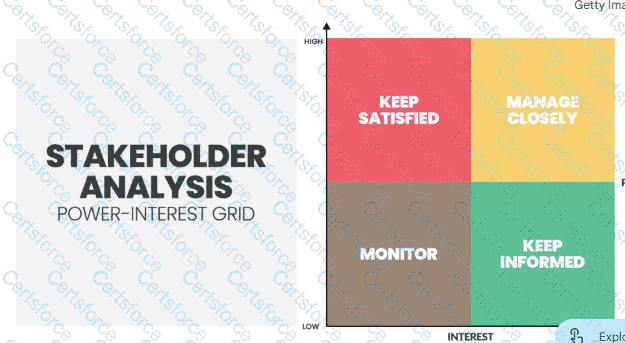 Comparison with other options:
A. Product: Product analysis (used in Define Scope) focuses on the physical or functional characteristics of the deliverable itself, not the people or entities interested in the project.
B. Cost-benefit: As discussed in previous questions, this analysis is used to compare the financial investment of an activity (like quality measures) against its expected return. It does not measure human or organizational interests.
D. Research: While " research " is a general activity used to gather information, it is not a formally defined PMI tool or technique for identifying and prioritizing project interests. Stakeholder Analysis is the specific professional term for this activity.
What type of reward can hurt team cohesiveness?
Sole-sum
Win-lose
Lose-win
Partial-sum
According to the PMBOK® Guide (specifically within the Develop Team process), the design of a recognition and reward system is critical to fostering a collaborative environment.
Win-lose rewards (also known as individual competitive rewards) are those where only a limited number of team members can achieve the reward, often at the expense of their colleagues. For example, naming an " Employee of the Month " can create a competitive atmosphere that discourages knowledge sharing and mutual support.
Impact on Cohesiveness: These rewards tend to hurt team cohesiveness because they pit team members against one another. If one person winning means another must lose, the incentive to collaborate on shared project goals is diminished, and internal competition replaces collective problem-solving.
PMI Recommendation: To foster a high-performing team, project managers should focus on win-win rewards—those that recognize the entire team ' s achievement of a milestone or objective. This reinforces the idea that everyone succeeds together.
Choice A, C, and D: These are not standard PMI terms regarding team motivation and reward systems. " Win-lose " is the specific terminology used in project management literature to describe zero-sum reward structures that damage team synergy.
Which of the following reduces the probability of potential consequences of project risk events?
Preventive action
Risk management
Corrective action
Defect repair
According to the PMBOK® Guide, specifically within the Direct and Manage Project Work and Monitor and Control Project Work processes, change requests are categorized into four types: corrective action, preventive action, defect repair, and updates.
A preventive action is an intentional activity that ensures the future performance of the project work is aligned with the project management plan.
Focus on the Future: Unlike corrective action, which deals with something that has already gone wrong, preventive action is proactive.
Risk Reduction: Its primary purpose is to reduce the probability of negative consequences associated with project risks before those risks materialize into actual issues.
Examples: Examples include cross-training a team member to avoid a single point of failure or performing extra maintenance on a piece of equipment to prevent a future breakdown.
B. Risk management: This is the overarching knowledge area and set of processes (Identify, Analyze, Plan Responses). While the goal of risk management is to reduce probability/impact, " Risk management " is the framework, whereas " Preventive action " is the specific physical or procedural activity taken to achieve that reduction.
C. Corrective action: This is an intentional activity that realigns the performance of the project work with the project management plan. It is reactive, meaning it is taken after a variance has occurred or a risk has already triggered an issue.
D. Defect repair: This is an intentional activity to modify a nonconforming product or product component. It focuses on fixing a specific deliverable that does not meet quality requirements, rather than addressing the probability of future risk events.
In the PMI framework, both preventive and corrective actions are usually processed as formal Change Requests. They are evaluated through the Perform Integrated Change Control process to ensure that the cost or time required to implement the preventive action is justified by the reduction in risk.
The only Process Group that comprises processes that typically occur from the beginning to the end of the project life cycle is:
Planning.
Executing,
Monitoring and Controlling.
Closing.
According to the PMBOK® Guide, the Monitoring and Controlling Process Group consists of those processes required to track, review, and regulate the progress and performance of the project; identify any areas in which changes to the plan are required; and initiate the corresponding changes.
Continuous Nature: Unlike other process groups that have a clear peak or primary focus at specific stages (e.g., Planning at the beginning, Executing in the middle, Closing at the end), Monitoring and Controlling occurs concurrently with all other process groups.
Beginning to End: Monitoring starts as soon as the project is initiated (e.g., monitoring the development of the Charter) and continues through Planning, Execution, and even during the Closing processes to ensure all requirements are met before formal sign-off.
Feedback Loop: It serves as the " checks and balances " system. It provides the project team with insight into the health of the project and allows for proactive adjustments throughout the entire project life cycle.
Why the other options are incorrect:
A. Planning: While planning is iterative (Rolling Wave Planning), the bulk of formal planning occurs early in the project or phase. It does not typically " occur " in the same capacity during the final closing activities.
B. Executing: This group is focused on performing the work to satisfy project specifications. It typically begins after some planning is completed and ends once the deliverables are produced, well before the final administrative closure of the project.
D. Closing: These processes are specifically designed to be performed at the end of a project or a project phase to formally complete the work. They do not occur at the beginning of the project.
A project manager is working on project cost management. The following information is current.
* Planned value = 30
* Actual cost = 35
* Earned value = 28
Considering this data, which project indicator is correct?
Schedule Variance (SV) = 2
Cost Performance Index (CPI) = 0.80
Schedule Performance Index (SPI) = 1.93
Cost Variance (CV) = 7
According to the PMBOK® Guide, specifically the Control Costs process, Earned Value Analysis (EVA) is used to assess project performance and progress. This involves calculating variances and indices based on Planned Value (PV), Actual Cost (AC), and Earned Value (EV).
To determine which indicator is correct, we must perform the standard calculations:
Cost Performance Index (CPI):
Formula: $CPI = \frac{EV}{AC}$
Calculation: $CPI = \frac{28}{35} = 0.80$
Interpretation: A CPI of 0.80 means the project is only getting 80 cents of value for every dollar spent. Since it is less than 1.0, the project is over budget.
Cost Variance (CV):
Formula: $CV = EV - AC$
Calculation: $CV = 28 - 35 = -7$
Interpretation: A negative CV indicates the project is over budget.
Schedule Variance (SV):
Formula: $SV = EV - PV$
Calculation: $SV = 28 - 30 = -2$
Interpretation: A negative SV indicates the project is behind schedule.
Schedule Performance Index (SPI):
Formula: $SPI = \frac{EV}{PV}$
Calculation: $SPI = \frac{28}{30} \approx 0.93$
Interpretation: An SPI of 0.93 means the project is progressing at 93% of the planned rate (behind schedule).
Why other options are incorrect:
Option A: The SV is actually -2, not 2. A positive 2 would incorrectly suggest the project is ahead of schedule.
Option C: The SPI is 0.93, not 1.93. An SPI of 1.93 would suggest the project is nearly twice as fast as planned.
Option D: The CV is -7, not 7. A positive 7 would incorrectly suggest the project is under budget.
Funding limit reconciliation is a tool and technique used in which process?
Control Costs
Determine Budget
Estimate Costs
Control Budget
According to the PMBOK® Guide, Funding Limit Reconciliation is a specific tool and technique of the Determine Budget process.
Definition: It is the process of comparing the planned expenditure of project funds against any limits on the commitment of funds for the project.
The Mechanism: Organizations often have constraints regarding the timing of fund disbursements (e.g., quarterly or annual budget caps). If the project ' s planned spending (the Cost Baseline) shows a spike that exceeds these limits, the project manager must reconcile the two.
Outcome of Reconciliation: To stay within the funding limits, the project manager may need to reschedule work. This often involves moving activities from a period of high spending to a period with more available funding by using scheduling constraints (such as " Must Start On " dates) within the project schedule.
Key Result: This process helps finalize the Cost Baseline, ensuring that the project ' s time-phased budget is not only realistic in terms of work but also financially viable based on the organization ' s cash flow.
Analysis of Other Options:
A. Control Costs: While this process involves monitoring the status of the project to update costs and managing changes to the cost baseline, the reconciliation of the total budget against funding limits is a planning activity performed during Determine Budget.
C. Estimate Costs: This process involves developing an approximation of the monetary resources needed to complete project activities. It provides the " raw data " (activity cost estimates) that are later aggregated in the Determine Budget process.
D. Control Budget: This is not a formal process name in the PMBOK® Guide. The monitoring and controlling process for finances is officially called Control Costs.
What name(s) is (are) associated with the Plan-Do-Check-Act cycle?
Pareto
Ishikawa
Shewhart-Deming
Delphi
According to the PMBOK® Guide, specifically within the Project Quality Management Knowledge Area, the Plan-Do-Check-Act (PDCA) cycle is a foundational concept for iterative improvement.
The names most commonly associated with this cycle are Walter Shewhart and Edwards Deming.
Walter Shewhart: Originally developed the concept of the " Shewhart Cycle " at Bell Laboratories in the 1920s, focusing on the application of statistical methods to quality control.
Edwards Deming: Often called the " father of modern quality control, " Deming promoted and popularized the cycle in Japan in the 1950s. He referred to it as the " Shewhart Cycle " for learning and improvement, though it eventually became known globally as the Deming Cycle or PDCA.
The PDCA Stages:
Plan: Establish the objectives and processes necessary to deliver results.
Do: Implement the plan, execute the processes, and make the product.
Check: Study the actual results and compare against the expected results to identify differences.
Act: Request corrective actions on significant differences between actual and planned results.
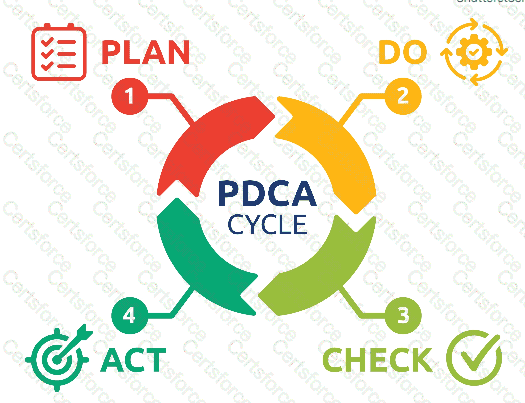
Analysis of other choices:
Choice A (Pareto): Vilfredo Pareto is associated with the Pareto Principle (the 80/20 rule) and Pareto Charts, which are used to identify the " vital few " sources of problems in a process.
Choice B (Ishikawa): Kaoru Ishikawa developed the Cause-and-Effect Diagram (also known as the Fishbone or Ishikawa diagram) used for identifying the root causes of quality problems.
Choice D (Delphi): The Delphi Technique is a communication framework used for gathering expert judgment anonymously to reach a consensus, often used in risk identification or estimating.
A project team submits a weekly progress report to the project manager. The project manager consolidates the same report and sends a complete progress report to the stakeholders. What is this an example of?
Informal communication
Internal communication
Formal communication
Horizontal communication
According to the PMBOK® Guide (6th Edition), project communications are categorized based on their nature, direction, and the level of structure involved. A Progress Report is a structured document intended to provide stakeholders with an official status of the project, which classifies it as Formal Communication.
Key Characteristics of Formal Communication:
Standardized Format: It follows a specific template or structure (in this case, a consolidated weekly progress report).
Official Record: It serves as a documented history of project performance, often used for auditing or high-level decision-making.
Defined Frequency: It occurs on a regular, planned schedule (e.g., weekly, monthly).
Professional Tone: It is intended for stakeholders and follows the guidelines laid out in the Communications Management Plan.
Analysis of Distractors:
A (Informal communication): This refers to ad-hoc conversations, emails without a standard format, or social interactions. While team members might chat informally about progress, the submission and consolidation of a report for stakeholders is a formal administrative task.
B (Internal communication): While the team reporting to the PM is internal, the question asks what the overall act of consolidating and sending a complete report to stakeholders represents. Furthermore, if stakeholders include clients or sponsors outside the organization, it becomes external. " Formal " is the more precise description of the type of communication.
D (Horizontal communication): This refers to communication between peers at the same level of the organizational hierarchy. The flow described (team to PM, and PM to stakeholders) is typically vertical (upward) or multidirectional, not strictly horizontal.
Which document can help a project manager to leverage historical project information?
Lessons learned register
Schedule baseline
Work performance data
Deliverable acceptance forms
According to the PMBOK® Guide, specifically the Manage Project Knowledge process, the Lessons Learned Register is the primary document used to record knowledge gained during a project so that it can be used to improve the performance of the current project and future projects.
Leveraging Information: At the end of a project or phase, the information in the lessons learned register is transferred to a Lessons Learned Repository, which is an Organizational Process Asset (OPA). This allows project managers to " leverage historical information " to avoid repeating mistakes and to replicate successful techniques used in previous work.
Content: It typically includes the category of the situation, a description of the event, the impact, recommendations, and proposed actions.
Why other options are incorrect:
B. Schedule baseline: This is a specific version of the project schedule used as a basis for comparison to actual results. It is used for current project control rather than for leveraging historical information across projects.
C. Work performance data: These are the raw observations and measurements identified during activities being performed to carry out the project work (e.g., actual costs, actual durations). It is current status data, not historical knowledge.
D. Deliverable acceptance forms: These are formal documents indicating that the customer or sponsor has signed off on a deliverable. While they are records, they do not provide the " how-to " or " lessons " context required to leverage knowledge for future success.
At what stages of project should the identify Stakeholder process be performed?
When beginning each phase of the project
At the beginning of the project only
Only when the project manager is concerned about stakeholder satisfaction
When the project charter is produced, at the beginning of each phase, and when significant changes occur
According to the PMBOK® Guide, the Identify Stakeholders process is not a one-time event. It is a process that is performed periodically throughout the project.
Initial Identification: The process typically first occurs as the project is being authorized (when the Project Charter is produced) to identify those who have a vested interest in the project ' s outcome from the start.
Phase Transitions: Stakeholders can change as the project moves from one phase to another (e.g., from design to construction). Therefore, it should be performed at the beginning of each phase.
Dynamic Environment: Significant changes—such as a change in project leadership, a major scope shift, or a change in the organization ' s structure—can introduce new stakeholders or change the influence level of existing ones.
Why other options are incorrect:
Option A: While identifying stakeholders at the beginning of each phase is correct, it is incomplete because it ignores the initial identification during the chartering process and the need to respond to significant changes.
Option B: Only performing this at the beginning is a major risk. New stakeholders may emerge, or the power/interest of existing stakeholders may shift, leading to project delays or lack of support if they are not managed.
Option C: Stakeholder identification is a formal, proactive project management requirement. It should not be reactive or based solely on the project manager ' s personal level of concern.
The iterative process of increasing the level of detail in a project management plan as greater amounts of information become available is known as:
Continuous improvement.
Predictive planning.
Progressive elaboration.
Quality assurance.
In accordance with the PMBOK® Guide, Progressive Elaboration is the iterative process of increasing the level of detail in a project management plan as greater amounts of information and more accurate estimates become available.
This concept acknowledges that it is rarely possible to define every detail of a project at its initiation. Instead, the project management plan is developed in broad strokes early on and then refined and made more specific as the project team gains a better understanding of the objectives, deliverables, and constraints.
Relationship to Rolling Wave Planning: Progressive elaboration is the broader concept that encompasses Rolling Wave Planning, where near-term work is planned in detail while future work is planned at a high level.
Purpose: It allows a project management team to manage to a greater level of detail as the project evolves, ensuring the plan remains realistic and aligned with current project realities.
Distinction from Scope Creep: Unlike scope creep (uncontrolled changes), progressive elaboration is a controlled, intentional process of refining the existing authorized scope.
Analysis of Distractors:
A. Continuous improvement: Also known as Kaizen, this refers to an ongoing effort to improve products, services, or processes over time. While it is an iterative mindset, it is not the specific term for refining project plan details.
B. Predictive planning: This refers to a project life cycle (Waterfall) where the scope, time, and cost are determined as early as possible. While predictive projects use progressive elaboration, " predictive planning " is not the name of the iterative refinement process itself.
D. Quality assurance: This is the process of auditing the quality requirements and the results from quality control measurements to ensure that appropriate quality standards and operational definitions are used. It does not relate to the detail level of the management plan.
An output of the Perform Integrated Change Control process is:
Deliverables.
Validated changes.
The change log.
The requirements traceability matrix.
According to the PMBOK® Guide (Project Management Body of Knowledge), the Perform Integrated Change Control process is the process of reviewing all change requests, approving changes, and managing changes to deliverables, organizational process assets, project documents, and the project management plan.
The Change Log (Option C): This is a primary output of this process. The change log is used to document changes that occur during a project. It contains the status of all change requests (approved, deferred, or rejected) and is updated continuously as the Change Control Board (CCB) or Project Manager makes decisions.
Deliverables (Option A): These are an output of the Direct and Manage Project Work process, not change control. While a change request might result in a modified deliverable later, the deliverable itself is not an output of the change control process.
Validated Changes (Option B): These are an output of the Control Quality process. Once a change is approved in Integrated Change Control, it is implemented, and then Control Quality " validates " that the change was implemented correctly.
Requirements Traceability Matrix (Option D): This is an output of the Collect Requirements process. While it may be updated as a result of a change (as part of Project Document Updates), it is not a primary output unique to the Perform Integrated Change Control process.
Other key outputs of this process include Approved Change Requests, Project Management Plan Updates, and Project Documents Updates.
The formal and informal interaction with others in an organization industry, or professional environment is known as:
negotiation
organizational theory
meeting
networking
According to the PMBOK® Guide, specifically within the Develop Team and Manage Stakeholder Engagement processes, Networking is a key interpersonal and team skill.
Definition: Networking is the formal and informal interaction with others in an organization, industry, or professional environment. It allows the project manager and the project team to establish connections and relationships that can provide support, information, and influence.
Purpose and Benefit: Networking provides project managers with better access to resources, improved information sharing, and enhanced stakeholder engagement. It is particularly useful during the early stages of a project to identify stakeholders and understand the political and cultural environment of the organization.
Contexts:
Internal Networking: Building relationships within the performing organization (e.g., with functional managers or other project managers).
External Networking: Engaging with professional bodies (like PMI), vendors, or industry experts.
Informal Networking: Lunch meetings, coffee breaks, or " water cooler " conversations that often yield critical project intelligence.
Comparison with other options:
A. Negotiation: This is a discussion intended to reach an agreement. While it involves interaction, its goal is to resolve a specific conflict or finalize a contract, rather than the general act of building a professional web of contacts.
B. Organizational theory: This provides information regarding the way in which people, teams, and units behave. It is a study or a framework (a tool/technique in Plan Resource Management) used to understand organizational behavior, not the act of interacting itself.
C. Meeting: While a meeting is a specific event where interaction occurs, " Networking " is the broader professional concept of building a relationship network. Meetings are a medium through which networking can happen, but they are often formal and structured toward a specific agenda.
Which of the following Project Communication Management processes uses performance reports as an input?
Manage Stakeholder Expectations
Report Performance
Distribute Information
Plan Communications
According to the PMBOK® Guide (specifically within the Communications Management knowledge area), the process of getting the right information to the right stakeholders at the right time is central to project success. In older versions of the PMBOK® Guide (which these specific numbered questions often reference), Distribute Information is the process that handles the collection and delivery of project data.
The Distribute Information process is focused on making relevant information available to project stakeholders as planned.
Input vs. Output: While " Performance Reports " are the primary output of the Report Performance process, they immediately become a critical input for Distribute Information.
The Flow of Data:
Work performance data is collected.
It is analyzed and turned into a Performance Report (in the Report Performance process).
That report is then fed into Distribute Information to be sent out via email, meetings, or portals to the stakeholders who need to see it.
A. Manage Stakeholder Expectations: This process (now called Manage Stakeholder Engagement) uses the Communications Management Plan and the Stakeholder Management Plan as primary guides. While performance reports might be discussed during engagement, they are not the primary mechanical input for this process.
B. Report Performance: This is the process that creates the performance reports. In the PMI framework, an output of a process is generally not listed as its own input; it is the result of the tools and techniques applied to work performance data.
D. Plan Communications: This is the initial process where you determine who needs what information. Since it happens during the Planning phase, performance reports (which reflect actual work) do not yet exist and cannot be an input.
In the most recent versions of the PMBOK® Guide, these processes have been consolidated and renamed:
Distribute Information and Report Performance are now largely contained within Manage Communications.
Manage Stakeholder Expectations is now Manage Stakeholder Engagement.
Sensitivity analysis is typically displayed as a/an:
Decision tree diagram.
Tornado diagram.
Pareto diagram.
Ishikawa diagram.
According to the PMBOK® Guide (Project Risk Management), specifically within the Perform Quantitative Risk Analysis process, Sensitivity Analysis is a data analysis technique used to determine which individual project risks or other sources of uncertainty have the most potential impact on project outcomes.
The typical display for this analysis is a Tornado Diagram.
How it works: Sensitivity analysis correlates variations in project outcomes with variations in elements of the quantitative risk analysis model. It involves changing one uncertain variable at a time while holding all other uncertain variables at their baseline values to see how much the outcome changes.
The Tornado Diagram: This is a special type of bar chart used in sensitivity analysis for comparing the relative importance of variables. In a tornado diagram, the Y-axis contains each type of uncertainty (risks), and the X-axis represents the spread or correlation to the studied objective (e.g., cost or schedule).
Visual Structure: The bars are ordered by the width of their impact, with the largest impact at the top and the smallest at the bottom, giving the chart a funnel or " tornado " appearance. This allows the project manager to quickly identify the " critical " variables that require the most attention.
Analysis of Distractors:
A. Decision tree diagram: This is a tool used in Decision Tree Analysis (another quantitative risk technique) to calculate the Expected Monetary Value (EMV) of different decision paths. It is not the standard display for sensitivity.
C. Pareto diagram: This is a vertical bar chart used in Quality Management to identify the " vital few " sources of problems (based on the 80/20 rule). It ranks causes from most frequent to least frequent.
D. Ishikawa diagram: Also known as a Fishbone or Cause-and-Effect diagram, this is used to identify the root causes of a problem. It is used in Quality Management and the Identify Risks process, but not for numerical sensitivity analysis.
The process of establishing the policies, procedures, and documentation for planning, developing, managing, executing, and controlling the project schedule is known as:
Plan Schedule Management.
Develop Project Charter.
Develop Schedule.
Plan Scope Management.
According to the PMBOK® Guide, specifically within the Project Schedule Management knowledge area, Plan Schedule Management is the first process performed.
Core Function: This process is dedicated to establishing the " rules of engagement " for the project ' s timeline. It results in the Schedule Management Plan, which is a subsidiary component of the Project Management Plan.
Key Responsibilities: It defines how the project schedule will be created (tools and methodologies), how it will be measured (units of measure like hours or days), how it will be maintained, and how variances will be managed.
Documentation: It provides the guidance and direction on how the project schedule will be managed throughout the project. Without this process, there would be no formal agreement on how to develop or control the schedule.
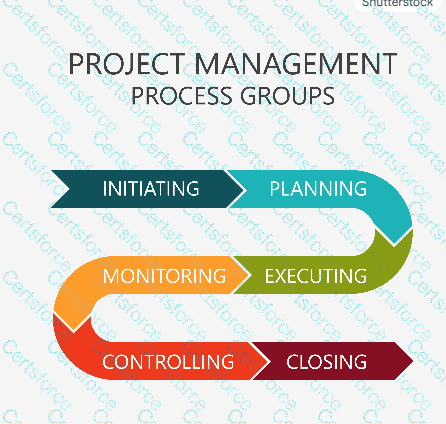
Why the other options are incorrect:
B. Develop Project Charter: This is an Initiation process. While it may include a high-level summary milestone schedule, it does not establish the detailed policies or procedures for managing the schedule throughout the project life cycle.
C. Develop Schedule: This is the process of analyzing activity sequences, durations, resource requirements, and schedule constraints to create the Project Schedule model. This process uses the policies established in Plan Schedule Management but does not create the policies themselves.
D. Plan Scope Management: This process is concerned with the Project Scope, not the schedule. It establishes the policies and procedures for defining, validating, and controlling the project scope.
The process of prioritizing risks for further analysis or action is known as:
Plan Risk Management.
Plan Risk Responses.
Perform Qualitative Risk Analysis.
Perform Quantitative Risk Analysis.
In accordance with the PMBOK® Guide (Project Risk Management), Perform Qualitative Risk Analysis is the process of prioritizing individual project risks for further analysis or action by assessing their probability of occurrence and impact as well as other characteristics.
Objective: The key benefit of this process is that it focuses efforts on high-priority risks. It is a subjective evaluation that allows project managers to reduce the level of uncertainty and focus on the risks that matter most.
Tools and Techniques: This process typically uses a Probability and Impact Matrix to rank risks into categories such as low, medium, or high. It may also consider other factors like urgency, proximity, and dormancy.
Frequency: Since it is a relatively quick and cost-effective way to prioritize risks, it is performed regularly throughout the project life cycle as new risks emerge or existing risks change.
Outcome: The primary output is an update to the Risk Register, specifically identifying the priority or " ranking " of each risk, which then dictates whether a risk requires a full quantitative analysis or moves straight to response planning.
Analysis of Distractors:
A. Plan Risk Management: This is the process of defining how to conduct risk management activities. it establishes the " rules of engagement " but does not actually analyze or prioritize specific risks.
B. Plan Risk Responses: This process occurs after prioritization. It involves developing options and actions to enhance opportunities and reduce threats. You cannot effectively plan responses until you know which risks are the highest priority.
D. Perform Quantitative Risk Analysis: This is the process of numerically analyzing the combined effect of identified individual project risks and other sources of uncertainty on overall project objectives. While it provides more detail, the initial prioritization of risks is the specific function of the Qualitative process.
The project manager is using co-location and providing training to the project team. On which of the following Project Resource Management processes is the project manager working?
Acquire Resources
Control Resources
Manage Team
Develop Team
According to the PMBOK® Guide, the Develop Team process is focused on improving competencies, team member interaction, and the overall team environment to enhance project performance.
Co-location (Tight Matrix): This is a specific tool and technique of the Develop Team process. It involves placing many or all of the most active project team members in the same physical location to enhance their ability to perform as a team, reduce friction, and improve communication.
Training: This is another primary tool and technique for this process. Training includes all activities designed to enhance the competencies of the project team members. It can be formal or informal and is aimed at closing skill gaps to ensure the project goals are met.
Objective: The goal of Develop Team is to create a high-functioning unit. By using co-location and training, the project manager is actively building team synergy and individual capability.
Analysis of other options:
A. Acquire Resources: This process is about outlining and guiding the selection of resources and assigning them to their respective activities. It is the act of getting the people, not improving them.
B. Control Resources: This process is concerned with physical resources (equipment, materials, facilities, and infrastructure) rather than the project team. It ensures that the physical resources assigned to the project are available as planned.
C. Manage Team: This process focuses on tracking team member performance, providing feedback, resolving issues, and managing team changes to optimize project performance. While " Develop Team " builds the team ' s capacity, " Manage Team " focuses on their actual output and behavior during execution.
Per PMI standards, Co-location and Training are foundational techniques used to Develop the Team, leading to improved project results through better collaboration and enhanced skills.
Which process is engaged when a proiect learn inember makes a change to project budget with the project manager ' s approval?
Manage Cost Plan
Estimate Costs
Determine Budget
Control Costs
According to the PMBOK® Guide (6th Edition), the Control Costs process is the process of monitoring the status of the project to update the project costs and managing changes to the cost baseline.
When a change is made to the project budget during the execution of the project—even with the project manager ' s approval—it falls under the monitoring and controlling domain. This process ensures that all change requests are processed in a timely manner and that the budget remains aligned with the actual work performed.
Key responsibilities within Control Costs include:
Influencing the factors that create changes to the authorized cost baseline.
Ensuring that all change requests are acted upon through the Perform Integrated Change Control process.
Managing the actual changes when they occur.
Ensuring that cost overruns do not exceed the authorized funding (both periodic and total).
Analysis of Distractors:
A (Manage Cost Plan): This is not a formal PMI process. The document that describes how costs will be managed is the Cost Management Plan, which is an output of the Plan Cost Management process.
B (Estimate Costs): This is a planning process focused on developing an approximation of the monetary resources needed to complete project activities. It happens before a budget is established.
C (Determine Budget): This is the process of aggregating the estimated costs of individual activities or work packages to establish an authorized cost baseline. Once the budget is determined and the project moves into execution, any further adjustments to that budget are handled by Control Costs.
Key Document Reference: Section 7.4 of the PMBOK® Guide states that " Control Costs " involves informing the appropriate stakeholders of all approved changes and associated costs. It is the mechanism through which the budget is maintained and adjusted throughout the project life cycle.
An input to Close Project or Phase is:
Accepted deliverables,
Final products or services,
Document updates,
Work performance information.
According to the PMBOK® Guide (Project Integration Management), the Close Project or Phase process is the process of finalizing all activities for the project, phase, or contract. To formally close a project or phase, the project manager must have confirmation that the work was completed according to the requirements.
Accepted Deliverables as an Input: Deliverables that have been signed off through the Validate Scope process are considered " Accepted Deliverables. " These are a primary input to closing because you cannot formally close a project or phase until the customer or sponsor has officially accepted the results of the work.
Transition of Ownership: Once these accepted deliverables enter the closing process, they are transitioned to the next phase or to production/operations.
Other Key Inputs: Other inputs include the Project Charter, the Project Management Plan, and Project Documents (such as the lesson learned register and milestone list).
Analysis of Distractors:
B. Final products or services: This is an output of the Close Project or Phase process. It represents the actual transition of the accepted product to the customer.
C. Document updates: While project documents are updated during this process (e.g., the Lessons Learned Register), " Project Document Updates " is categorized as an output, not a primary input required to start the closing activities.
D. Work performance information: This is an output of various Monitoring and Controlling processes (like Control Schedule or Control Costs). While it is used to manage the project, it is not the specific administrative trigger or requirement for the formal closing process.
