
Which component controls and distributes physical resources for each virtual machine?
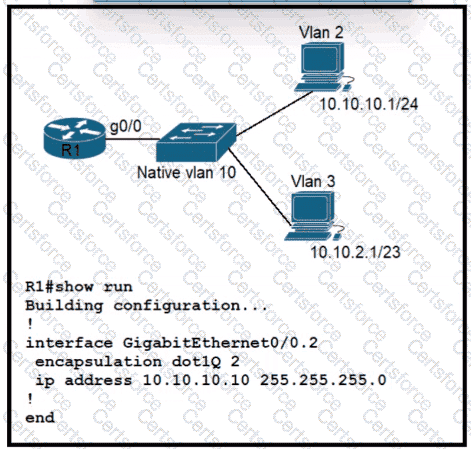
A)

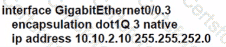
B)
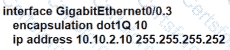
C)
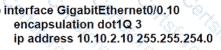
D)
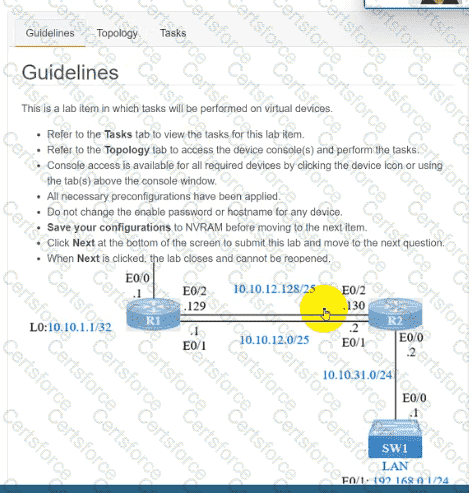
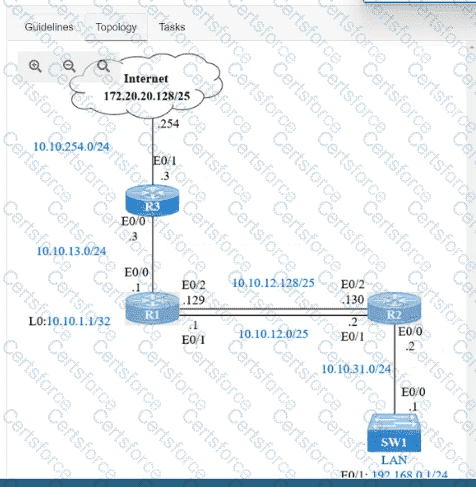
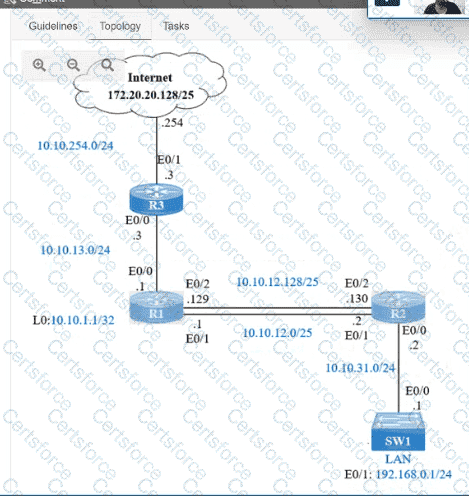
IP connectivity and OSPF are preconfigured on all devices where necessary. Do not make any changes to the IP addressing or OSPF. The company policy uses connected interfaces and next hops when configuring static routes except for load balancing or redundancy without floating static. Connectivity must be established between subnet 172.20.20.128/25 on the Internet and the LAN at 192.168.0.0/24 connected to SW1:
1. Configure reachability to the switch SW1 LAN subnet in router R2.
2. Configure default reachability to the Internet subnet in router R1.
3. Configure a single static route in router R2 to reach to the Internet subnet considering both redundant links between routers R1 and R2. A default route is NOT allowed in router R2.
4. Configure a static route in router R1 toward the switch SW1 LAN subnet where the primary link must be through Ethernet0/1. and the backup link must be through Ethernet0/2 using a floating route. Use the minimal administrative distance value when required.
Refer to the exhibit.
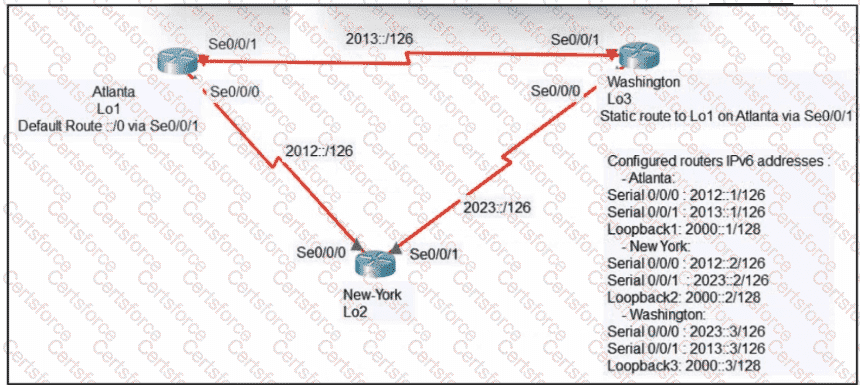
The New York router must be configured so that traffic to 2000::1 is sent primarily via the Atlanta site, with a secondary path via Washington that has an administrative distance of 2. Which two commands must be configured on the New York router? (Choose two.)
Refer to the exhibit.
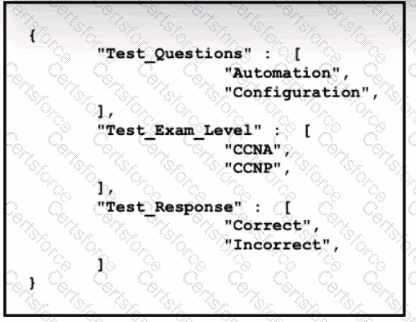
How many arrays are present in the JSDN data?
Which type of wired port is required when an AP offers one unique SSID, passes client data and management traffic, and is in autonomous mode?
What mechanism carries multicast traffic between remote sites and supports encryption?
Refer to the exhibit.
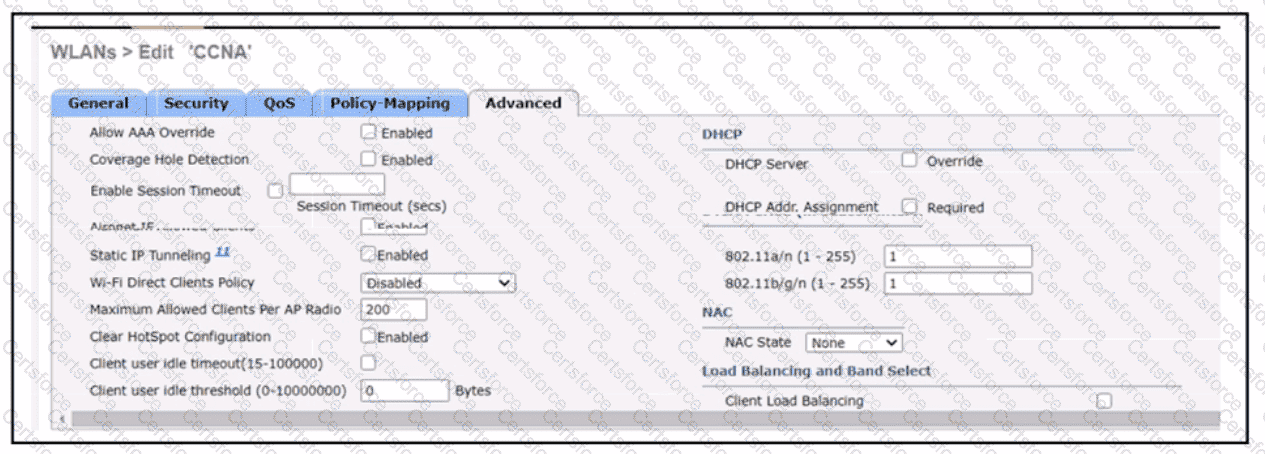
A network engineer configures the CCNA WLAN so that clients must authenticate hourly and to limit the number of simultaneous connections to the WLAN to Which two actions complete this configuration? (Choose two.)
How does automation affect network management processes?
Which CRUD operation corresponds to me HTTP GET method?
Which mode must be used to configure EtherChannel between two switches without using a negotiation protocol?
Topology:
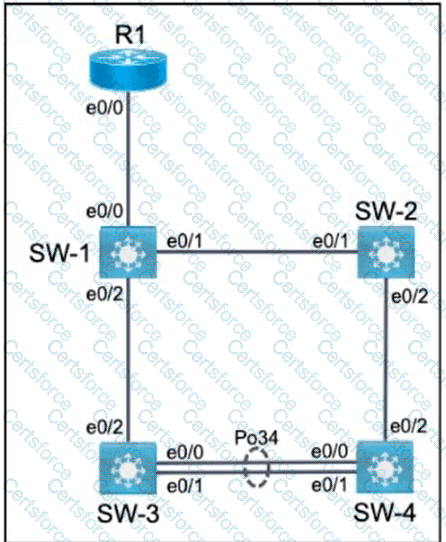
All relevant ports are preconfigured as IEEE 802.1Q trunks.
Task 1
Configure SW-1 port Ethernet0/0 to permit only VLANs 5 and 6.
Task 2
Configure ports Ethernet0/1 on SW-1 and SW-2 to use VLAN 77 as the native VLAN.
Task 3
Configure SW-2 port Ethernet0/2 to permit only VLAN 6.
Task 4
Using LACP, create a Port-Channel between SW-3 and SW-4.
Combine Ethernet0/0 and Ethernet0/1 into a Port-Channel while leaving the existing trunk configurations intact.
Assign Port-Channel number 34.
Only SW-3 must initiate LACP negotiations.
Which switch port configuration must be configured when connected to an AP running in FlexConnect mode, and the WLANs use flex local switching?
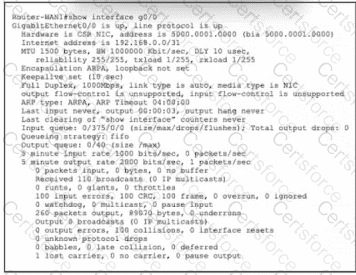
Refer to the exhibit. Router-WAN1 has a new connection via Gi0/0 to the ISP. Users running the web applications indicate that connectivity is unstable to the internet. What is causing the interface issue?
What are two behaviors of a point-to-point WAN topology? (Choose two.)
Refer to the exhibit.
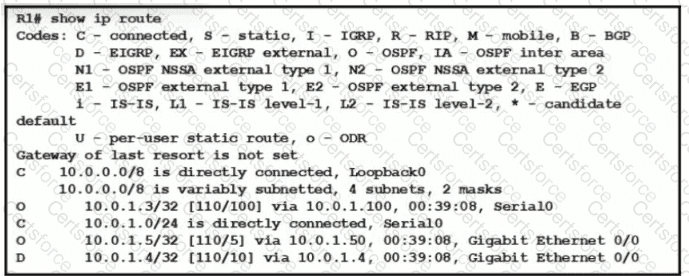
What does route 10.0.1.3/32 represent in the routing table?
What is a function of Layer 3 switches?
Which two principles must be considered when using per-hop behavior in QoS? (Choose two.)
How does HSRP provide first hop redundancy?
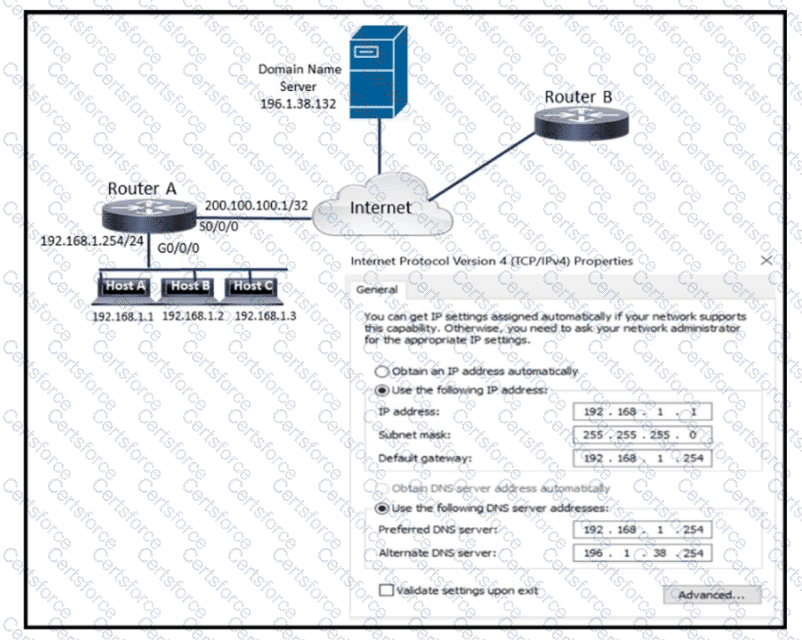
Refer to the exhibit. What is preventing host A from reaching the internet?
