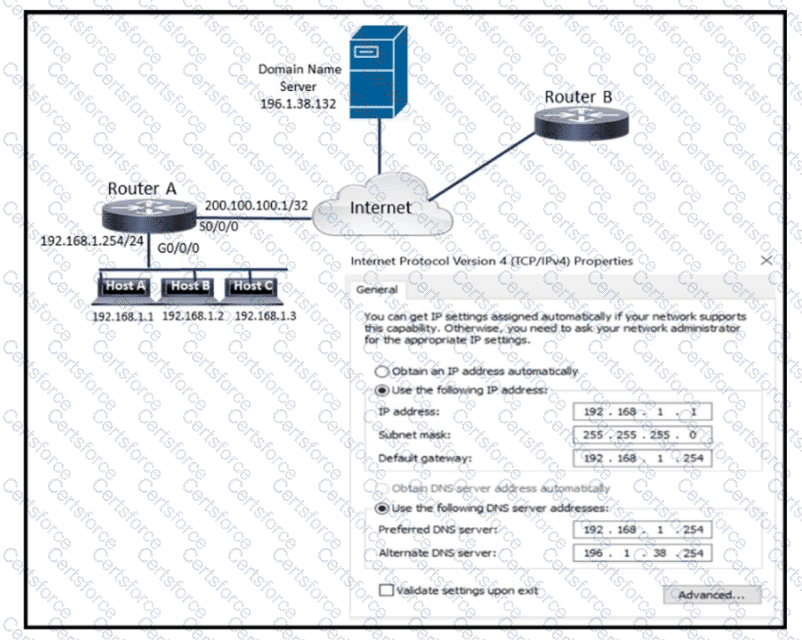
IP addressss assignment is incorrect.. Network fundamentals questions require careful attention to address scope, media type, cabling limits, topology design, virtualization, cloud service models, and the difference between TCP and UDP. The CCNA 200-301 v1.1 blueprint expects candidates to identify not only definitions but also the operational consequence of each choice. For example, public and private addressing have different routing behavior; fiber and copper use different physical media; TCP and UDP make different reliability tradeoffs; and virtualization abstracts physical resources through a hypervisor. The wrong answers are usually plausible terms from the same area, but they do not match the exact condition described in the question. The selected answer is correct because it is the only option that fits the stated network behavior, design requirement, or physical/logical property. That is the level of precision needed for Cisco troubleshooting and implementation work.
Contribute your Thoughts:
Chosen Answer:
This is a voting comment (?). You can switch to a simple comment. It is better to Upvote an existing comment if you don't have anything to add.


Submit