New Year Sale Limited Time 70% Discount Offer - Ends in 0d 00h 00m 00s - Coupon code: simple70

Pass the Cisco CyberOps Associate 200-201 Questions and answers with CertsForce

Viewing page 2 out of 14 pages
Viewing questions 11-20 out of questions
Questions # 11:

A user reports difficulties accessing certain external web pages. When an engineer examines traffic to and from the external domain in full packet captures, they notice that many SYNs have the same sequence number, source, and destination IP address, but they have different payloads. What is causing this situation?

Options:

A.

TCP injection


B.

misconfiguration of a web filter


C.

Failure of the full packet capture solution


D.

insufficient network resources


Expert Solution
Questions # 12:

What is the difference between an attack vector and attack surface?

Options:

A.

An attack surface identifies vulnerabilities that require user input or validation; and an attack vector identifies vulnerabilities that are independent of user actions.


B.

An attack vector identifies components that can be exploited, and an attack surface identifies the potential path an attack can take to penetrate the network.


C.

An attack surface recognizes which network parts are vulnerable to an attack; and an attack vector identifies which attacks are possible with these vulnerabilities.


D.

An attack vector identifies the potential outcomes of an attack; and an attack surface launches an attack using several methods against the identified vulnerabilities.


Expert Solution
Questions # 13:

What describes the impact of false-positive alerts compared to false-negative alerts?

Options:

A.

A false negative is alerting for an XSS attack. An engineer investigates the alert and discovers that an XSS attack happened A false positive is when an XSS attack happens and no alert is raised


B.

A false negative is a legitimate attack triggering a brute-force alert. An engineer investigates the alert and finds out someone intended to break into the system A false positive is when no alert and no attack is occurring


C.

A false positive is an event alerting for a brute-force attack An engineer investigates the alert and discovers that a legitimate user entered the wrong credential several times A false negative is when a threat actor tries to brute-force attack a system and no alert is raised.


D.

A false positive is an event alerting for an SQL injection attack An engineer investigates the alert and discovers that an attack attempt was blocked by IPS A false negative is when the attack gets detected but succeeds and results in a breach.


Expert Solution
Questions # 14:

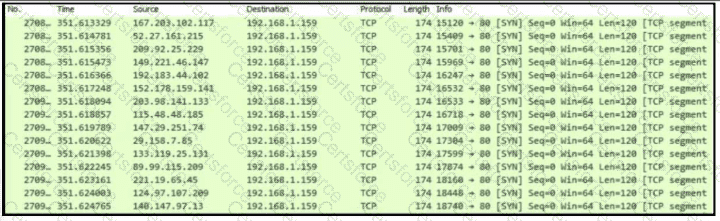
Refer to the exhibit.

Question # 14

What is occurring?

Options:

A.

ARP flood


B.

DNS amplification


C.

ARP poisoning


D.

DNS tunneling


Expert Solution
Questions # 15:

Which CVSS metric group identifies other components that are affected by a successful security attack?

Options:

A.

scope


B.

attack vector


C.

integrity


D.

privileges required


Expert Solution
Questions # 16:

Drag and drop the definition from the left onto the phase on the right to classify intrusion events according to the Cyber Kill Chain model.

Question # 16


Expert Solution
Questions # 17:

Question # 17

Refer to the exhibit. Based on the .pcap file, which DNS server is used to resolve cisco.com?

Options:

A.

224.0.0.251


B.

192.168.2.1


C.

72.163.4.185


D.

192.168.2.104


Expert Solution
Questions # 18:

An engineer needs to fetch logs from a proxy server and generate actual events according to the data received. Which technology should the engineer use to accomplish this task?

Options:

A.

Firepower


B.

Email Security Appliance


C.

Web Security Appliance


D.

Stealthwatch


Expert Solution
Questions # 19:

Refer to the exhibit.

Question # 19

Which tool was used to generate this data?

Options:

A.

NetFlow


B.

dnstools


C.

firewall


D.

tcpdump


Expert Solution
Questions # 20:

What is the difference between inline traffic interrogation (TAPS) and traffic mirroring (SPAN)?

Options:

A.

TAPS interrogation is more complex because traffic mirroring applies additional tags to data and SPAN does not alter integrity and provides full duplex network.


B.

SPAN results in more efficient traffic analysis, and TAPS is considerably slower due to latency caused by mirroring.


C.

TAPS replicates the traffic to preserve integrity, and SPAN modifies packets before sending them to other analysis tools


D.

SPAN ports filter out physical layer errors, making some types of analyses more difficult, and TAPS receives all packets, including physical errors.


Expert Solution
Viewing page 2 out of 14 pages
Viewing questions 11-20 out of questions