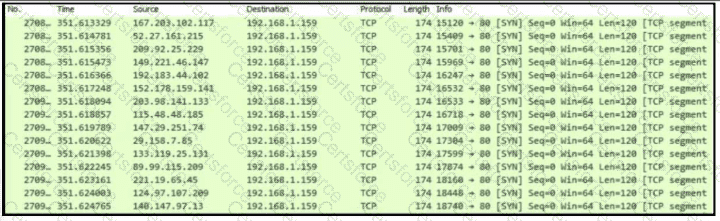
The exhibit shows a pcap file capturing multiple TCP SYN packets directed at the same destination IP address.
High volume of SYN packets with very little variance in time: This pattern is indicative of a SYN flood attack, a type of Denial of Service(DoS) attack where numerous SYN requests are sent to overwhelm the target system.
SYN packets acknowledged from several source IP addresses: This can be indicative of a Distributed Denial of Service (DDoS) attack where multiple compromised hosts (botnet) are used to generate traffic.
These characteristics suggest that the network is under a SYN flood or DDoS attack, aiming to exhaust the target's resources and disrupt service availability.
References
Understanding SYN Flood Attacks
Analysis of DDoS Attack Patterns
Wireshark Analysis Techniques for Intrusion Detection
Contribute your Thoughts:
Chosen Answer:
This is a voting comment (?). You can switch to a simple comment. It is better to Upvote an existing comment if you don't have anything to add.


Submit