
An application deployed to a runtime fabric environment with two cluster replicas is designed to periodically trigger of flow for processing a high-volume set of records from the source system and synchronize with the SaaS system using the Batch job scope
After processing 1000 records in a periodic synchronization of 1 lakh records, the replicas in which batch job instance was started went down due to unexpected failure in the runtime fabric environment
What is the consequence of losing the replicas that run the Batch job instance?
An organization is designing the following two Mule applications that must share data via a common persistent object store instance:
- Mule application P will be deployed within their on-premises datacenter.
- Mule application C will run on CloudHub in an Anypoint VPC.
The object store implementation used by CloudHub is the Anypoint Object Store v2 (OSv2).
what type of object store(s) should be used, and what design gives both Mule applications access to the same object store instance?
Refer to the exhibit.
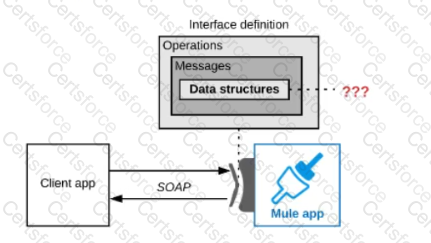
A Mule application is being designed to expose a SOAP web service to its clients.
What language is typically used inside the web service's interface definition to define the data structures that the web service Is expected to exchange with its clients?
An organization's governance process requires project teams to get formal approval from all key stakeholders for all new Integration design specifications. An integration Mule application Is being designed that interacts with various backend systems. The Mule application will be created using Anypoint Design Center or Anypoint Studio and will then be deployed to a customer-hosted runtime.
What key elements should be included in the integration design specification when requesting approval for this Mule application?
A new Mule application under development must implement extensive data transformation logic. Some of the data transformation functionality is already available as external transformation services that are mature and widely used across the organization; the rest is highly specific to the new Mule application.
The organization follows a rigorous testing approach, where every service and application must be extensively acceptance tested before it is allowed to go into production.
What is the best way to implement the data transformation logic for this new Mule application while minimizing the overall testing effort?
An insurance company is using a CIoudHub runtime plane. As a part of requirement, email alert should
be sent to internal operations team every time of policy applied to an API instance is deleted As an integration architect suggest on how this requirement be met?
What is a core pillar of the MuleSoft Catalyst delivery approach?
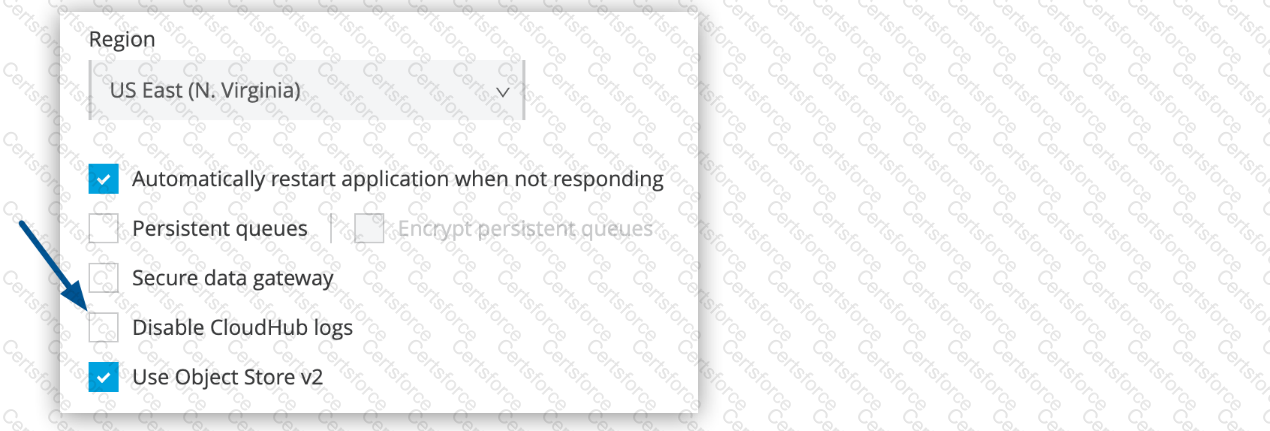
What aspect of logging is only possible for Mule applications deployed to customer-hosted Mule runtimes, but NOT for Mule applications deployed to CloudHub?
What aspects of a CI/CD pipeline for Mule applications can be automated using MuleSoft-provided Maven plugins?
Refer to the exhibit.
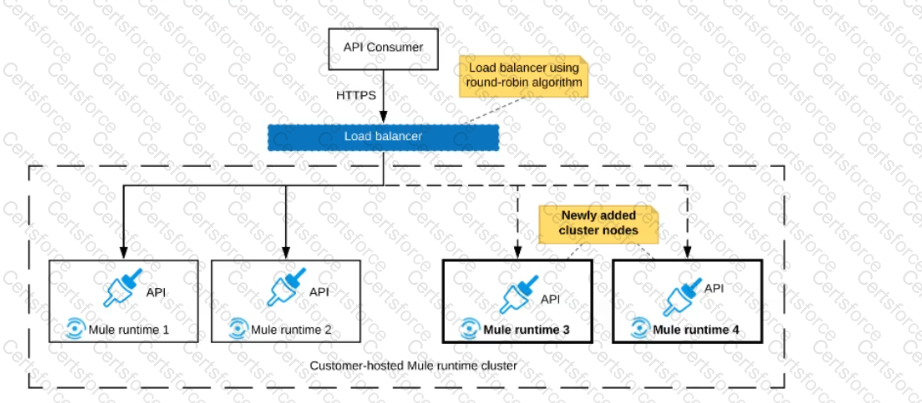
An organization uses a 2-node Mute runtime cluster to host one stateless API implementation. The API is accessed over HTTPS through a load balancer that uses round-robin for load distribution.
Two additional nodes have been added to the cluster and the load balancer has been configured to recognize the new nodes with no other change to the load balancer.
What average performance change is guaranteed to happen, assuming all cluster nodes are fully operational?
 Graphical user interface, application, Word
Description automatically generated
Graphical user interface, application, Word
Description automatically generated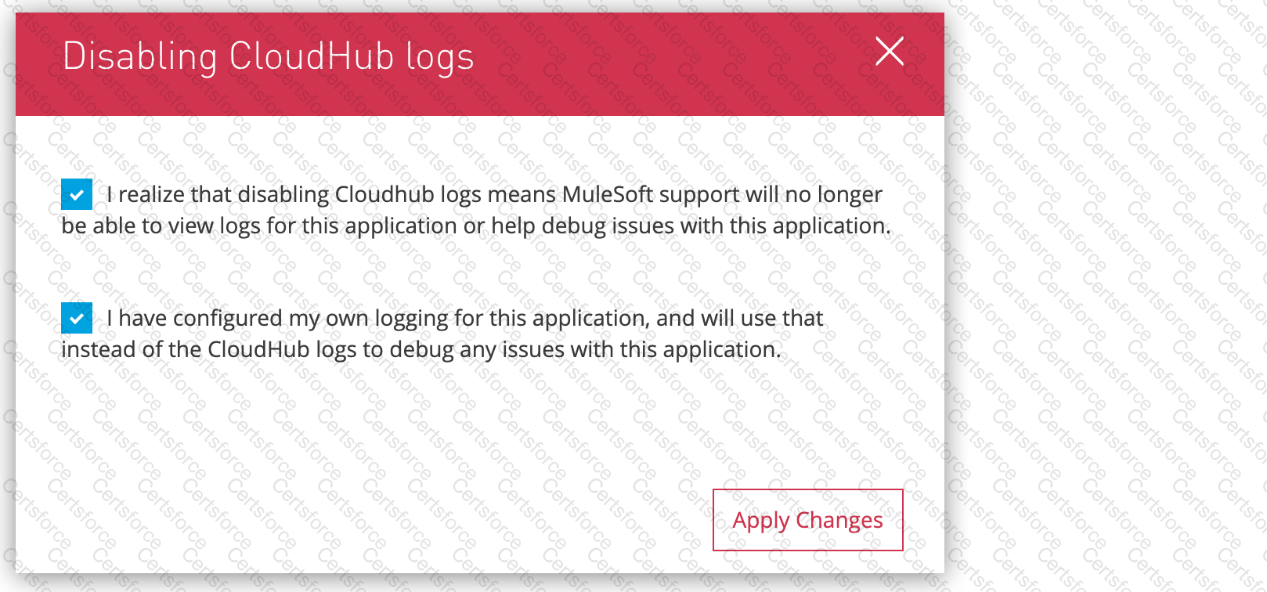 Graphical user interface, text, application, email
Description automatically generated
Graphical user interface, text, application, email
Description automatically generated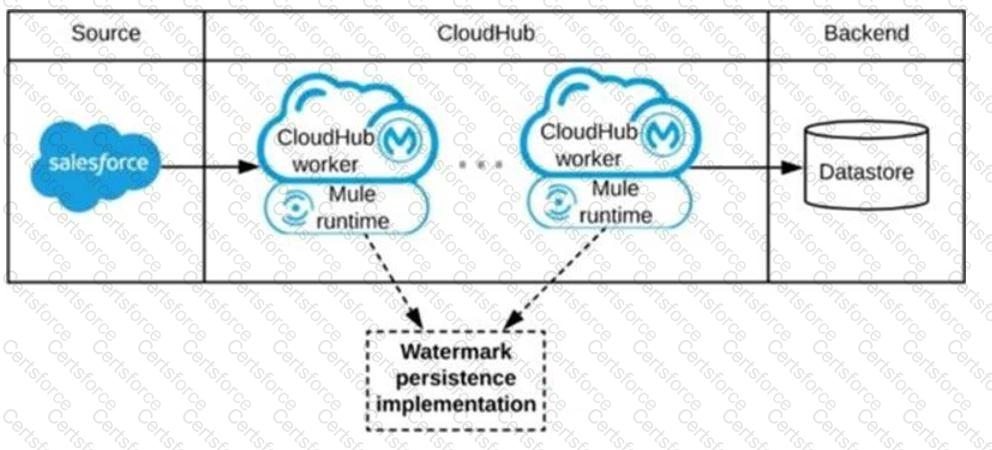 Diagram
Description automatically generated
Diagram
Description automatically generated