
Huawei network devices such as switches and routers can establish NETCONF channels with iMaster NCE-Campus through DHCP. The DHCP server notifies DHCP clients of the URL/IP address and port number of iMaster NCE-Campus through Option_____. (Enter only digits.)
If the neighbor relationship between R1 and R2 has reached the Full state in OSPF, which of the following statements are true? (Select all that apply)
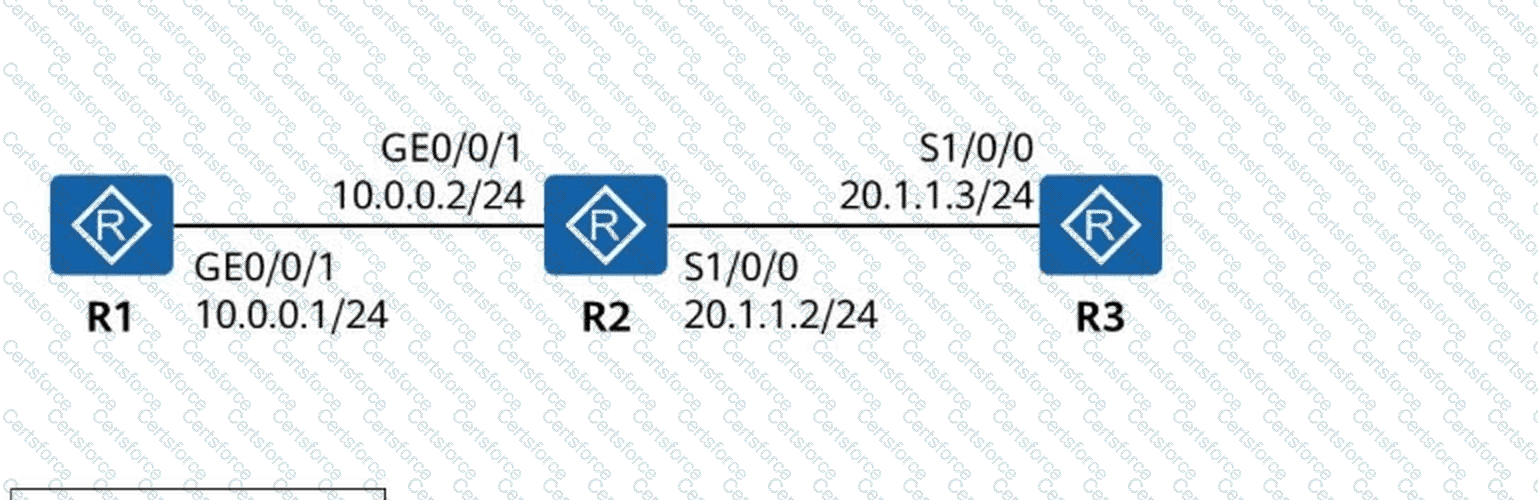
On the network shown in the figure, it is required that interfaces on R1 and R3 are reachable to each other through static routes. When implementing this requirement, there is no need to configure static routes on _____. (Enter a device name in the figure, for example, R1.)
Compared with Wi-Fi 6, Wi-Fi 7 uses which of the following technologies to improve performance?
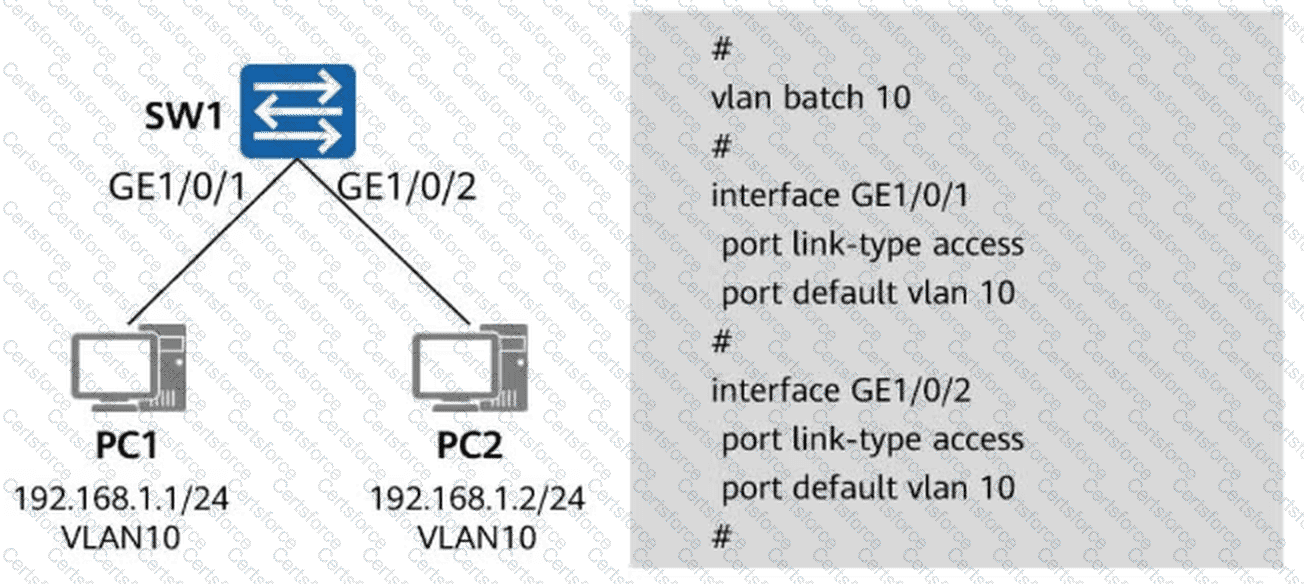
The administrator performs the configuration shown in the figure on SW1. After the network is stable, the administrator pings the IP address of PC2 from PC1. The connectivity is normal. Then, the administrator runs the undo vlan 10 command on SW1. After the network is stable, the administrator pings the IP address of PC2 from PC1 again. Which of the following statements are false about this scenario? (Select all that apply)
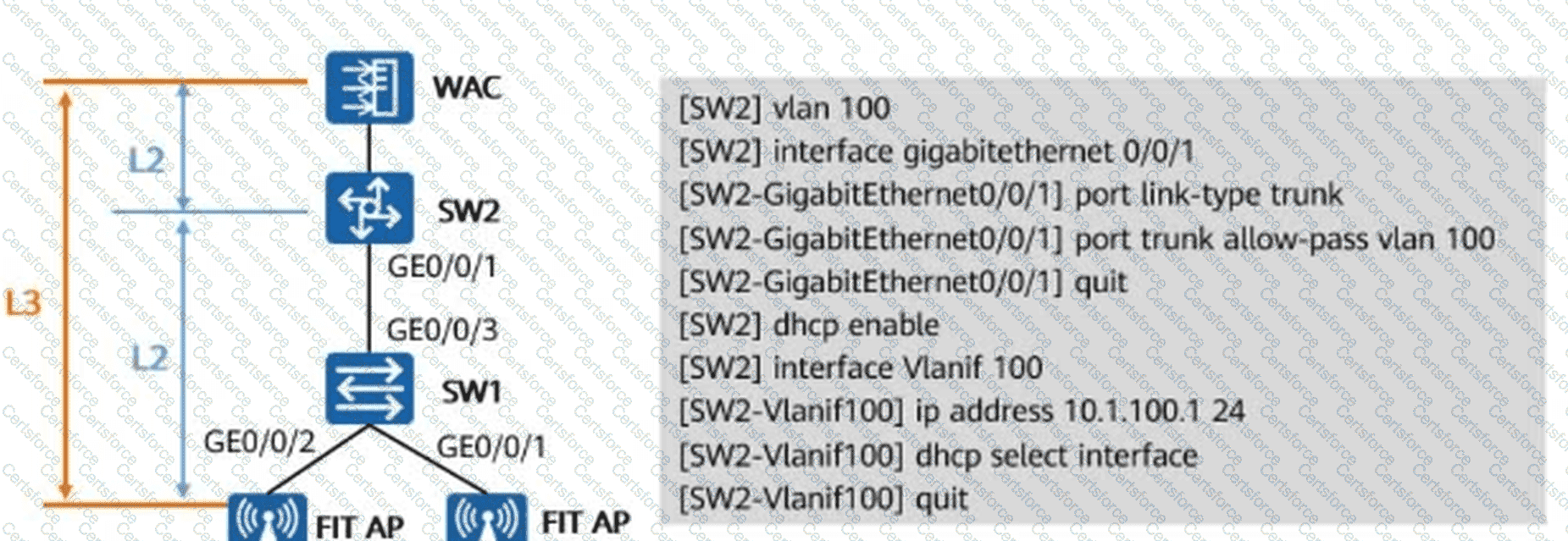
A micro-enterprise is deploying a WLAN, as shown in the figure. The WAC and Fit APs communicate with each other at Layer 3. SW2 functions as a DHCP server to assign IP addresses to Fit APs, with VLAN 100 as the management VLAN. The figure also shows part of the configuration on SW2. However, Fit APs fail to go online. Which of the following is the possible cause?
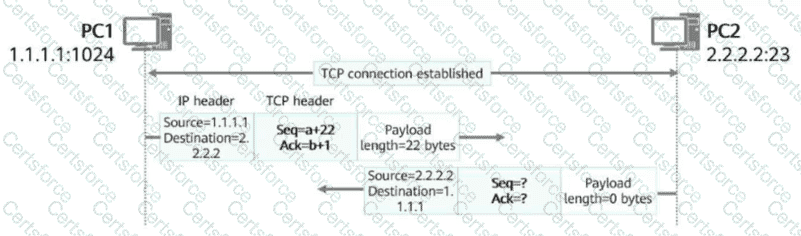
In the figure, a TCP connection has been established between PC1 and PC2. After PC1 sends a data segment to PC2, which of the following is the acknowledgment number in the packet returned by PC2?
OSPF has five types of packets. Which type is used to notify an OSPF neighbor of its required LSAs?
In the figure, a web client sends an HTTP request to a web server, and the router in between performs operations on the HTTP request. Which of the following statements are false about the router ' s operations? (Select all that apply)

R1 has the following configurations:
[R1] radius-server template 1
[R1-radius-1] radius-server authentication 10.1.6.6 1812
[R1-radius-1] radius-server accounting 10.1.6.6 1813
[R1-radius-1] radius-server shared-key cipher YsHsjx_202206139
[R1-radius-1] quit
[R1] aaa
[R1-aaa] authentication-scheme auth1
[R1-aaa-authen-auth1] authentication-mode radius
[R1-aaa-authen-auth1] quit
[R1-aaa] accounting-scheme acc1
[R1-aaa-accounting-acc1] accounting-mode radius
[R1-aaa-accounting-acc1] quit
[R1-aaa] domain huawei.com
[R1-aaa-domain-huawei.com] authentication-scheme auth1
[R1-aaa-domain-huawei.com] accounting-scheme acc1
[R1-aaa-domain-huawei.com] radius-server 1
[R1-aaa-domain-huawei.com] quit
[R1-aaa] quit
Which of the following statements is true?
