According to the PMBOK® Guide, specifically within the Manage Project Team process, conflict management is a key tool and technique. Conflict is inevitable in a project environment, but how it is handled determines whether it becomes a functional or dysfunctional force.
Timing (Early): Conflicts should be addressed early. Proactive management prevents minor disagreements from escalating into major issues that could impact team morale, productivity, and the project schedule.
Setting (In Private): As a general rule, conflict should be addressed in private. Handling disagreements away from the larger group or stakeholders protects the professional reputation of the individuals involved and fosters a safer environment for honest communication.
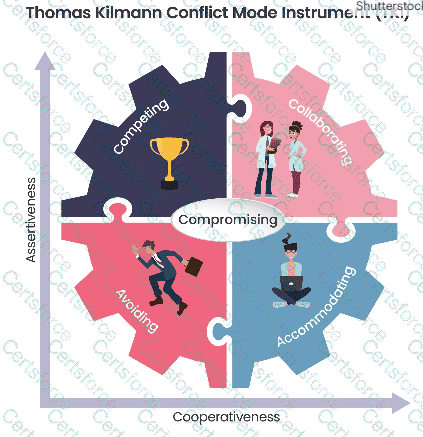
Approach (Direct/Collaborative): The most effective method for long-term resolution is a direct, collaborative approach (also known as the Problem Solving or Confronting technique). This involves treating the conflict as a problem to be solved, examining alternatives, and requiring a " give-and-take " attitude from all parties to reach a consensus.
Analysis of other choices:
Choice B (Early, in public, using an indirect, collaborative approach): While " early " and " collaborative " are positive, " in public " is generally discouraged as it can lead to defensiveness, embarrassment, and a breakdown in team trust.
Choice C (Early, in private, using an indirect, cooperative approach): " Indirect " or " cooperative " (often associated with Smoothing or Accommodating) may provide temporary relief but often fails to address the root cause of the conflict, leading to the issue resurfacing later.
Choice D (As late as possible, in public, using a direct, confrontational approach): This is the least desirable method. Waiting " as late as possible " allows the conflict to fester, while " public " and " confrontational " (associated with Forcing) usually results in a win-lose situation that damages long-term team dynamics.


Submit