Summer Certification Special Limited Time 70% Discount Offer - Ends in 0d 00h 00m 00s - Coupon code: force70

Pass the Cisco CCNP Enterprise 300-420 Questions and answers with CertsForce

Viewing page 5 out of 12 pages
Viewing questions 41-50 out of questions
Questions # 41:

Question # 41

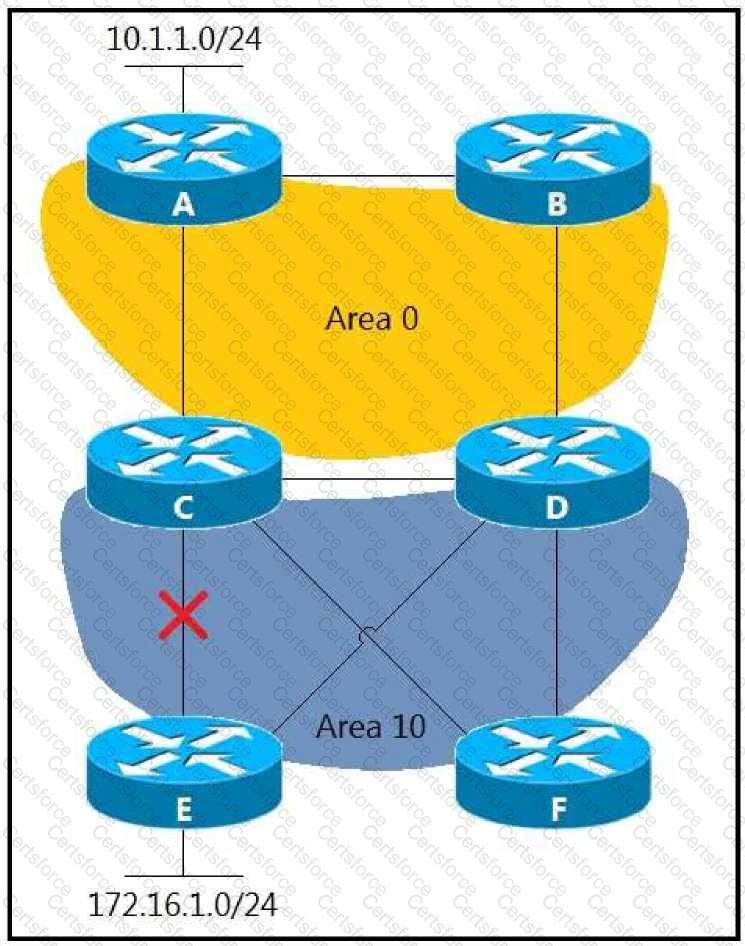
Refer to the exhibit. Area 10 is a regular OSPF area and networks 10.1.1.0/24 and 172.16.1.0/24 are internal. Which design provides optimal routing between both networks when the link between routers C and E fails?

Options:

A.

Move the link between routers C and D to area 10.


B.

Create an OSPF virtual link between routers E and F.


C.

Create a tunnel between routers E and F in area 10.


D.

Make area 10 a not-so-stubby area.


Expert Solution
Questions # 42:

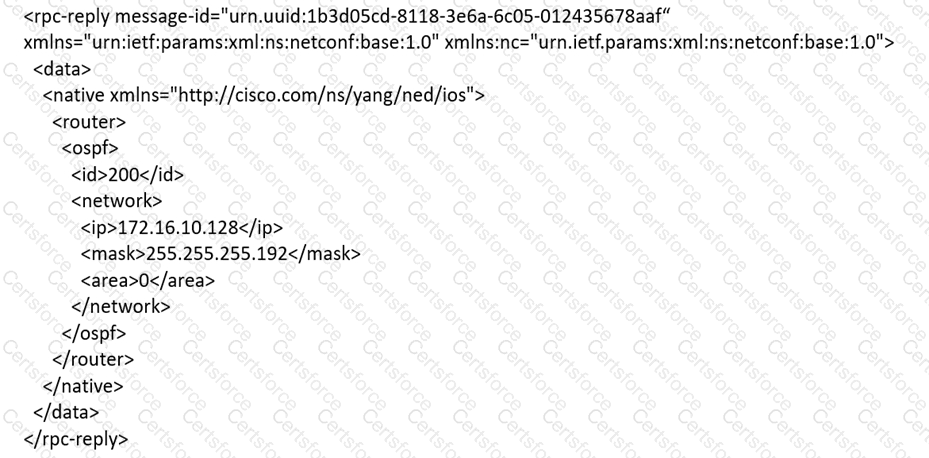
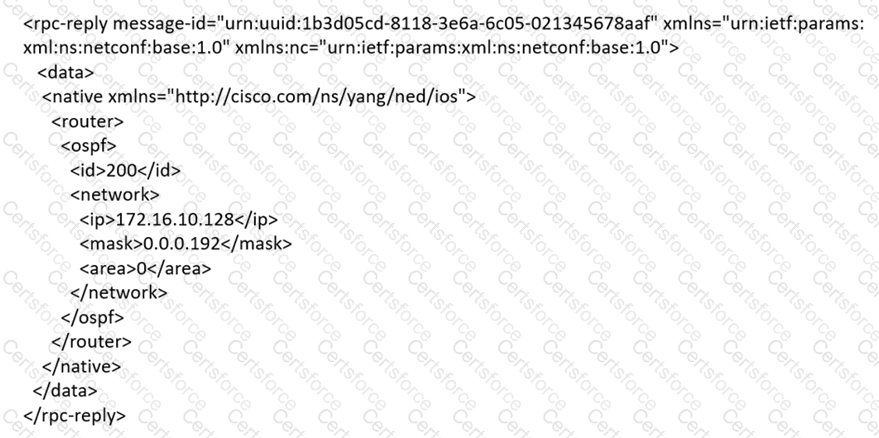
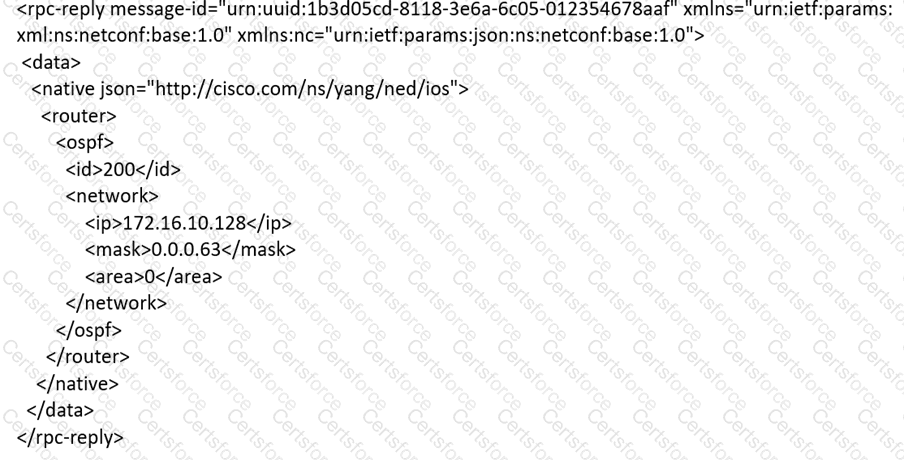
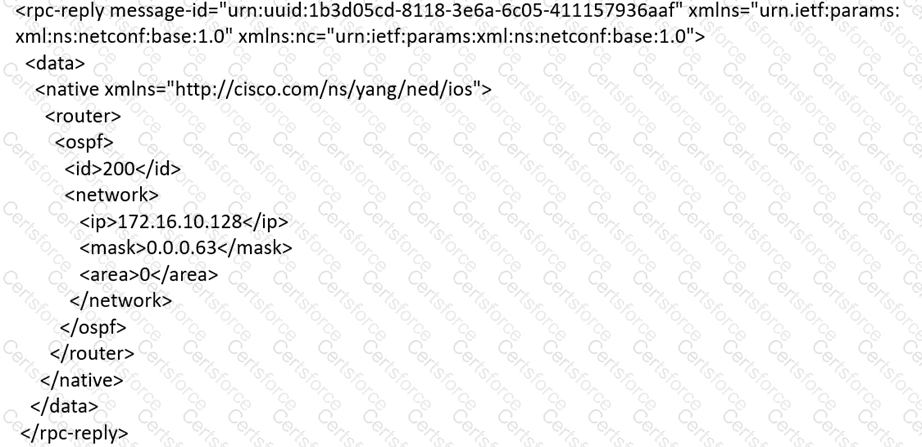
An engineer uses Postman and YANG to configure a router with:

    OSPF process ID 200

    network 172.16.10.128/26 enabled for Area 0

Which get-config reply verifies that the model set was designed correctly?
Options:

A.

300-420 Question 42 Option 1


B.

42


C.

42


D.

42


Expert Solution
Questions # 43:

How do IETF. OpenConfig and Cisco nativo YANG models differ when used to configuro the same feature on an infrastructure device?
Options:

A.

OpenConfig models are more comprehensive than IETF.


B.

Cisco native models are less comprehensive than OpenConfig.


C.

Cisco native models are less comprehensive than IETF.


D.

IETF models are more comprehensive than OpenConfig.


Expert Solution
Questions # 44:

Question # 44

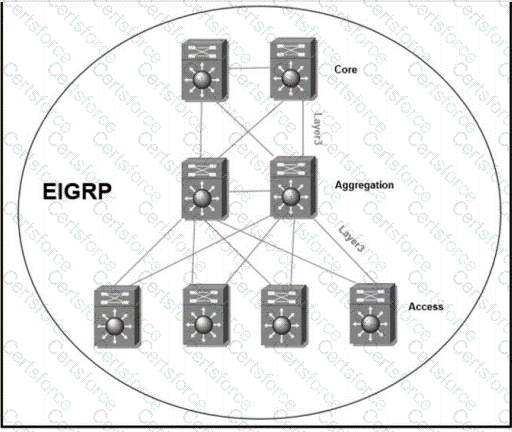
Refer to the exhibit. The full EIGRP routing table is advertised throughout the network. Currently, users experience data loss when any one link in the network fails. An architect optimizes the network to reduce the impact when a link fails. Which solution should the architect include in the design?

Options:

A.

Run BFD on the inter links between EIGRP neighbors.


B.

Summarize the access layer networks from each access layer switch toward the aggregation layer.


C.

Reduce the default EIGRP hello interval and hold time.


D.

Summarize the access layer networks from the aggregation layer toward the core layer.


Expert Solution
Questions # 45:

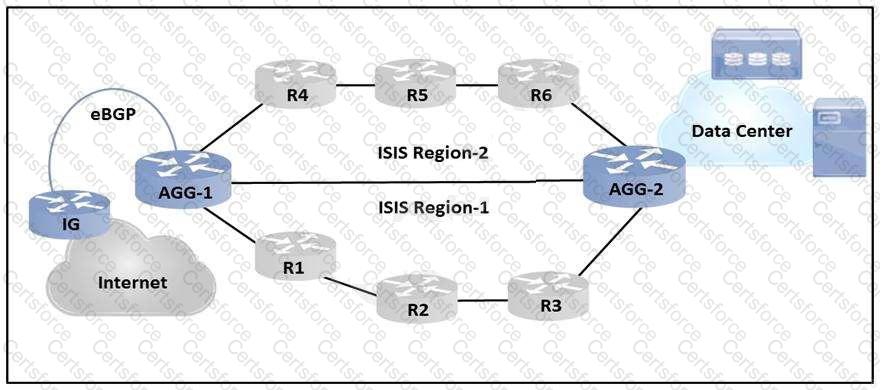
Refer to the exhibit.

Question # 45

An architect must design an IGP solution for an enterprise customer. The design must support:

Physical link flaps should have minimal impact.

Access routers should converge quickly after a link failure.

Which two ISIS solutions should the architect include in the design? (Choose two.)

Options:

A.

Use BGP to IS-IS redistribution to advertise all Internet routes in the Level 1 area.


B.

Advertise the IS-IS interface and loopback IP address toward the Internet and data center.


C.

Reduce SPF and PRC intervals to improve convergence time.


D.

Configure all access and aggregate routers to establish Level 1 / Level 2 adjacencies across the network.


E.

Configure access routers to establish a Level 1 adjacency and aggregate routers to establish a Level 1 /

Level 2 adjacency.


Expert Solution
Questions # 46:

An engineer working for a service provider with an employee ID 4598.48.606 prepared several designs for a traditional campus network. The design must allow the deployment on the same VXLAN to any switch at the access layer and must support:

    Fast convergence

    High availability

    Resilience

Which design must be selected?
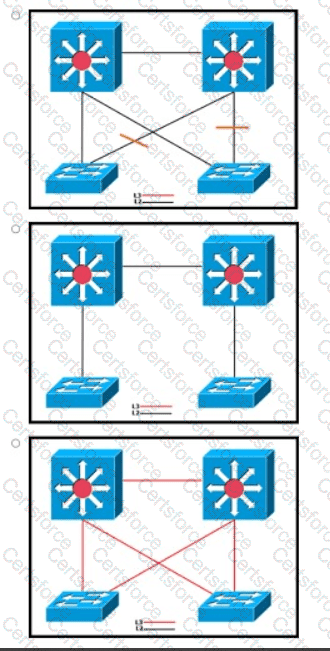
Question # 46

Question # 46

Options:

A.

Option A


B.

Option B


C.

Option C


D.

Option D


Expert Solution
Questions # 47:

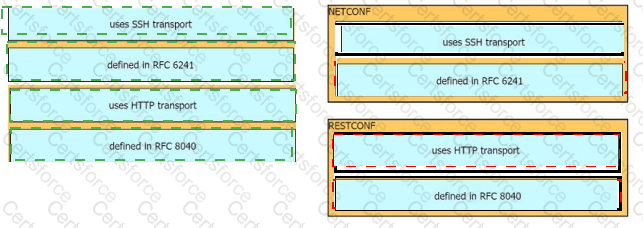
Drag and drop the characteristics from the left onto the configuration protocols they describe on the right.
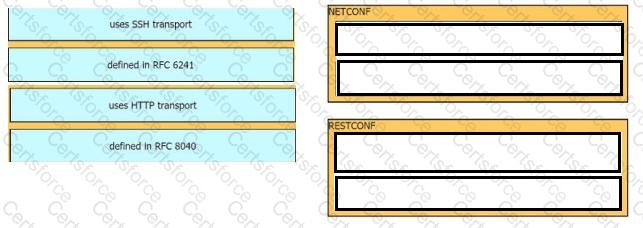
Question # 47


Expert Solution
Questions # 48:

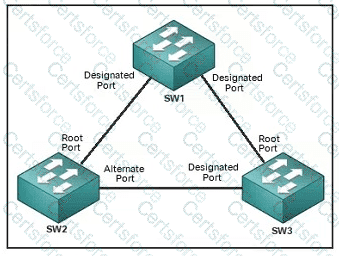
Question # 48

Refer to the exhibit. The connection between SW2 and SW3 is fiber and occasionally experiences unidirectional link failure. An architect must optimize the network to reduce the change of layer2 forwarding loops when the link fails. Which solution should the architect include?

Options:

A.

Utilize 8PDU filter on SW3.


B.

Utilize loop guard on SW2


C.

Utilize BPDU guard on SW1


D.

Utilize root guard on SW1.


Expert Solution
Questions # 49:

A large chain of stores currently uses MPLS-based T1 lines to connect their stores to their data center. An architect must design a new solution to improve availability and reduce costs while keeping these considerations in mind:

» The company uses multicast to deliver training to the stores.

» The company uses dynamic routing protocols and has implemented QoS.

» To simplify deployments, tunnels should be created dynamically on the hub when additional stores open.

Which solution should be included in this design?

Options:

A.

VPLS


B.

GET VPN


C.

DMVPN


D.

IPsec


Expert Solution
Questions # 50:

Which feature must be incorporated into the campus LAN design to enable Wake on LAN?
Options:

A.

dynamic ARP Inspection Snooping on layer 2 devices


B.

directed broadcasts on layer 3 devices


C.

proxy ARP on layer 3 devices


D.

DHCP Snooping on layer 2 devices


Expert Solution
Viewing page 5 out of 12 pages
Viewing questions 41-50 out of questions