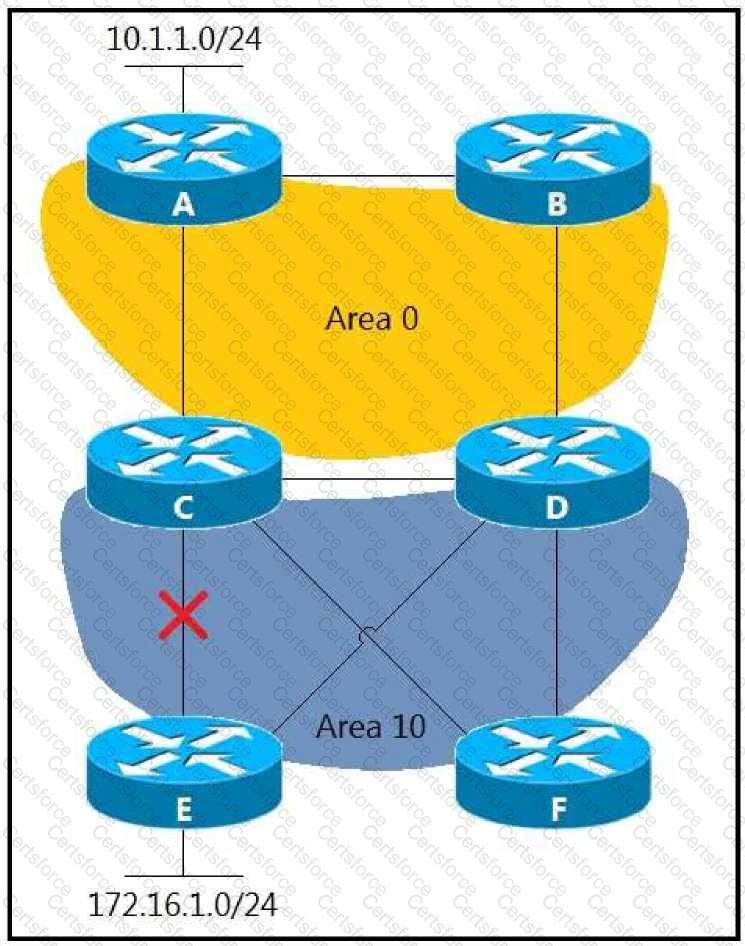
Refer to the exhibit. Area 10 is a regular OSPF area and networks 10.1.1.0/24 and 172.16.1.0/24 are internal. Which design provides optimal routing between both networks when the link between routers C and E fails?
A.
Move the link between routers C and D to area 10.
B.
Create an OSPF virtual link between routers E and F.
C.
Create a tunnel between routers E and F in area 10.
Moving the link between routers C and D into area 10 provides the most direct OSPF design correction for optimal routing between the internal networks after the C-E link fails. OSPF requires careful area design because intra-area routes are preferred over interarea routes, and traffic between two routers in the same regular area should not be forced through a less optimal backbone or interarea path when a better local path exists. If the C-D link remains outside area 10, the failure of C-E can cause traffic between 10.1.1.0/24 and 172.16.1.0/24 to take a suboptimal interarea route. Placing the C-D link in area 10 keeps the alternate path within the same area and allows OSPF to calculate the best intra-area route when the primary link fails. A virtual link is used to connect a disconnected area to area 0, not to optimize this intra-area failure case. A tunnel adds unnecessary overlay complexity, and making area 10 NSSA changes external LSA behavior, not internal path optimization. Reference topics: OSPF area design, intra-area preference, failure-path optimization, link placement.
Contribute your Thoughts:
Chosen Answer:
This is a voting comment (?). You can switch to a simple comment. It is better to Upvote an existing comment if you don't have anything to add.


Submit