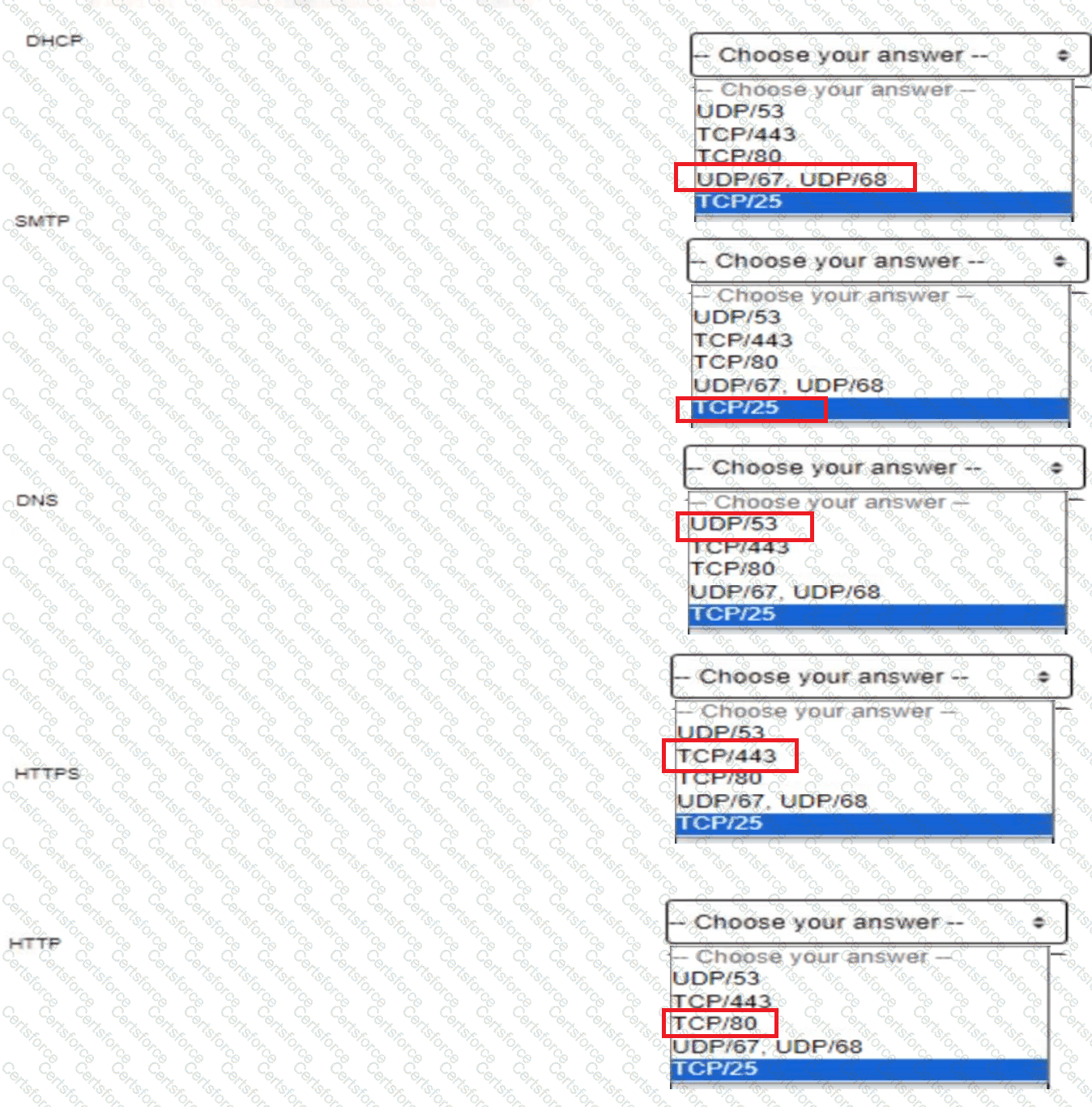
Comprehensive Technical Explanation:
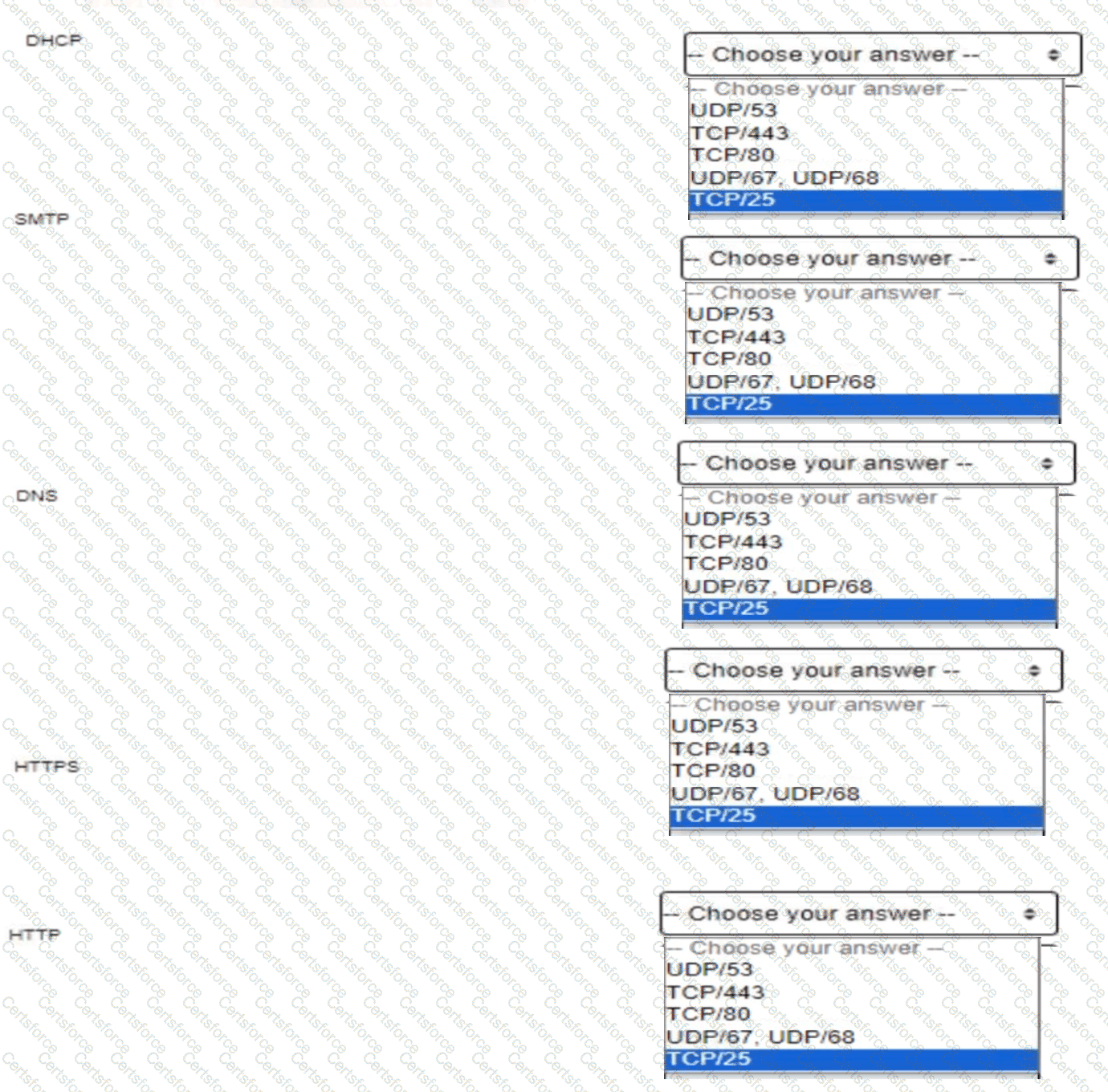
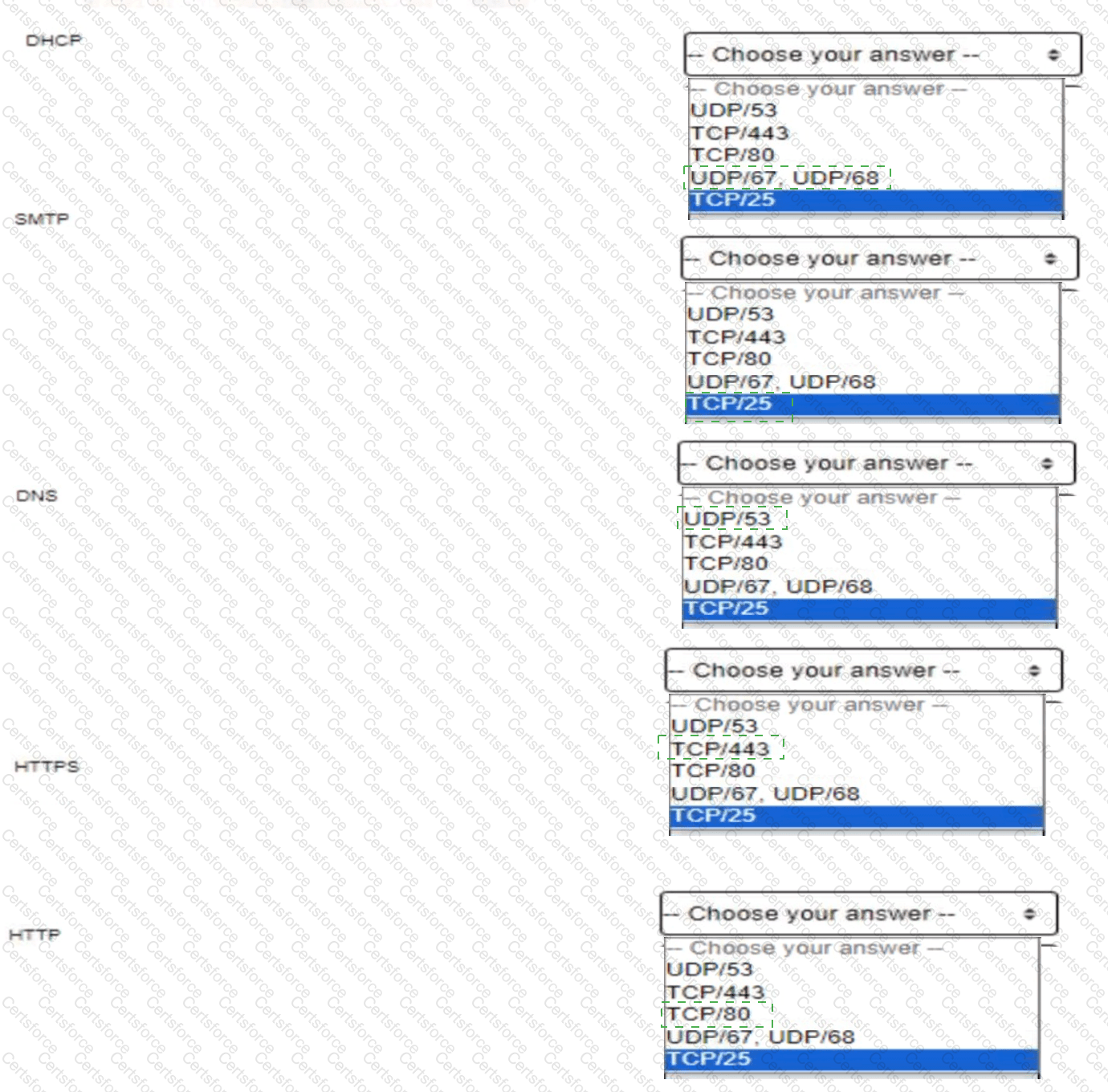
Standard TCP/IP network application protocols rely on well-known transport layer ports standardized by IANA and recognized throughout Fireware policies. Dynamic Host Configuration Protocol (DHCP) operates over User Datagram Protocol (UDP), utilizing UDP destination port 67 on the server/relay agent and UDP destination port 68 on client endpoints to negotiate dynamic address configurations without prior layer-3 identity. Simple Mail Transfer Protocol (SMTP) employs Transmission Control Protocol (TCP) port 25 for reliable, connection-oriented message delivery between mail transfer agents (MTAs). The Domain Name System (DNS) resolves human-readable names to network addresses primarily via UDP port 53 for lightweight transactional lookups, utilizing TCP port 53 for transactions exceeding standard packet sizing limits or zone transfers. Hypertext Transfer Protocol (HTTP) serves unencrypted web communication over cleartext TCP port 80. In contrast, Hypertext Transfer Protocol Secure (HTTPS) secures transport data by layering TLS encryption over TCP port 443. In Fireware, these ports correspond directly with built-in policy templates and packet filters (e.g., DNS, HTTP, HTTPS, and DHCP-client/server definitions), ensuring accurate traffic inspection and enforcement boundaries across physical and virtual interfaces.
[Reference: WatchGuard Network Security Essentials — Network and Network Security Basics: Common Protocols, Standard Ports, and Fireware Policy Templates., ――――――――――――――――――――――――――――――――――――――――――――――――――――――――――]


Submit