
An engineer configured a router with this configuration
ip access-hst DENY TELNET
10 deny tcp any any eq 23 log-input
The router console starts receiving log message :%SEC-6-IPACCESSLOGP: list DENY_TELNET denied tcp 192.168.1.10(1022)(FastEthernet1/0 D508.89gb.003f) - > 192.168.2.20(23), 1 packet "
Which action stops messages on the console while still denying Telnet?
Which two solutions are used to overcome a flapping link that causes a frequent label binding
exchange between MPLS routers? (Choose two)
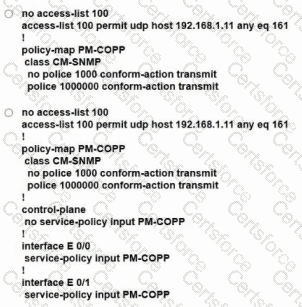
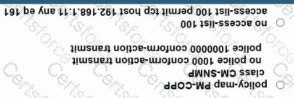
The network administrator configured CoPP so that all SNMP traffic from Cisco Prime located at 192.168.1.11 toward the router CPU is limited to 1000 kbps. Any traffic that exceeds this limit must be dropped.
access-list 100 permit udp any any eq 161
class-map CM-SNMP
match access-group 100
policy-map PM-COPP
class CM-SNMP
police 1000 conform-action transmit
!
control-plane
service-policy input PM-COPP
The network administrator is not getting the desired result for the SNMP traffic and SNMP traffic is getting dropped frequently. Which set of configurations resolves the issue?
configuration on the hub router meets this requirement?
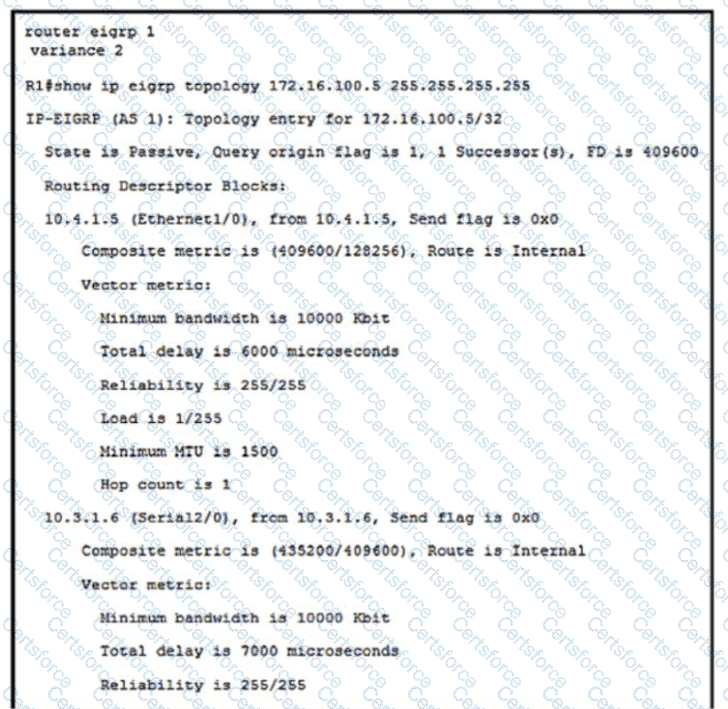
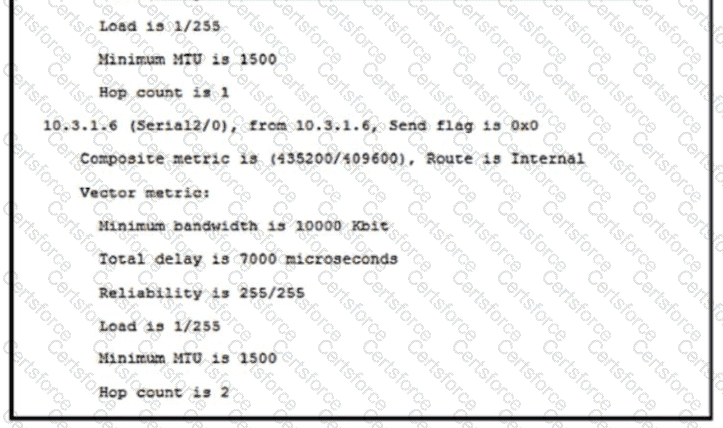
Refer to the exhibit. A network engineer troubleshooting a packet drop problem for the host 172.16.100.5 notices that only one link is used and installed on the routing table, which saturates the bandwidth. Which action must the engineer take to resolve the high bandwidth utilization problem and share the traffic toward this host between the two available links?
Refer to the exhibit.
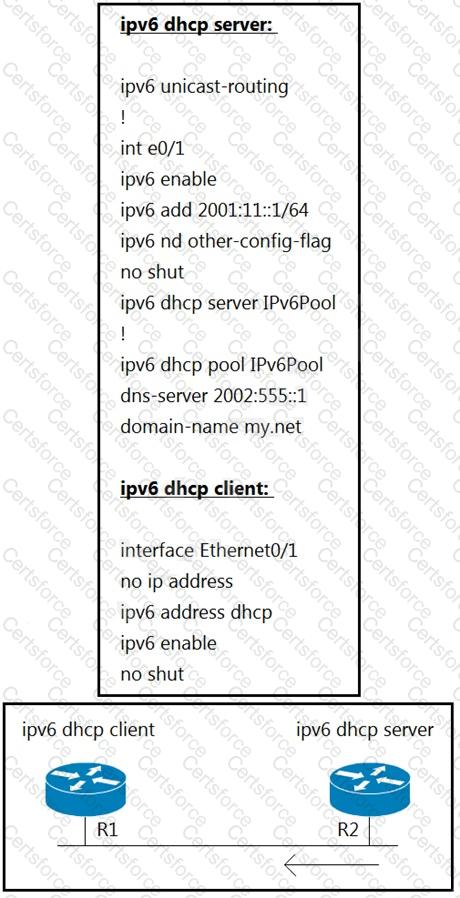
A network administrator is troubleshooting IPv6 address assignment for a DHCP client that is not getting an IPv6 address from the server.
Which configuration retrieves the client IPv6 address from the DHCP server?
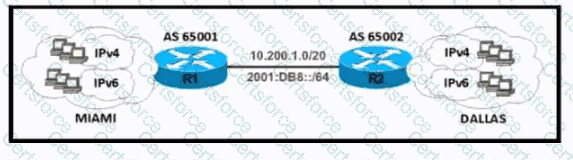
Refer to the exhibit. A network engineer configured routers R1 and R2 with MP-BGP. The engineer noticed that the routers cannot exchange any IPv6 routes, however, the IPv4 neighbor relationship is working fine. Which configuration must the engineer apply to router R2 to exchange IPv6 routes?
A customer is running an mGRE DMVPN tunnel over WAN infrastructure between hub and spoke sites. The existing configuration allows NHRP to add spoke routers automatically to the multicast NHRP mappings. The customer is migrated the network from IPv4 to the IPv6 addressing scheme for those spokes’ routers that support IPv6 and can run DMVPN tunnel over the IPv6 network. Which configuration must be applied to support IPv4 and IPv6 DMVPN tunnel on spoke routers?
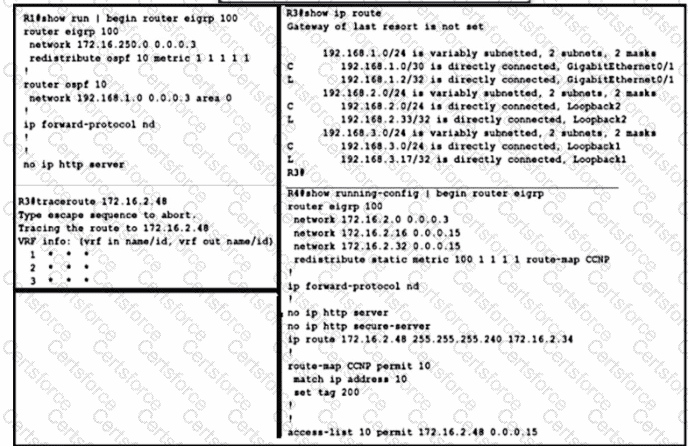
Refer to the exhibit. An engineer must troubleshoot a connectivity issue impacting the redistribution of the subnet 172.16.2.48/28 into the OSPF domain. Which configuration on router R1 advertises this subnet into the OSPF domain?
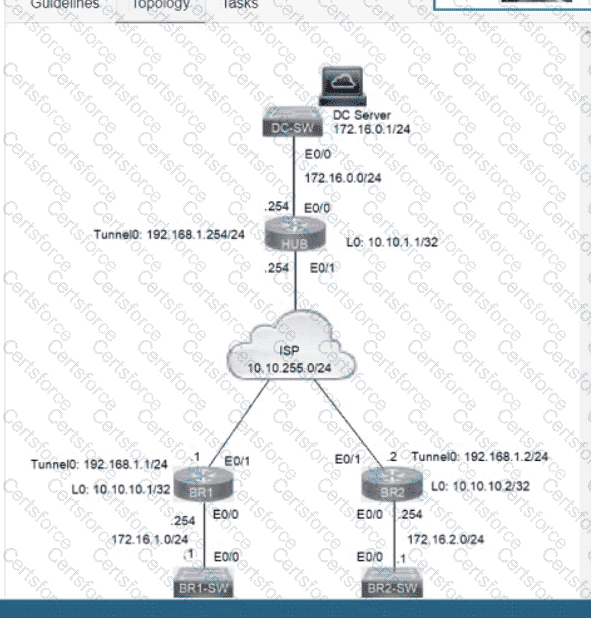
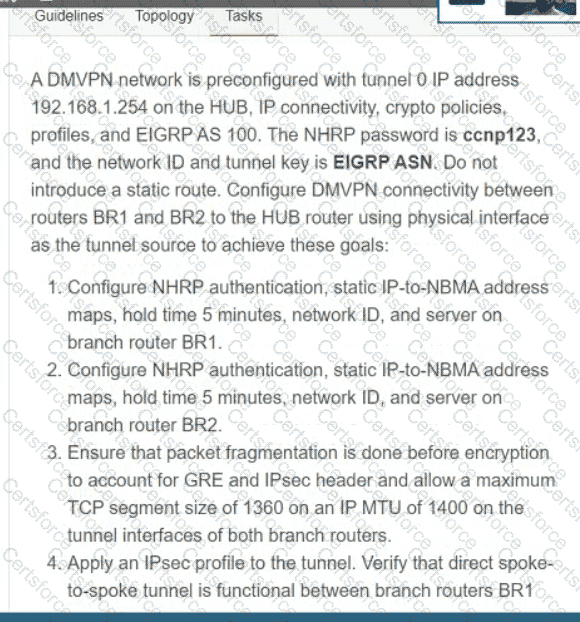
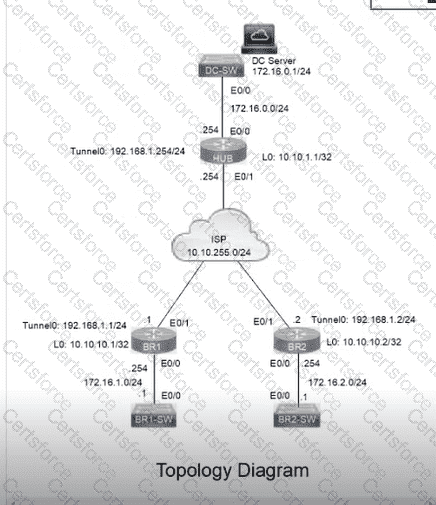
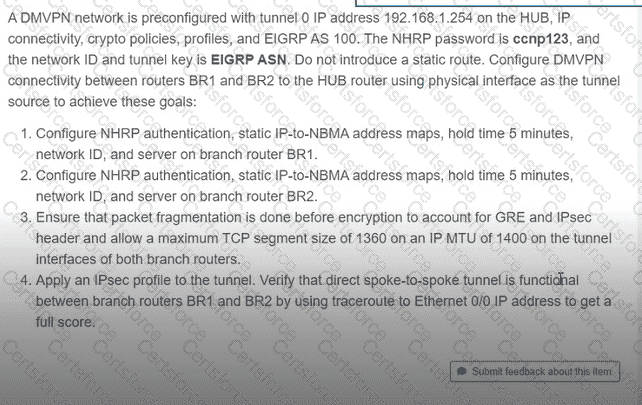
A DMVPN network is preconfigured with tunnel 0 IP address 192.168.1.254 on the HUB, IP connectivity, crypto policies, profiles, and EIGRP AS 100. The NHRP password is ccnp123, and the network ID and tunnel key is EIGRP ASN Do not introduce a static route. Configure DMVPN connectivity between routers BR1 and BR2 to the HUB router using physical interface as the tunnel source to achieve these goals:
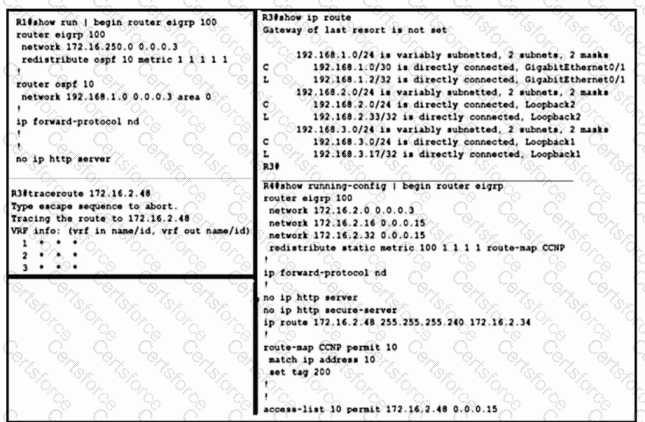
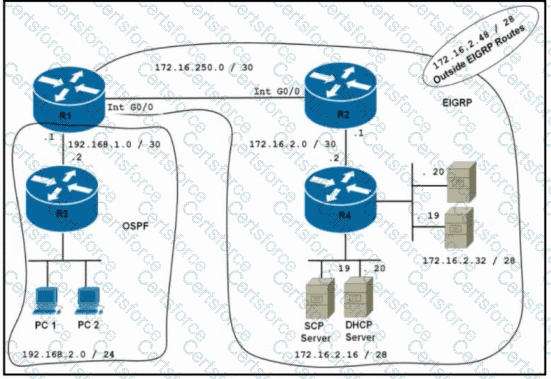
Refer to the exhibit. An engineer must troubleshoot a connectivity issue impacting the redistribution of the subnet 172.16.2.48/28 into the OSPF domain. Which configuration on router R1 advertises this subnet into OSPF?
Which method provides failure detection in BFD?
Refer to the exhibit.
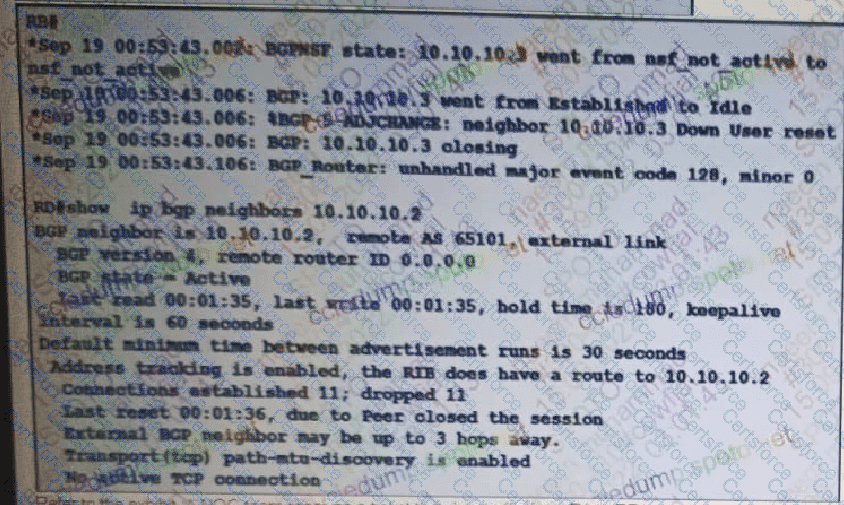
A NOC team receives a ticket that data traffic from RA to RF is not forwarded when the link between the RC-RE path goes down. All routers learn loopback IP through the IGP protocol. Which configuration resolves?
Refer to the exhibit.
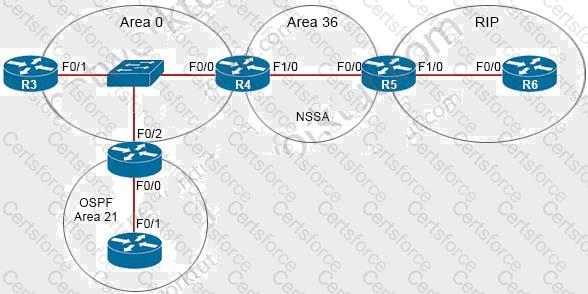
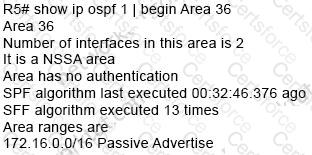
The network engineer configured the summarization of the RIP routes into the OSPF domain on R5 but
still sees four different 172.16.0.0/24 networks on R4. Which action resolves the issue?
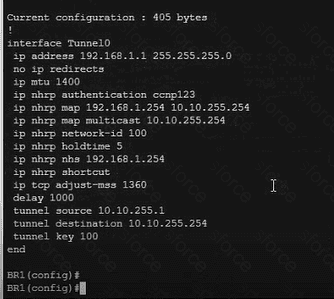 A computer screen shot of a black screen AI-generated content may be incorrect.
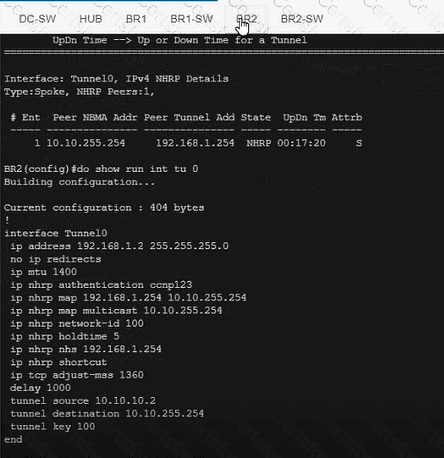 A screenshot of a computer AI-generated content may be incorrect.
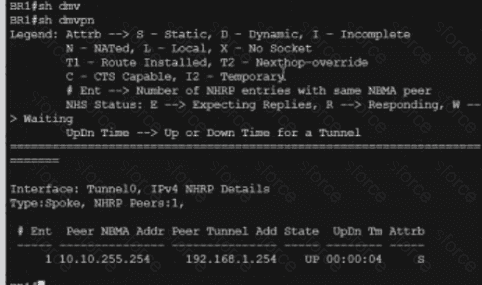 A computer screen with white text AI-generated content may be incorrect.
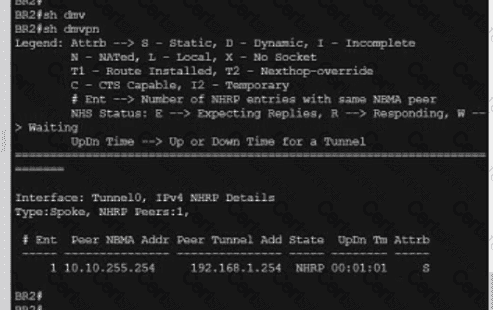 A computer screen with white text AI-generated content may be incorrect.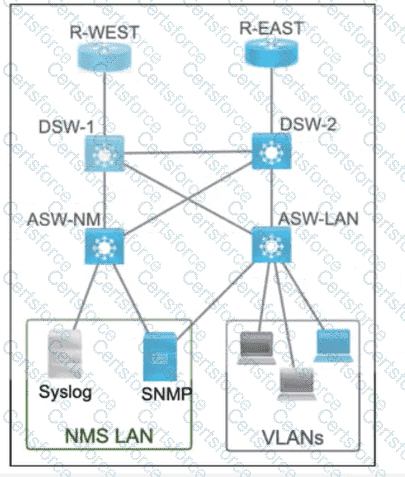
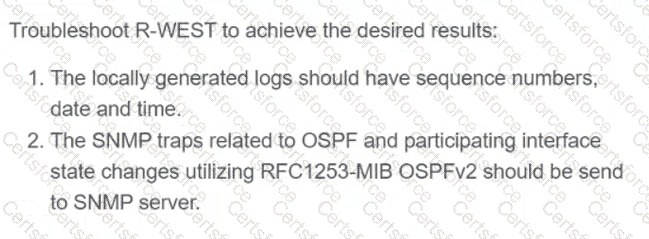
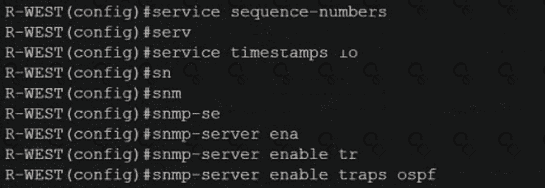 A screen shot of a computer AI-generated content may be incorrect.
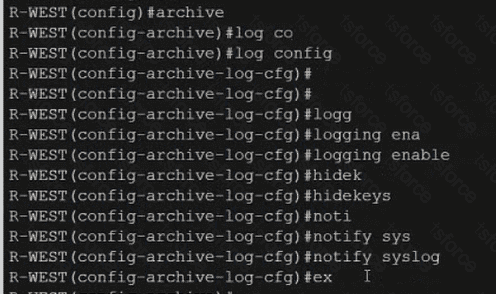 A screen shot of a computer AI-generated content may be incorrect.


