Spring Sale Limited Time 70% Discount Offer - Ends in 0d 00h 00m 00s - Coupon code: simple70

Pass the Cisco CyberOps Professional 300-215 Questions and answers with CertsForce

Viewing page 2 out of 4 pages
Viewing questions 11-20 out of questions
Questions # 11:

Rotor to the exhibit.
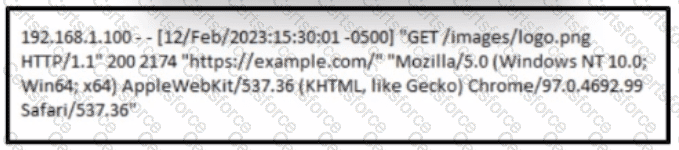
Question # 11

A cybersecurity analyst must analyst the logs from an Apache server for the client. The concern is that an offboarded employee home IP address was potentially used to access the company web server via a still active VPN connection Based on this log entry, what should an analyst conclude?

Options:

A.

An ex employee planted malware on the server


B.

A file was downloaded from the server


C.

A worker uploaded a file to the server


D.

An employee has accessed a web page on the server


Expert Solution
Questions # 12:

Which tool is used for reverse engineering malware?

Options:

A.

Ghidra


B.

SNORT


C.

Wireshark


D.

NMAP


Expert Solution
Questions # 13:

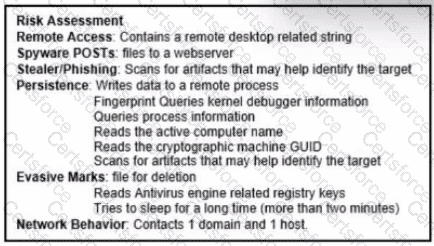
Refer to the exhibit.

Question # 13

The application x-dosexec with hash 691c65e4fb1d19f82465df1d34ad51aaeceba14a78167262dc7b2840a6a6aa87 is reported as malicious and labeled as "Trojan.Generic" by the threat intelligence tool. What is considered an indicator of compromise?

Options:

A.

modified registry


B.

hooking


C.

process injection


D.

data compression


Expert Solution
Questions # 14:

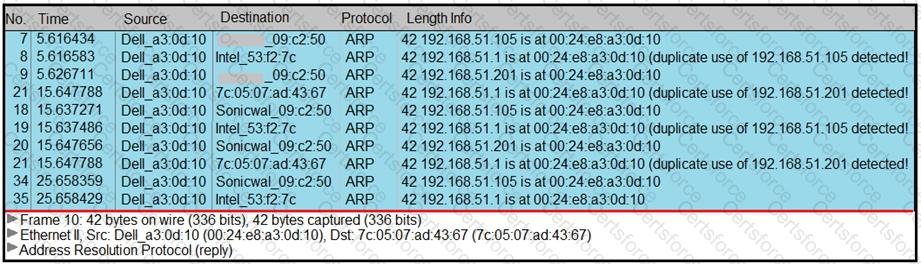
Refer to the exhibit.

Question # 14

A security analyst notices unusual connections while monitoring traffic. What is the attack vector, and which action should be taken to prevent this type of event?

Options:

A.

DNS spoofing; encrypt communication protocols


B.

SYN flooding; block malicious packets


C.

ARP spoofing; configure port security


D.

MAC flooding; assign static entries


Expert Solution
Questions # 15:

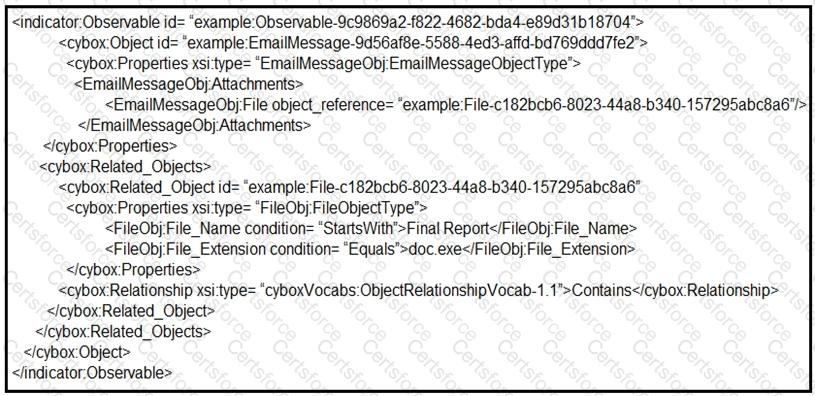
Refer to the exhibit.

Question # 15

Which determination should be made by a security analyst?

Options:

A.

An email was sent with an attachment named “Grades.doc.exe”.


B.

An email was sent with an attachment named “Grades.doc”.


C.

An email was sent with an attachment named “Final Report.doc”.


D.

An email was sent with an attachment named “Final Report.doc.exe”.


Expert Solution
Questions # 16:

A security team is discussing lessons learned and suggesting process changes after a security breach incident. During the incident, members of the security team failed to report the abnormal system activity due to a high project workload. Additionally, when the incident was identified, the response took six hours due to management being unavailable to provide the approvals needed. Which two steps will prevent these issues from occurring in the future? (Choose two.)

Options:

A.

Introduce a priority rating for incident response workloads.


B.

Provide phishing awareness training for the full security team.


C.

Conduct a risk audit of the incident response workflow.


D.

Create an executive team delegation plan.


E.

Automate security alert timeframes with escalation triggers.


Expert Solution
Questions # 17:

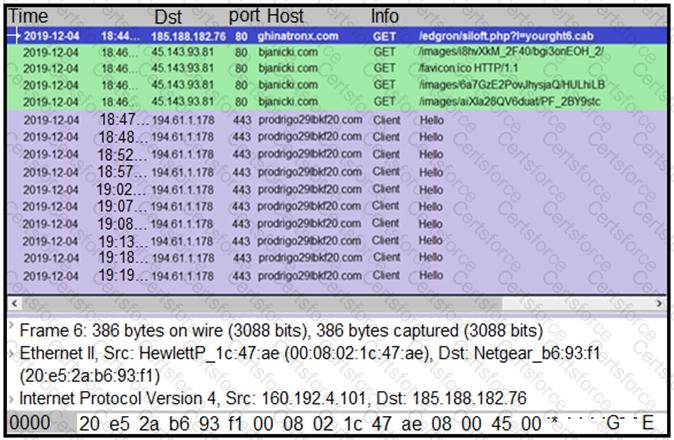
Refer to the exhibit.

Question # 17

A network engineer is analyzing a Wireshark file to determine the HTTP request that caused the initial Ursnif banking Trojan binary to download. Which filter did the engineer apply to sort the Wireshark traffic logs?

Options:

A.

http.request.un matches


B.

tls.handshake.type ==1


C.

tcp.port eq 25


D.

tcp.window_size ==0


Expert Solution
Questions # 18:

A threat intelligence report identifies an outbreak of a new ransomware strain spreading via phishing emails that contain malicious URLs. A compromised cloud service provider, XYZCloud, is managing the SMTP servers that are sending the phishing emails. A security analyst reviews the potential phishing emails and identifies that the email is coming from XYZCloud. The user has not clicked the embedded malicious URL. What is the next step that the security analyst should take to identify risk to the organization?

Options:

A.

Reset the reporting user's account and enable multifactor authentication.


B.

Create a detailed incident report and share it with top management.


C.

Find any other emails coming from the IP address ranges that are managed by XYZCloud.


D.

Delete email from user mailboxes and update the incident ticket with lessons learned.


Expert Solution
Questions # 19:

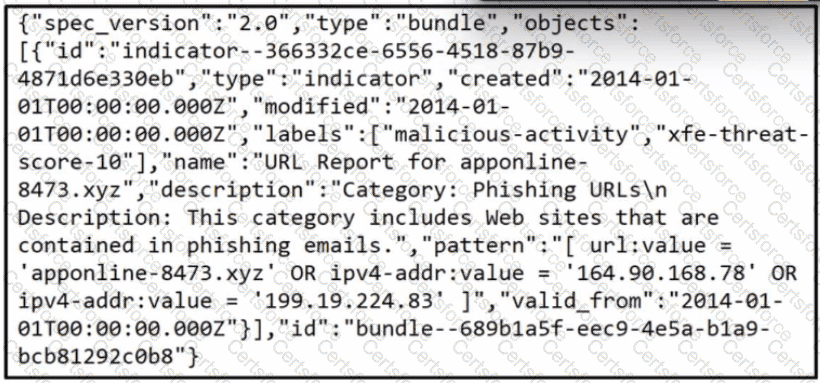
Refer to the exhibit.

Question # 19

Which two actions should be taken as a result of this information? (Choose two.)

Options:

A.

Block any URLs in received emails.


B.

Blacklist IPs 164.90.168.78 and 199.19.224.83.


C.

Block any access to and from domain apponline-8473.xyz.


D.

Block any malicious activity with xfe-threat-score-10.


E.

Block all emails sent from malicious domain apponline-8473.xyz.


Expert Solution
Questions # 20:

Refer to the exhibit.

Question # 20

What is occurring within the exhibit?

Options:

A.

Source 10.1.21.101 sends HTTP requests with the size of 302 kb.


B.

Host 209.141.51.196 redirects the client request from /Lk9tdZ to /files/1.bin.


C.

Host 209.141.51.196 redirects the client request to port 49723.


D.

Source 10.1.21.101 is communicating with 209.141.51.196 over an encrypted channel.


Expert Solution
Viewing page 2 out of 4 pages
Viewing questions 11-20 out of questions