Task 10
You need to configure VNET1 to log all events and met rics. The solution must ensure that you can query the events and metrics directly from the Azure portal by using KQL.
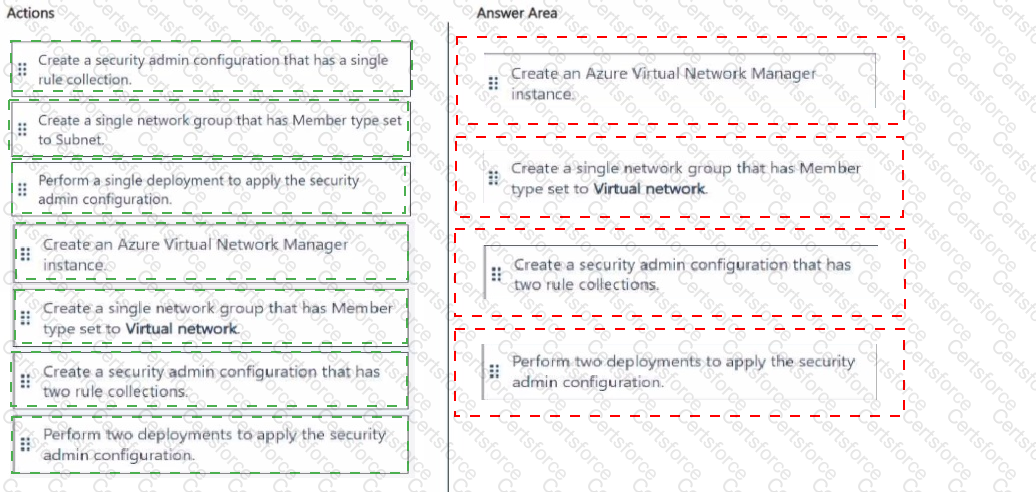
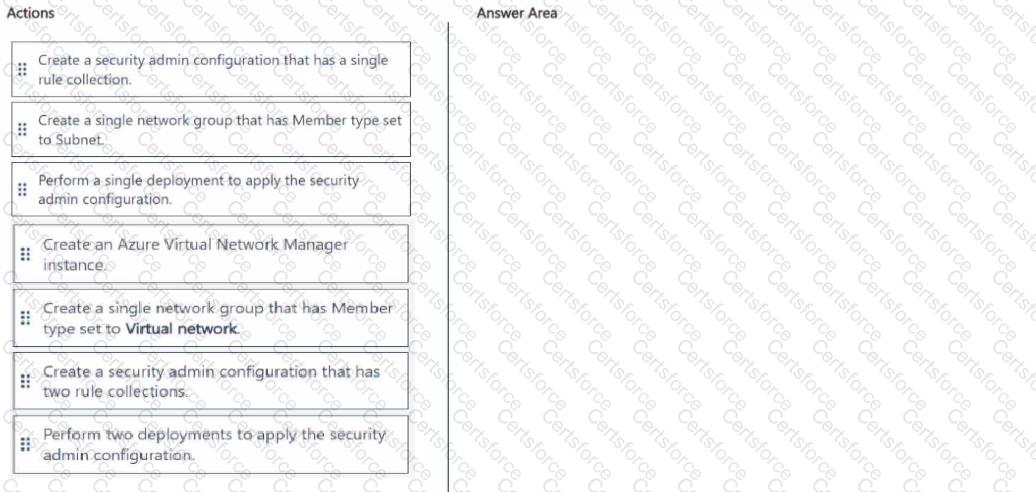
You need to deploy Azure Virtual Network Manager. The solution must support the planned changes and meet the connectivity requirements.
Which four actions should you perform in sequence? To answer, move the appropriate actions from the list of actions to the answer area and arrange them in the correct order.
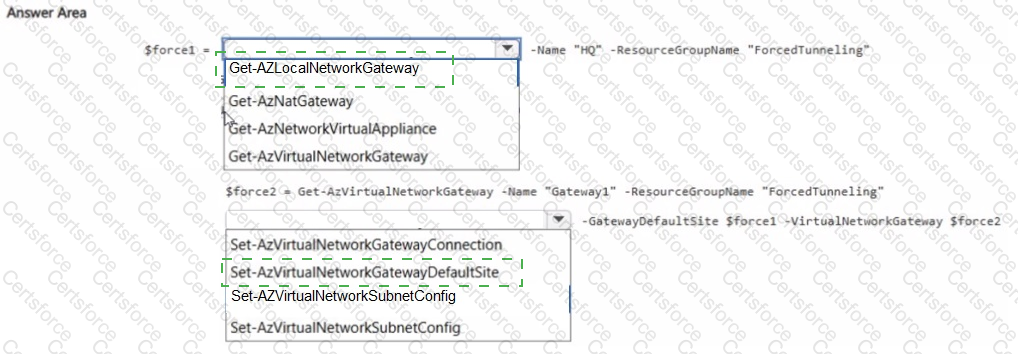
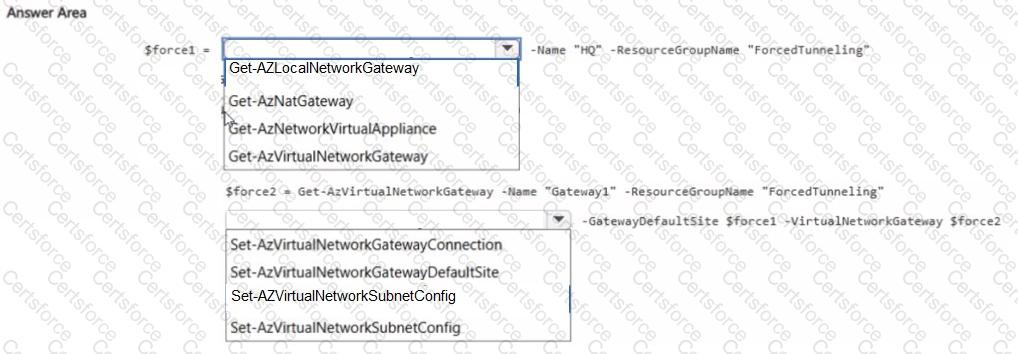
You have an Azure virtual network and an on-premises datacenter that connect by using a Site-to-Site VPN tunnel.
You need to ensure that all traffic from the virtual network to the internet is routed through the datacenter.
How should you complete the PowerShell script to configure forced tunneling? To answer, select the appropriate options in the answer area.
NOTE: Each correct selection is worth one point.
You have the network security groups (NSGs) shown in the following table.
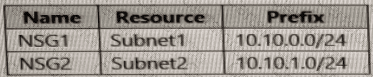
In NSG1, you create inbound rules as shown in the following table.
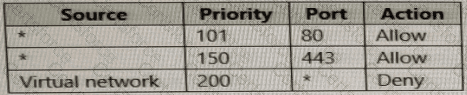
You have the Azure virtual machines shown in the following table.

NSG2 has only the default rules configured.
For each of the following statements, select Yes if the statement is true. Otherwise, select No.
NOTE: Each correct selection is worth one point.

You need to provide access to storage2. The solution must meet the PaaS networking requirements and the business requirements.
Which connectivity method should you use?
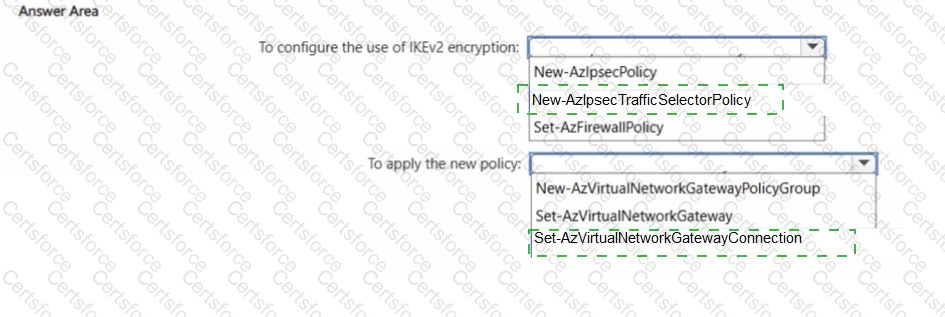
You have an on-premises VPN appliance named GW1.
You have an Azure subscription that contains an Azure VPN gateway named VPNGW1. VPNGW1 connects to GW1.
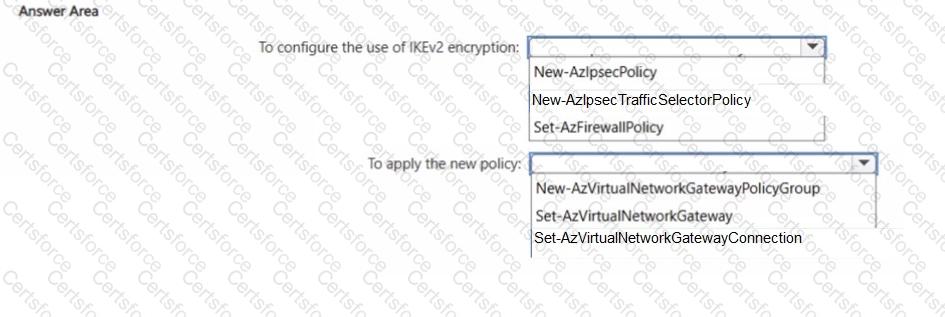
You need to modify the IKEv2 encryption algorithm used by VPNGW1 and GW1.
Which PowerShell cmdlet should you run? To answer, select the appropriate options in the answer area.
NOTE Each correct selection is worth one point.
Task 1
You plan to deploy a firewall to subnetl-2. The firewall will have an IP address of 10.1.2.4.
You need to ensure that traffic from subnetl-1 to the IP address range of 192.168.10.0/24 is routed through the firewall that will be deployed to subnetl-2. The solution must be achieved without using dynamic routing protocols.
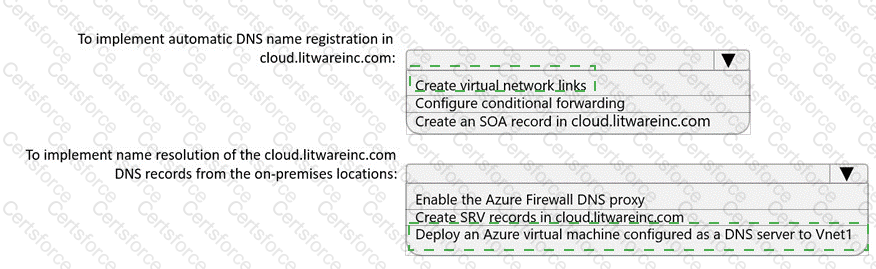
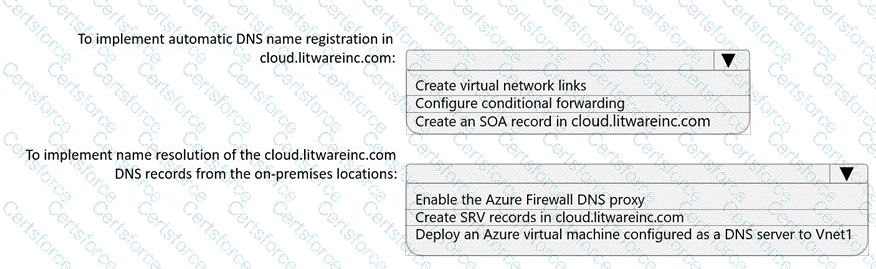
You need to i mplement name resolution for the cloud.liwareinc.com. The solution must meet the networking requirements.
What should you do? To answer, select the appropriate options in the answer area.
NOTE: Each correct selection is worth one point.
You need to provide connectivity to storage1. The solution must meet the PaaS networking requirements and the business requirements.
What should you include in the solution?
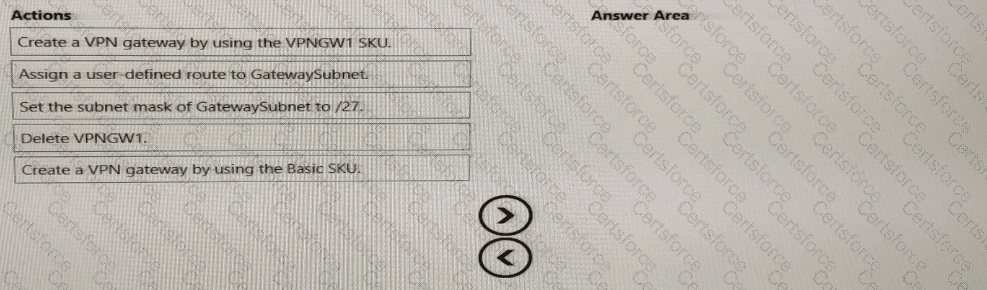
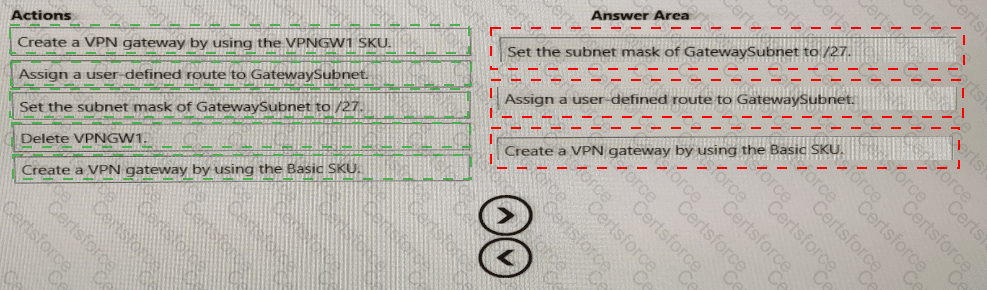
You need to prepare Vnet1 for the deployment of an ExpressRoute gateway. The solution must meet the hybrid connectivity requirements and the business requirements.
Which three actions should you perform in sequence for Vnet1? To answer, move the appropriate actions from the list of actions to the answer area and arrange them in the correct order.