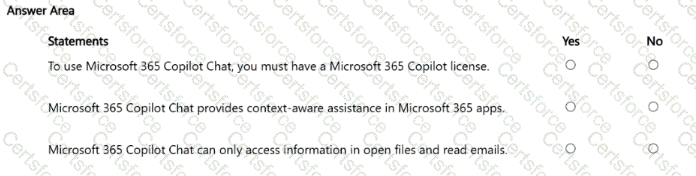
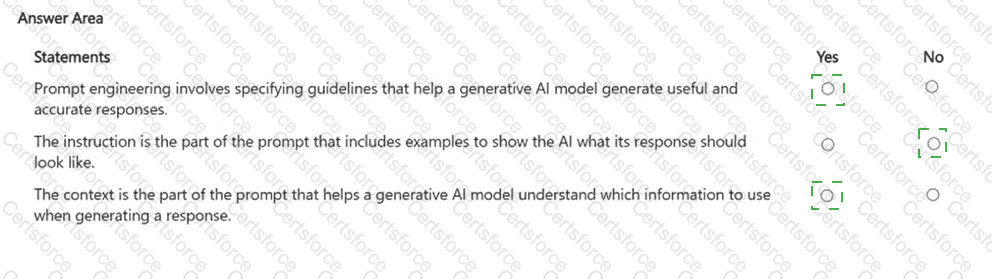
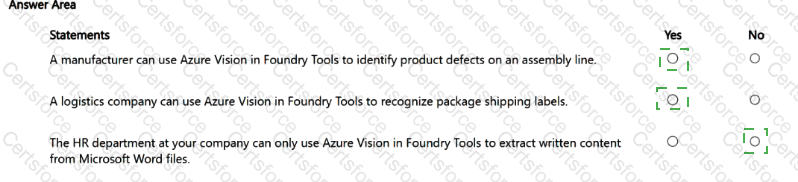
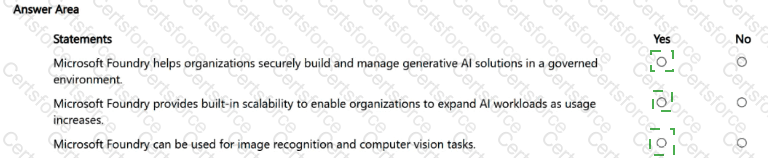
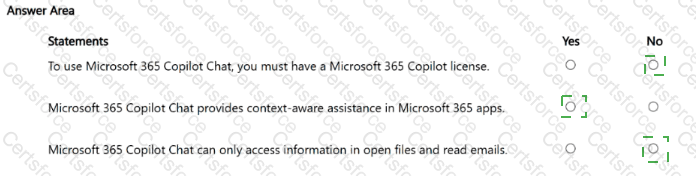
For each of the following statements, select Yes if the statement is true. Otherwise, select No.
Your company wants to ensure that AI solutions are used responsibly and align with company values and compliance requirements.
You need to establish governance principles for AI use.
Which two actions should you perform? Select the two BEST answers. Each correct answer presents a complete solution.
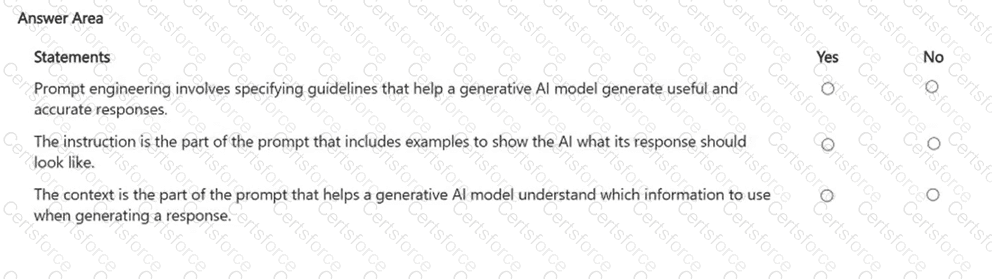
For each of the following statements, select Yes if the statement is true. Otherwise, select No. NOTE: Each correct selection is worth one point.
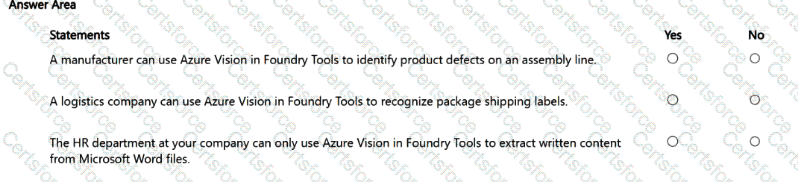
For each of the following statements, select Yes if the statement is true. Otherwise, select No. NOTE: Each correct selection is worth one point.
You plan to meet with a group of stakeholders to discuss how generative AI can benefit your company. You need to provide the stakeholders with a relevant description of generative AI during the meeting. Which description should you use?
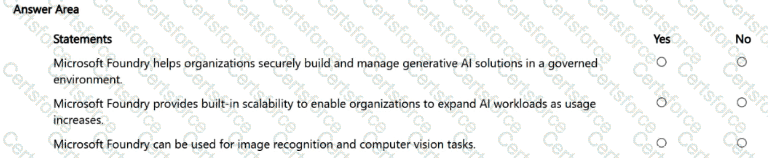
- For each of the following statements, select Yes if the statement is true. Otherwise, select No. NOTE: Each correct selection is worth one point.