
A previously well 2-year-old girl is brought to the Emergency Department with difficulty breathing that has been gradually worsening over the last 24 hours. Her parents say she has a sore throat. On examination, you note that she appears ill. She has stridor and is in moderate respiratory distress, drooling and emitting a muffled voice. Vital signs are as follows: respiratory rate 34/min, heart rate 160/min, temperature 40.2°C.
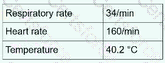
Which one of the following is the most likely diagnosis?
A 15-year-old boy is brought to the office by his father because he is having headaches. When alone, the boy appears withdrawn and admits to suicidal ideation. He shares that he is gay but does not want to tell his parents. He says that he faked the headaches so that one of his parents would make an appointment for him. Which one of the following is the best next step?
A 34-year-old man presents to your office with a 2-week history of headaches and double vision when he looks to the right. On physical examination, you note that he is unable to gaze laterally with his right eye. Which one of the following cranial nerves is most likely affected?
A 6-year-old girl is found to have a blood pressure of 130/75 mm Hg. She was born prematurely at 32 weeks ' gestation and required ventilation. There is a family history of hypertension in 3 grandparents. Clinical examination reveals a grade 1/6 mid-systolic murmur, no renal bruits, and femoral pulses are difficult to feel. Which one of the following is the most likely diagnosis?
A 31-year-old nulligravid woman presents to your office after 5 months of attempting to get pregnant without success. Her menses are regular, and she is otherwise healthy. Her husband is healthy and has never fathered any children before. Which one of the following is the best next step?
A 4-month-old girl is brought by a parent to your clinic with a history of recurrent vomiting since birth. She cries with feeding and has not gained weight in the last 2 weeks. Her hemoglobin level is 95 g/L (100–125). The patient is currently being fed thickened hypoallergenic formula. Which one of the following is the most appropriate therapy?
A 78-year-old man presents to the office with urinary hesitancy, straining to void his bladder, and a sensation of incomplete bladder emptying. On history, he has a BMI of 36 and type 2 diabetes. Which one of the following medications would most likely help the patient’s symptoms?
A 32-year-old man presents to the clinic for assessment of a dog bite sustained 3 days ago while traveling in another country. He recalls having seen the dog eat where he was staying, and the animal did not appear well. On examination, the patient has 2 distinct deep puncture wounds on his left leg. There is an erythematous border but no exudate. He is unsure of his immunization status. Which one of the following is the most appropriate management?
A 56-year-old woman is admitted to hospital with gastrointestinal bleeding. Her hemoglobin level is low and the physician who saw her in the Emergency Department has recommended a blood transfusion. You attend her on the unit and tell her that a blood transfusion will help her feel better. Which one of the following is the best next step?
A 39-year-old woman, gravida 2, para 1, aborta 0, presents with concerns that a friend has recently suffered from postpartum psychosis. She wonders if she is likely to suffer this disorder following delivery of her 2nd child. Which one of the following is most likely to increase your patient ' s risk?
