
An organization is reporting slow performance accessing their Intranet website. All employees use a single Proxy Server with a public IP.
What should the BIG-IP Administrator do to fix this issue?
The BIG-IP Administrator is investigating whether better TCP performance is possible for a virtual server.
Which built-in profile should be tried first? (Choose one answer)
Users are unable to reach an application. The Virtual Server shows a red diamond status in the Configuration Utility.
What is the cause?
A Standard Virtual Server for a web application is configured with Automap for Source Address Translation. The original client IP must be known by backend servers.
What should the BIG-IP Administrator configure?
Which persistence profile would be the most appropriate to ensure an HTTP web request connects to the same pool member? (Choose one answer)
A BIG-IP Administrator finds the following log entry: tmm tmm[714]: 011e0002:4: sweeper_update: aggressive mode activated. Which action should the BIG-IP administrator take to mitigate this memory issue?
A set of servers is used for an FTP application as well as an HTTP website via separate BIG-IP Pools. The server support team reports that some servers are receiving a lot more traffic than others. Which Load Balancing Method should the BIG-IP Administrator apply to even out the connection count?
A BIG-IP Administrator creates a new Virtual Server. The end user is unable to access the page. During troubleshooting, the administrator learns that the connection between the BIG-IP system and server is NOT set up correctly. What should the administrator do to solve this issue? (Choose one answer)
All pool members are online and all other settings are default.
What might alter the load balancing behavior?
Refer to the exhibit.
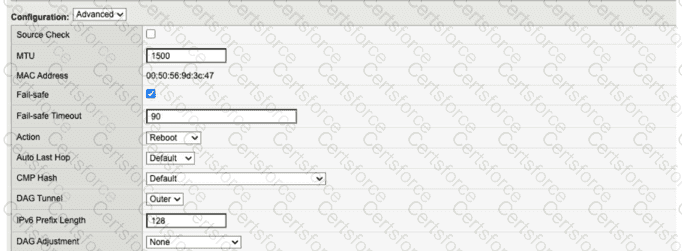
A BIG-IP Administrator configures a new VLAN on an HA pair of devices that does NOT yet have any traffic. This action causes the assigned traffic group to fail over to the standby device. Which VLAN setting should be changed to prevent this issue?
