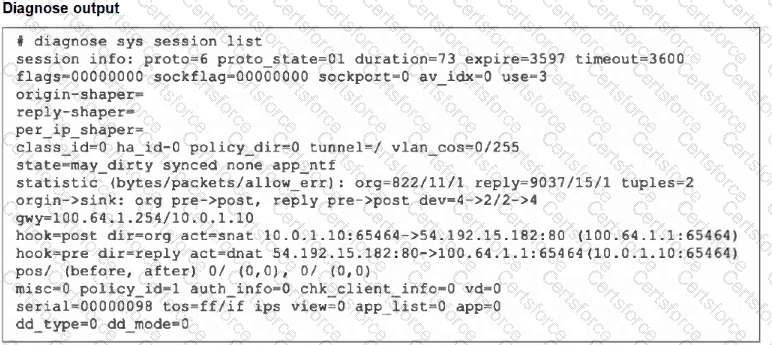
Refer to the exhibit, which shows the output of diagnose sys session list.
If the HA ID for the primary device is 0, what happens if the primary fails and the secondary becomes the primary?
A.
The secondary device has this session synchronized; however, because application control is applied, the session is marked dirty and has to be re-evaluated after failover.
B.
Traffic for this session continues to be permitted on the new primary device after failover, without requiring the client to restart the session with the server.
C.
The session will be removed from the session table of the secondary device because of the presence of allowed error packets, which will force the client to restart the session with the server.
D.
The session state is preserved but the kernel will need to re-evaluate the session because NAT was applied.
Chosen Answer:
This is a voting comment (?). You can switch to a simple comment. It is better to Upvote an existing comment if you don't have anything to add.


Submit