
Laura, a customer, has instructed you to configure her home office wireless access point.
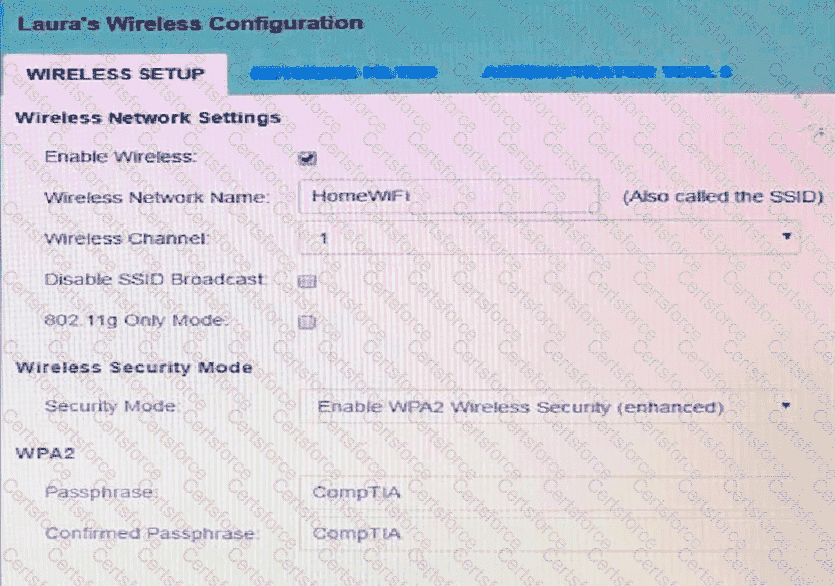
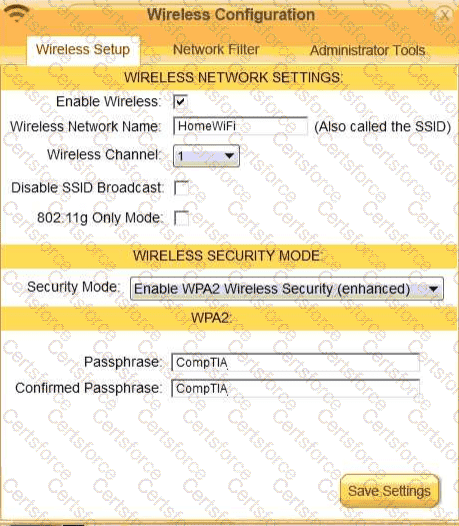
She plans to use the wireless network for finances and has requested that the network be setup with the highest encryption possible.
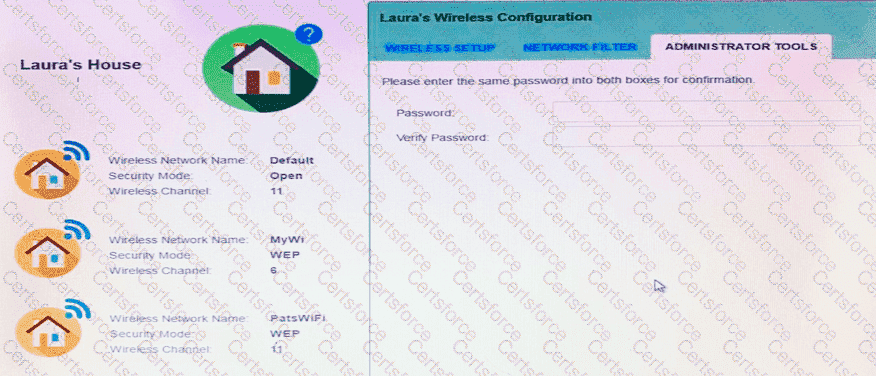
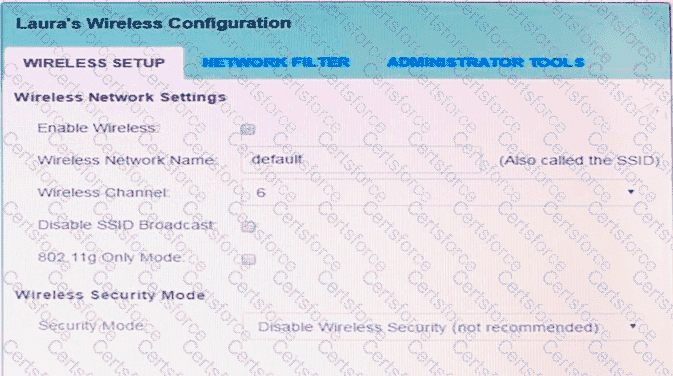
Additionally, Laura knows that her neighbors have wireless networks and wants to ensure that her network is not being interfered with by the other networks.
She requests that the default settings be changed to the following.
Wireless Name: HomeWiFi
Shared Key: CompTIA
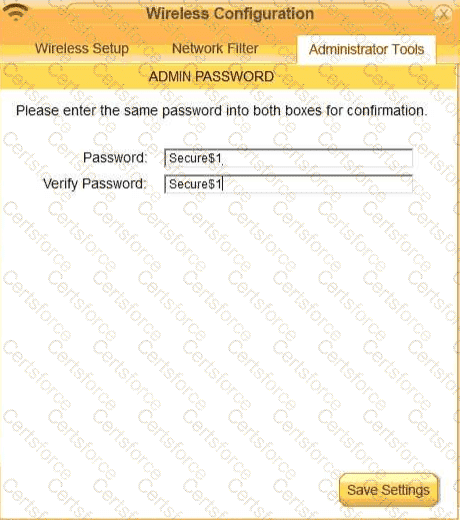
Router Password: Secure$1
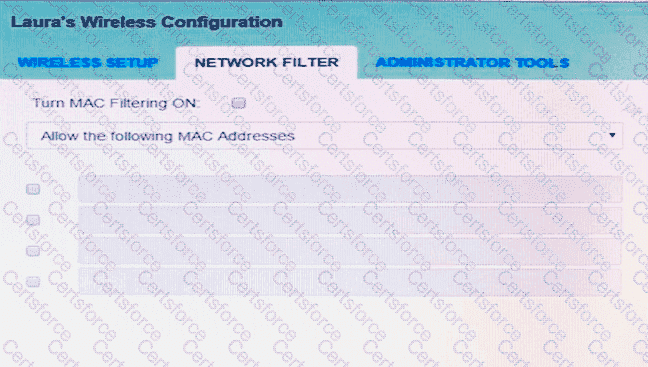
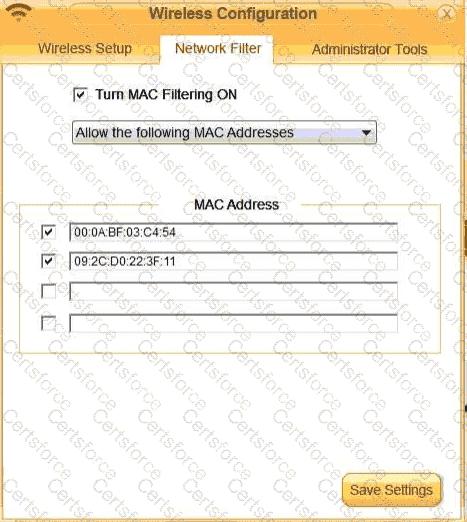
Finally, Laura wants to ensure that only her laptop and Smartphone can connect to the network.
Laptop: IP Address 192.168.1.100
Hardware Address: 00:0A:BF:03:C4:54
Smartphone: IP Address 192.168.1.101
Hardware Address: 09:2C:D0:22:3F:11
INSTRUCTIONS
Configure Laura’s wireless network using the network adapter window.
If at any time you would like to bring back the initial state of the situation, please click the Reset All button.
 A screenshot of a network settings AI-generated content may be incorrect.
 A screenshot of a computer AI-generated content may be incorrect.
 A screenshot of a computer AI-generated content may be incorrect.
Submit