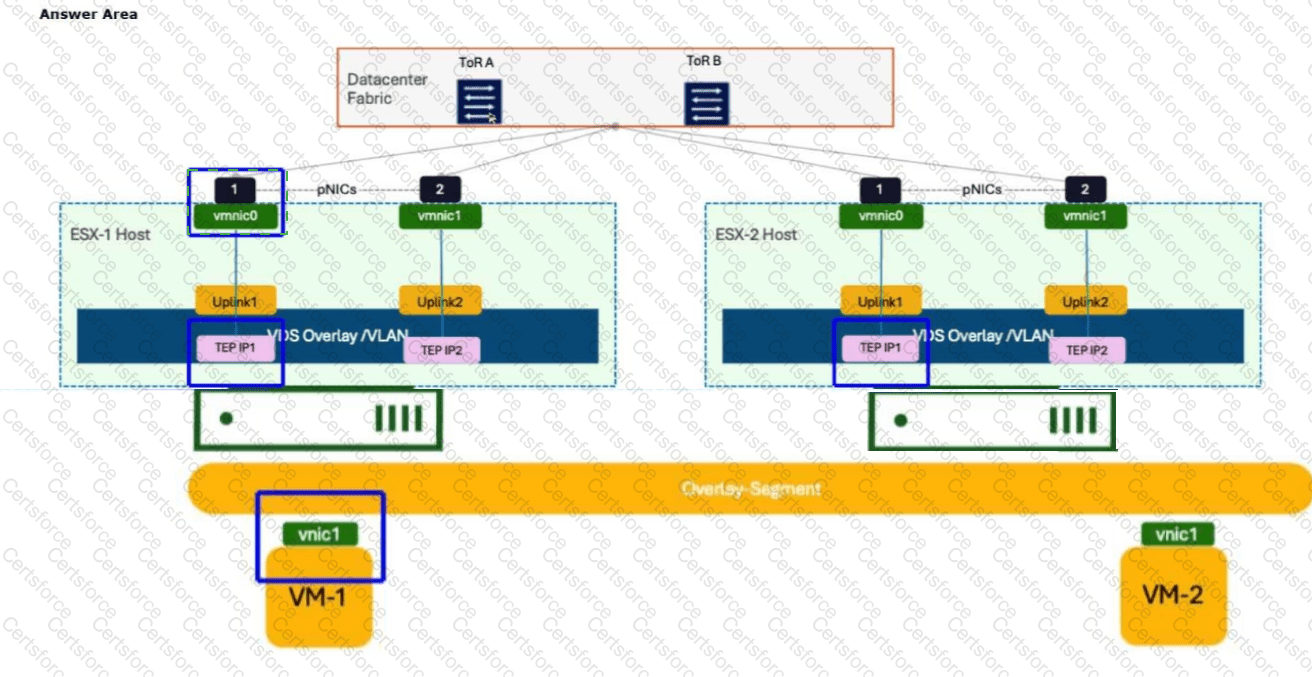
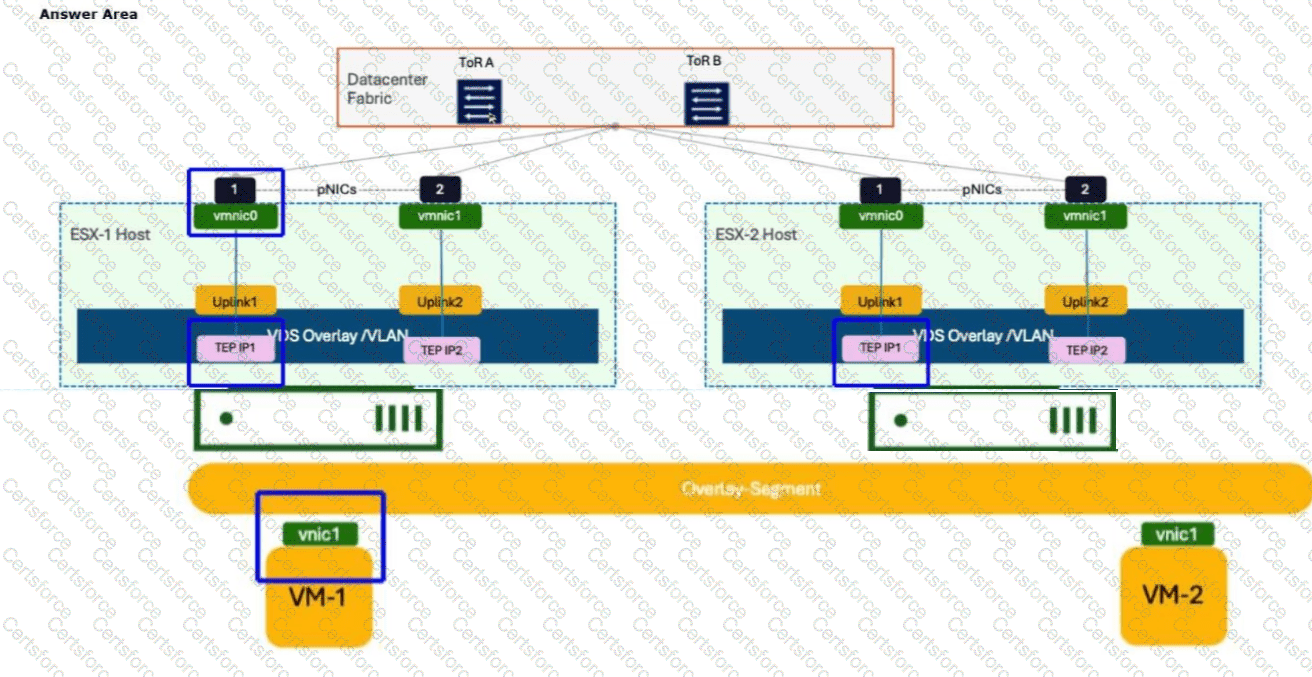
The administrator is working to ascertain the encapsulation of GENEVE by reviewing the capture on Wireshark.
The administrator instructed VM-1 to send a continuous ICMP request directed at VM-2.
Click to highlight where the administrator should observe the GENEVE encapsulated packet.
An administrator has a VMware Cloud Foundation (VCF) instance. A critical NSX security update has been released by Broadcom. How can the administrator install the NSX update?
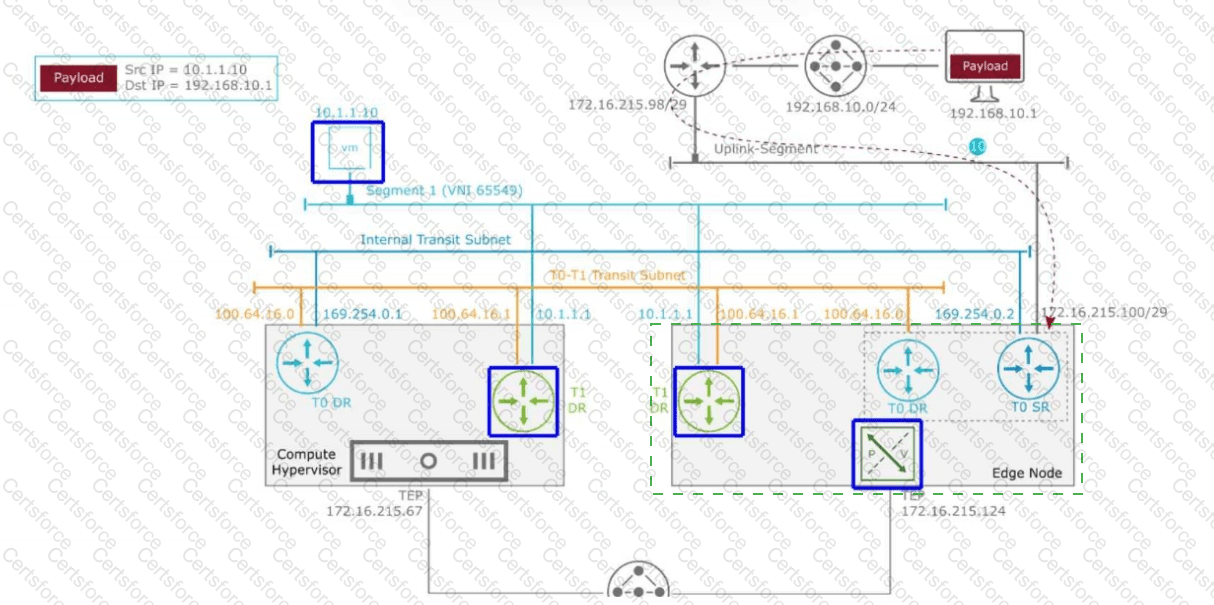
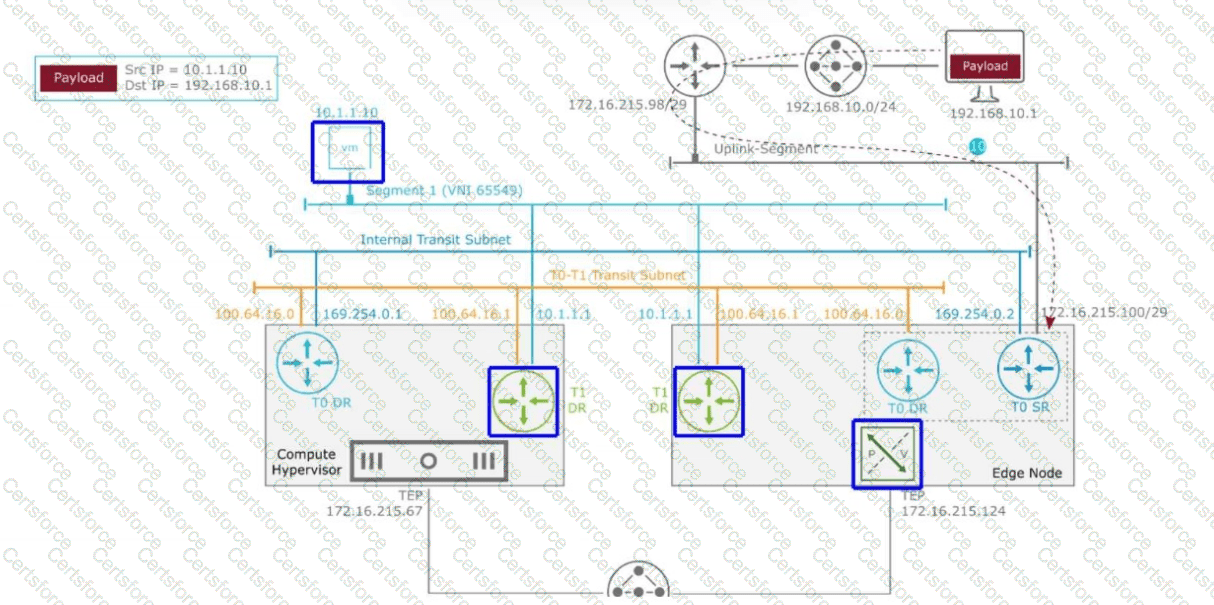
An administrator is troubleshooting the packet flow of an incoming response to an ICMP Reply payload destined for 10.1.1.10 in the diagram.
The packet arrived at the Tier-0 SR at 172.16.215.100/29.
Which highlighted location identifies the next hop in the path to the destination?
How should the Global Managers (GMs) and Local Managers (LMs) be distributed to ensure high availability and optimal performance in a multi-site NSX Federation deployment comprised of three sites? (Choose two.)
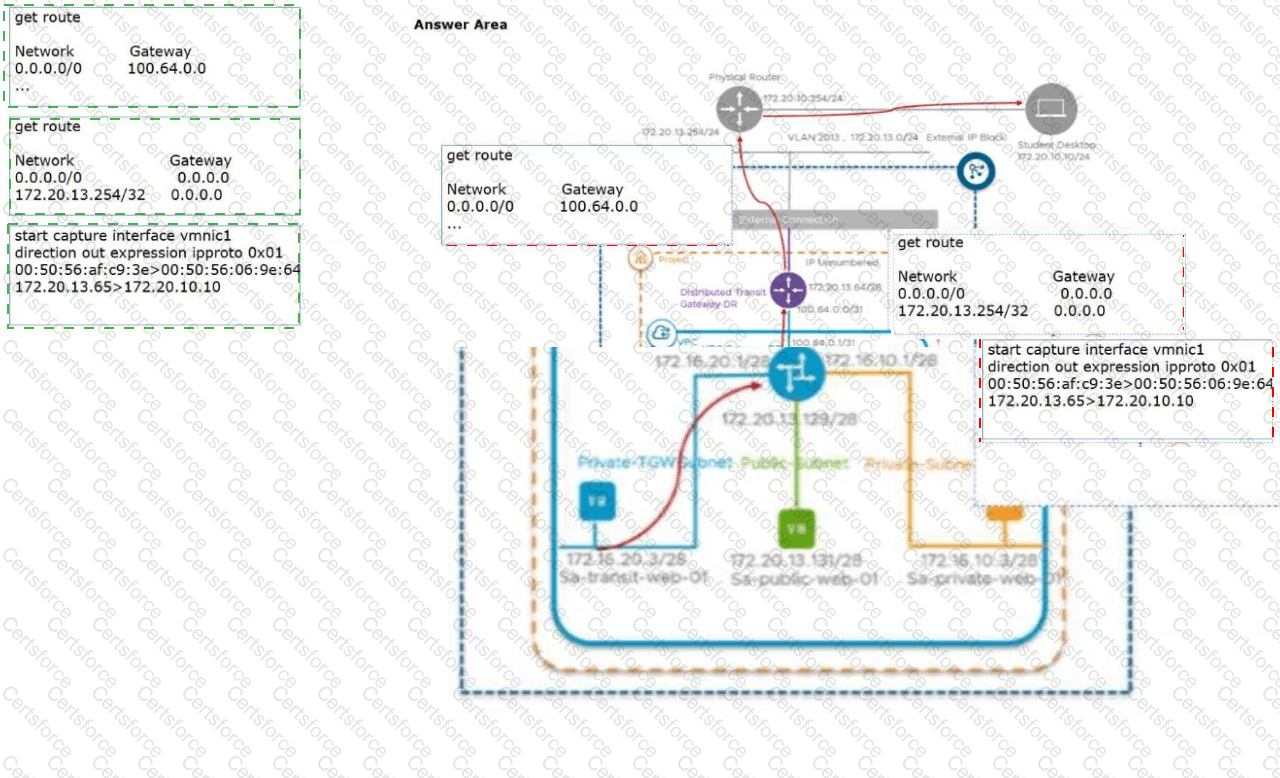
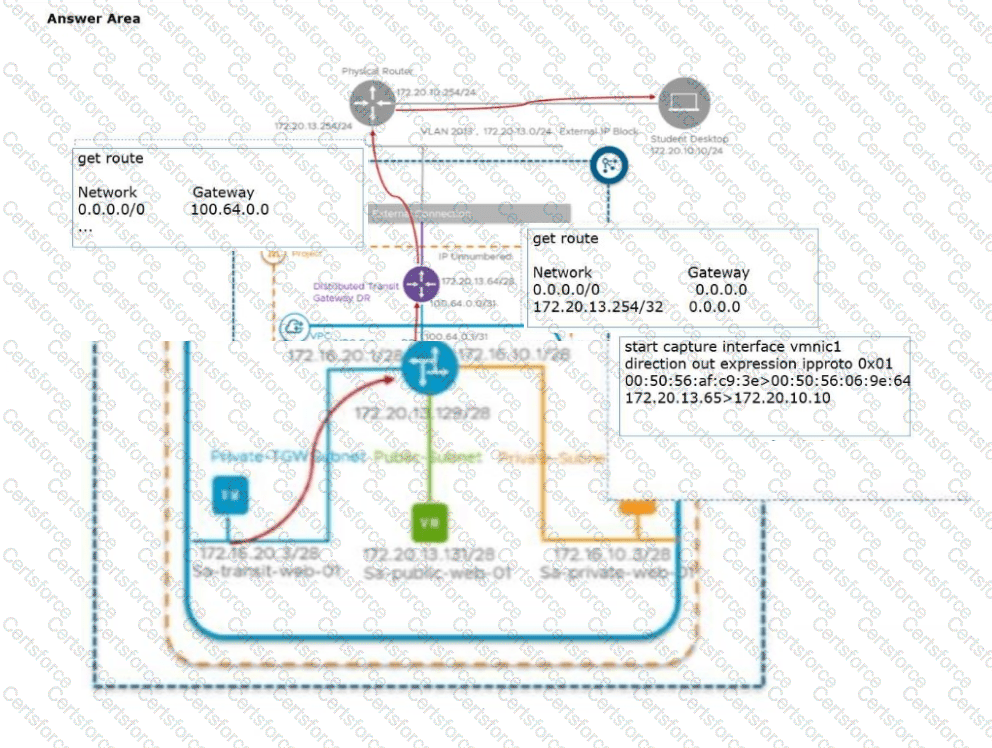
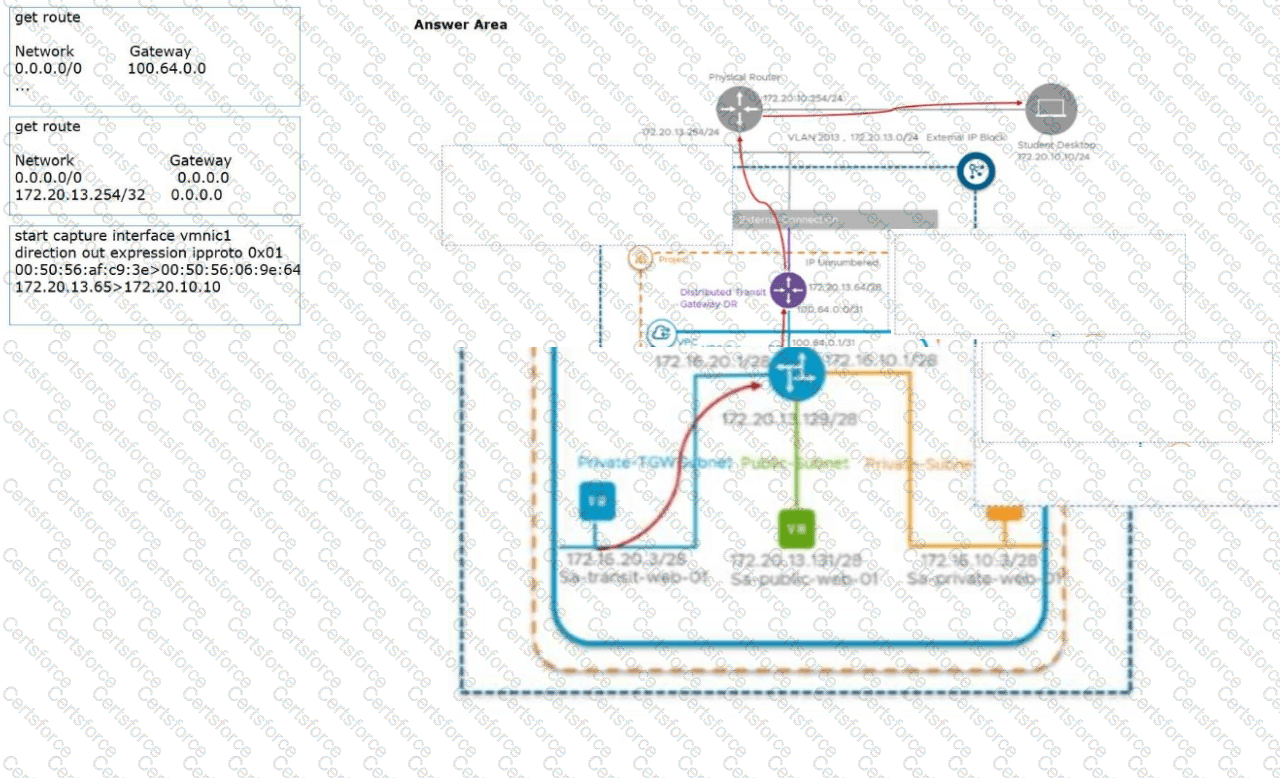
An administrator is attempting to confirm the successful transmission between an internal VM to an external destination.
An ICMP request packet is being sent from Sa-transit-web-01 to the Student Desktop in the diagram.
Drag and Drop the commands output into their appropriate originating NSX object.
An administrator is investigating packet loss reported by workloads connected to VLAN segments in an NSX environment. Initial checks confirm:
• All VMs are powered on
• VLAN segment IDs are consistent across transport nodes
• Physical switch configurations are correct.
Which two NSX tools can be used to troubleshoot packet loss on VLAN Segments? (Choose two.)
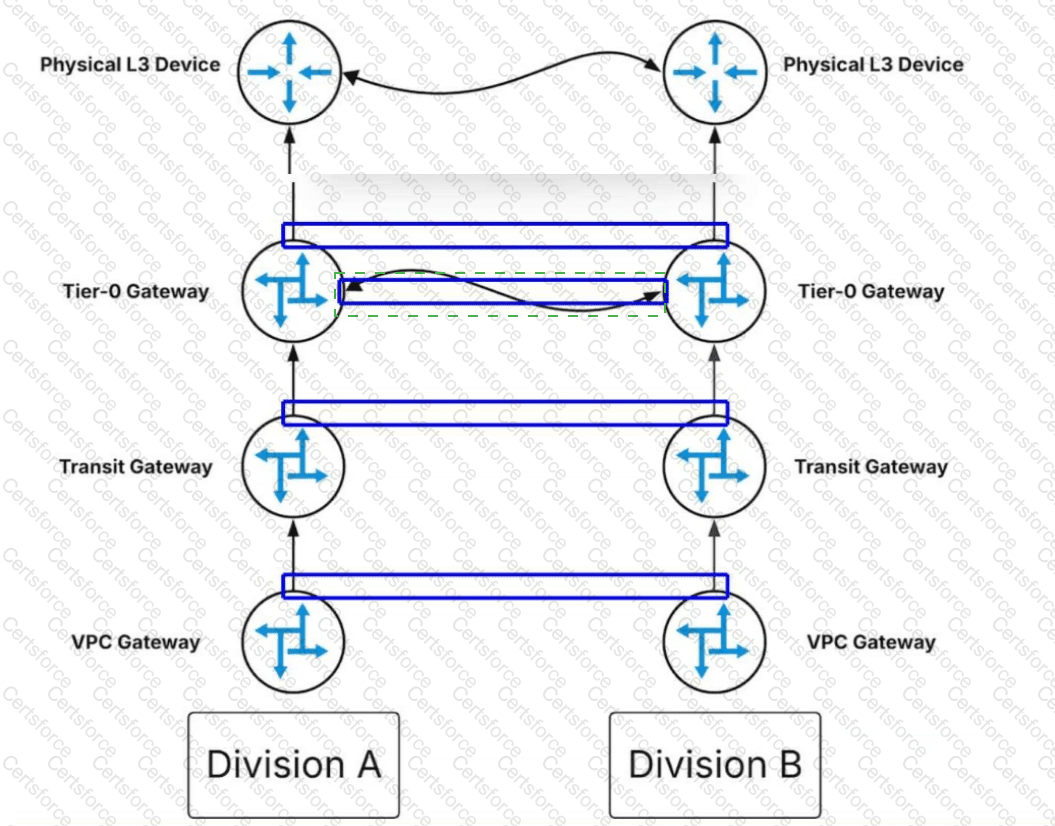
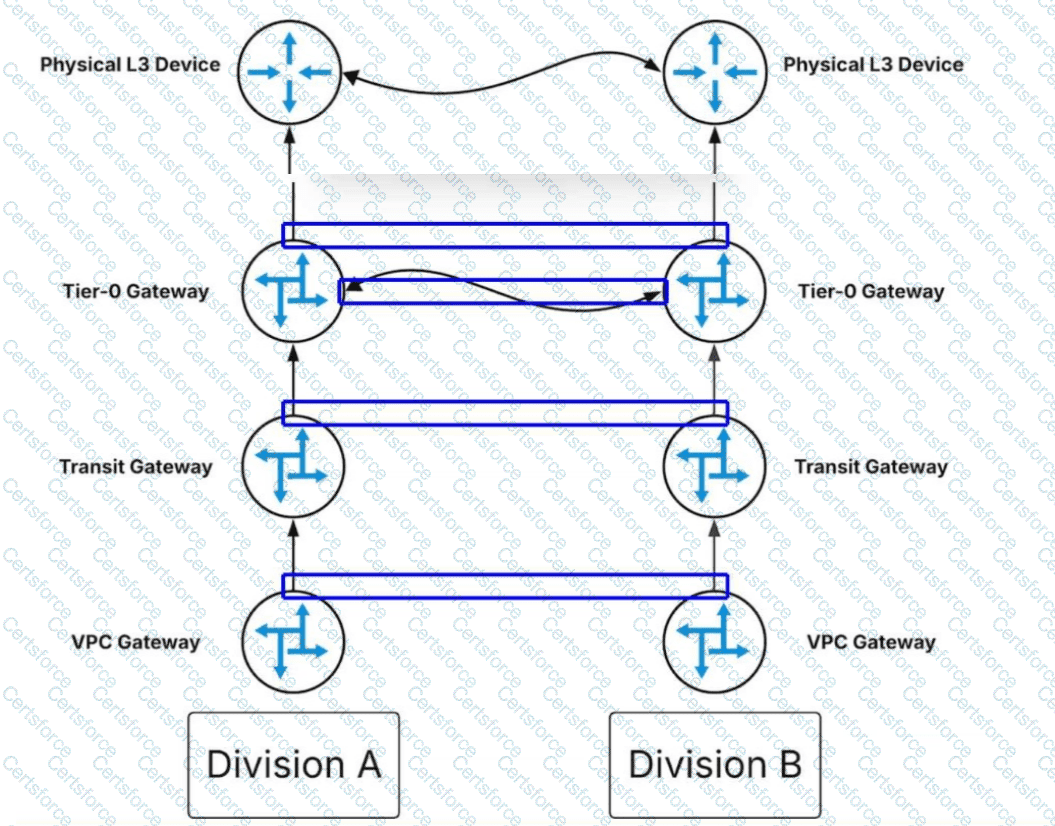
An administrator implements route leaking between the Tier-0 gateways to enhance east/west communication because the physical L3 devices are oversubscribed.
Where should route-maps be configured based on the architecture observed in the diagram?
An administrator is troubleshooting a BGP connectivity issue on a Tier-0 Gateway (Active/Active). The Tier-0 has the following configuration:
• Uplink VLAN 100: 192.168.100.0/24
• Uplink VLAN 101: 192.168.101.0/24
• BGP neighbors configured: 192.168.100.1 and 192.168.101.1
• A single static default route (0.0.0.0/0) exists with next-hop 192.168.100.1.
Symptoms observed on both Edge Nodes:
• Get BGP neighbors —> both neighbors stuck in Idle (Connect) — "No route to peer"
• Ping to 192.168.100.1 and 192.168.101.1 succeeds from the Edge nodes
• Get route shows the default route present only on VLAN 100 interface (fp-eth0), missing on VLAN 101 (fp-eth1)
What is the root cause of both BGP sessions remaining in Idle state?