
-- Exhibit–

-- Exhibit --
Earlier in this story, Maud Martha’s Gramma Ernestine dies. Maud Martha thinks to herself, “I never saw anyone die before . . . but I’m seeing somebody die right now.”
How does this situation relate to the encounter Maud Martha has with the mouse?
-- Exhibit–
-- Exhibit–
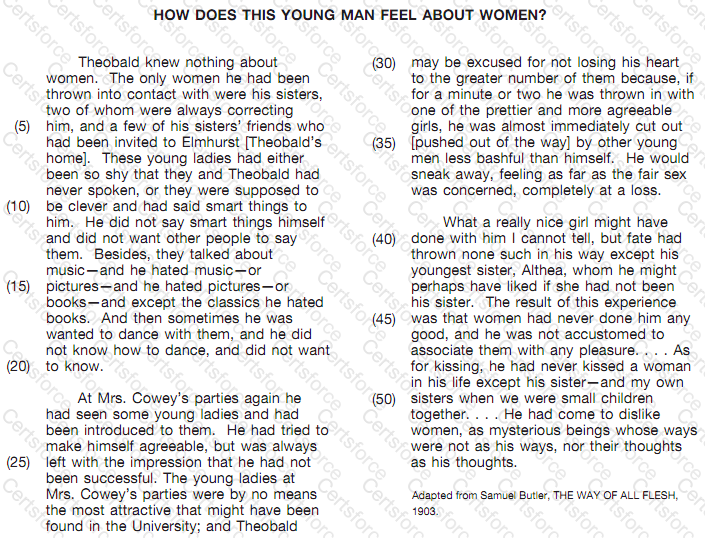
How does the narrator describe Theobald’s relationship with women?
-- Exhibit–

-- Exhibit --
Nelson Mandela was the principal South African, anti-apartheid leader.
Based on the author’s description of Makeba in this excerpt, why was she able to return to South Africa after Mandela’s release from prison?
-- Exhibit–

-- Exhibit --
What does Mr. Jessup mean when he says, “There are protected ocean areas for sailing, fishing, and water skiing” (lines 25–26)?
-- Exhibit–
-- Exhibit --
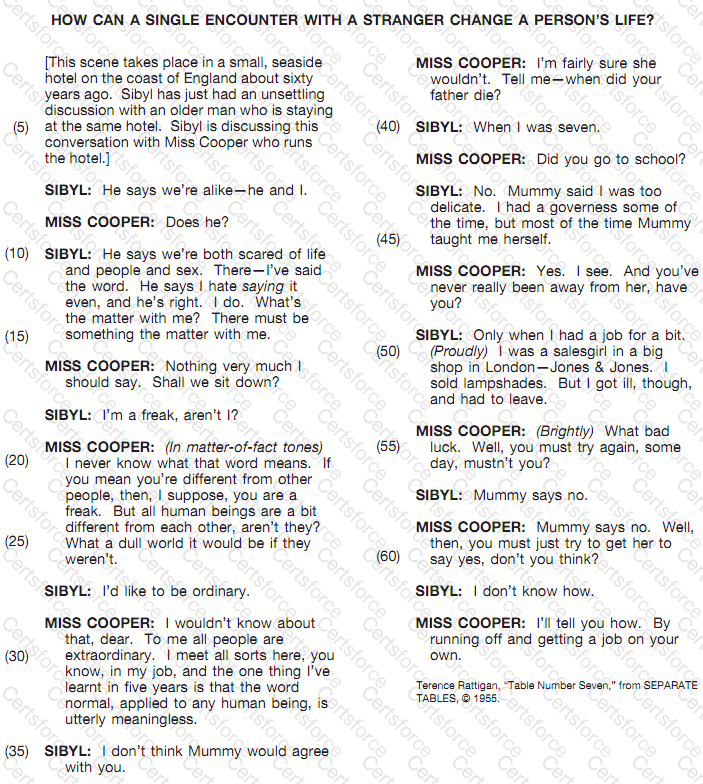
Earlier in the play, the reader learns that Sibyl is 33 years old. How does this additional information affect the way the reader understands Sibyl's problem?
-- Exhibit–

-- Exhibit --
Fred Ingram states in his letter that his role in his children’s lives “is not as important as it could or should be” (line 22).
Based on this statement, what might the reader conclude about Fred Ingram’s beliefs about rearing children?
-- Exhibit–

-- Exhibit --
Because of this experience with Minnie Foster, Mrs. Hale will likely, in the future, be more aware of which one of the following?
-- Exhibit–
-- Exhibit --
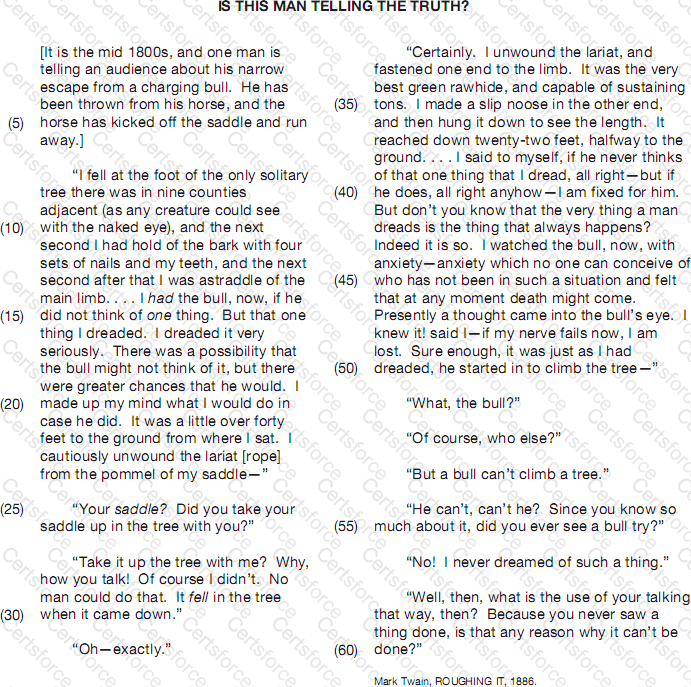
Later in the story, a member of the audience says, “I made up my mind that if this man was not a liar he only missed it by the skin of his teeth.”
Judging from this information and the character of the narrator as revealed in this excerpt, which one of the following is probably the narrator’s greatest talent?
Exhibit:

What does the speaker of the poem reveal in the final line, “Why am I not as they?”
-- Exhibit–
-- Exhibit --
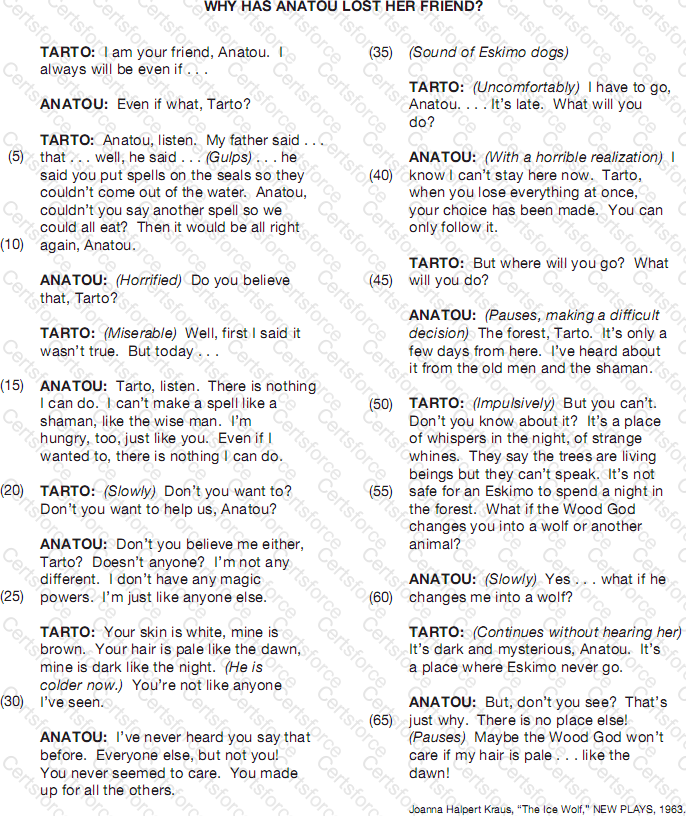
When Anatou tells Tarto that she is going to the forest, Tarto cries, “(Impulsively) But you can’t” (line 50). How does his concern for Anatou’s safety contrast with his earlier statements to her?
