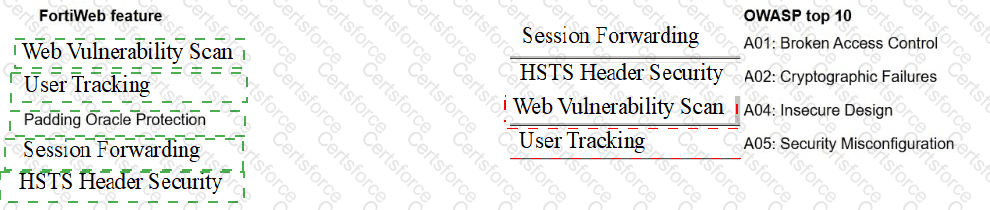
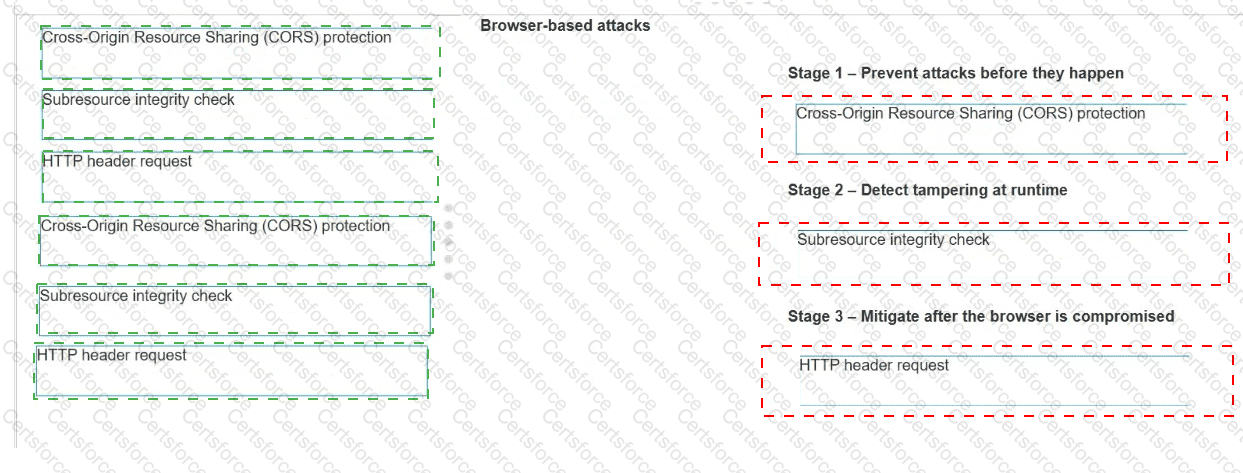
A FortiWeb administrator is reviewing issues found during a security audit. The audit lists shortcomings based on behavior, configuration, and data protection.
The administrator must break down the findings and match them with the correct FortiWeb feature.
Select each FortiWeb feature in the left column, hold and drag it to the blank space next to the OWASP issue in the column on the right. Once you match a FortiWeb
feature to the OWASP issue, you can move it again if you want to change your answer by clicking on the FortiWeb feature. You need to match five FortiWeb features to
the OWASP issue in the work area.
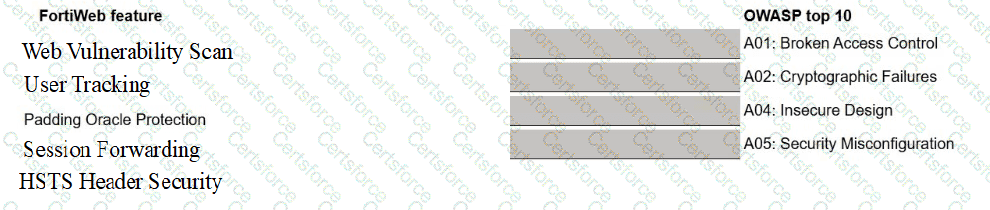
Refer to the exhibits.
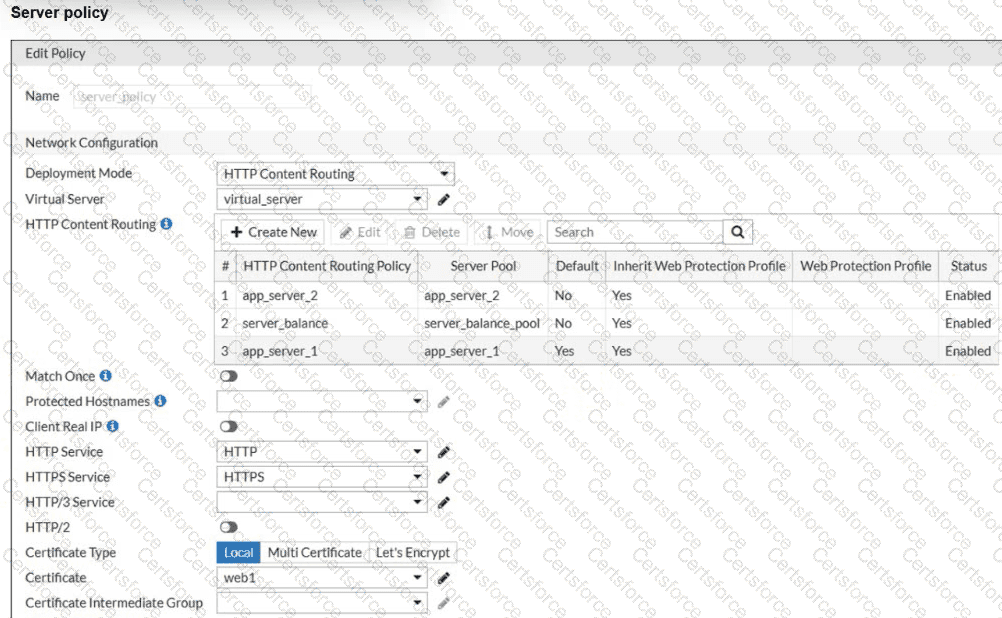
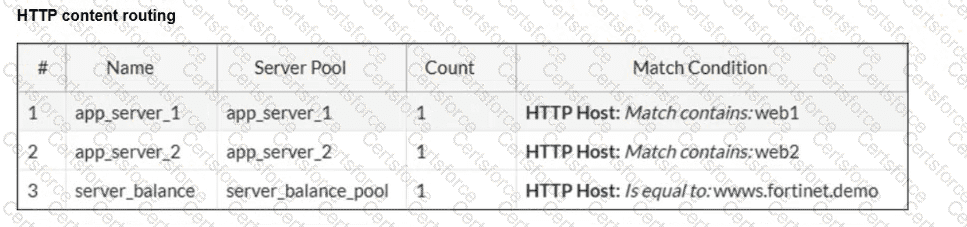
A new domain, https://finance.fortinet.demo, was added but not explicitly mapped. Users report the site loads correctly, but you’re unsure which back-end server is being used.
Why is this request succeeding despite no explicit routing rule for finance.fortinet.demo?
You recently deployed two FortiWeb devices in an active-active (A-A) high availability (HA) cluster.
During routine maintenance, you want to confirm that the cluster is synchronizing the correct configuration areas and that both FortiWeb devices behave consistently in production.
As the FortiWeb administrator, which two configuration areas should you examine to verify that HA synchronization is functioning correctly? (Choose two.)
A FortiWeb administrator wants to stop coordinated scraping traffic coming from several IP addresses, each making only a few requests so thresholds never trigger.
Which tactic should the administrator deploy to identify botnets using shared behavioral signals instead of volume?
Which situation best explains when a FortiWeb administrator should enable automatic HTTP-to-HTTPS redirection?
Refer to the exhibit.
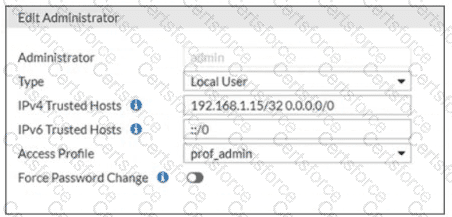
There is only one administrator account configured on FortiWeb and IPv6 is not configured on any interface.
Which action should an administrator take to restrict any brute force attacks that attempt to gain access to the FortiWeb management GUI?
Refer to the exhibit.
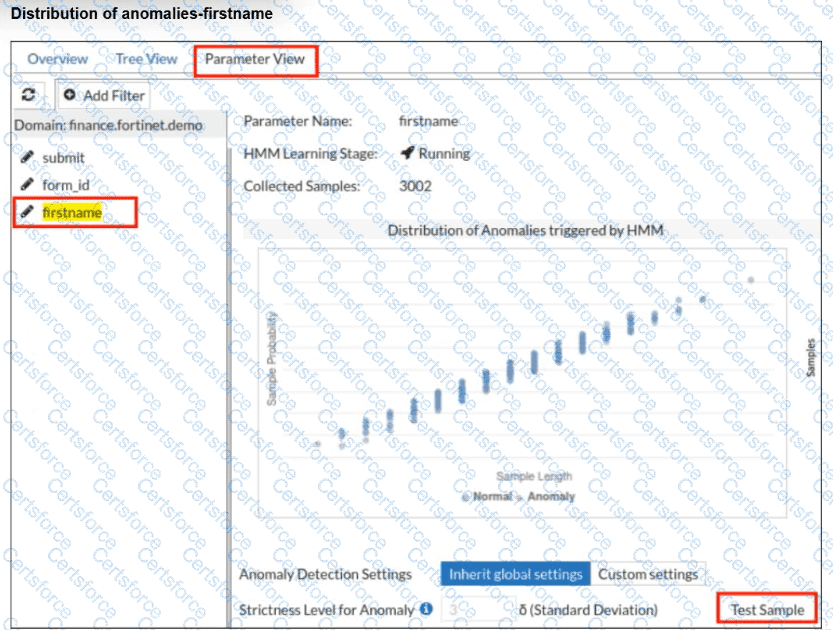
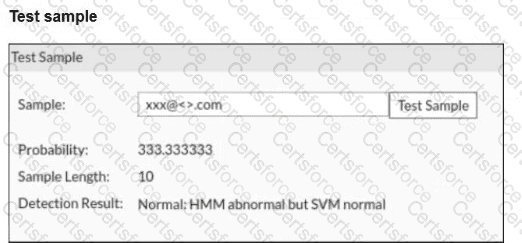
A FortiWeb administrator tests a new form input value after training the machine learning (ML) anomaly detection system.
The hidden Markov model (HMM) flags the input as abnormal, while the support vector machine (SVM) model classifies it as normal. FortiWeb allows the request.
What does this result indicate about the FortiWeb ML anomaly detection behavior?
You are a FortiWeb administrator investigating an SQL injection attack on your company’s customer portal. The network firewall and intrusion prevention system (IPS) did not stop the attack.
You decide to deploy a web application firewall (WAF) to help prevent this type of attack.
Which two actions can you take to block application-layer threats? (Choose two.)
Refer to the exhibit.
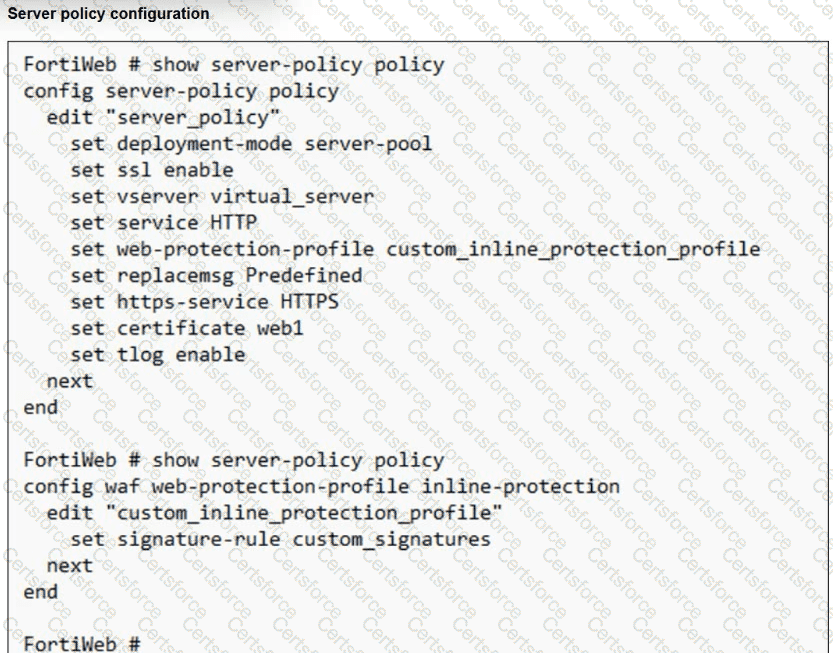
You have deployed FortiWeb behind a FortiGate that is configured as a reverse proxy and inserts the X-Forwarded-For HTTP header when forwarding HTTP and HTTPS traffic.
FortiWeb is using a custom inline protection profile, and logging is enabled, as shown in the exhibit.
You notice that FortiWeb is blocking legitimate users, and all requests in the attack logs appear to come from the FortiGate IP address, not the original client IP address.
Which action should you take to fix this issue?
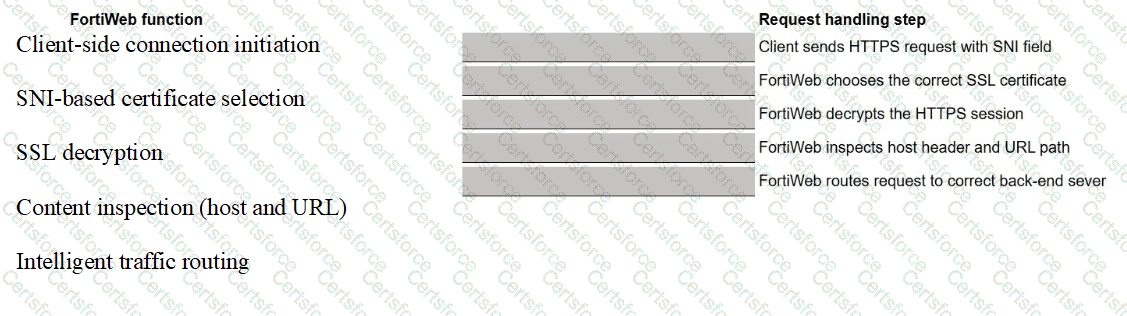
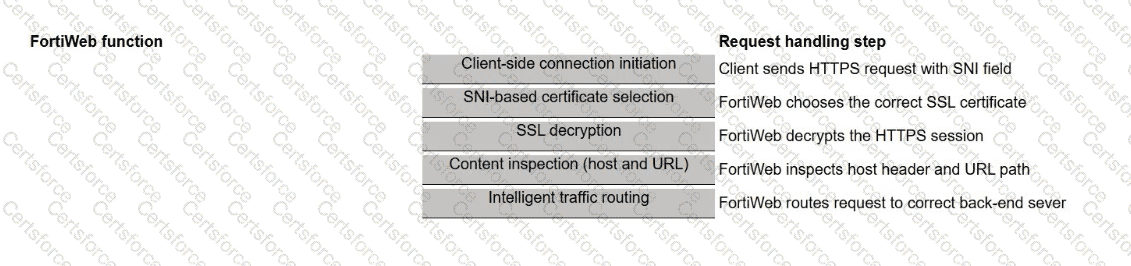
You are hosting multiple secure web applications behind a single public IP address on FortiWeb.
When a client connects to a service, FortiWeb needs to:
Identify the correct SSL certificate.
Decrypt the request.
Route the request to the correct back-end server.
Match each FortiWeb function to the request handling step that performs the function.