
(Refer to the exhibit.
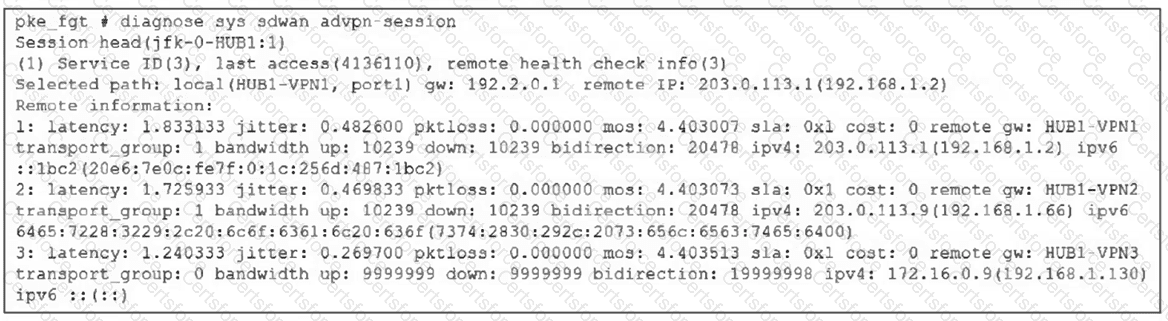
Based on the output shown in the exhibit, what can you conclude about the device role and how it handles health checks? Choose one answer.)
Refer to the exhibit.
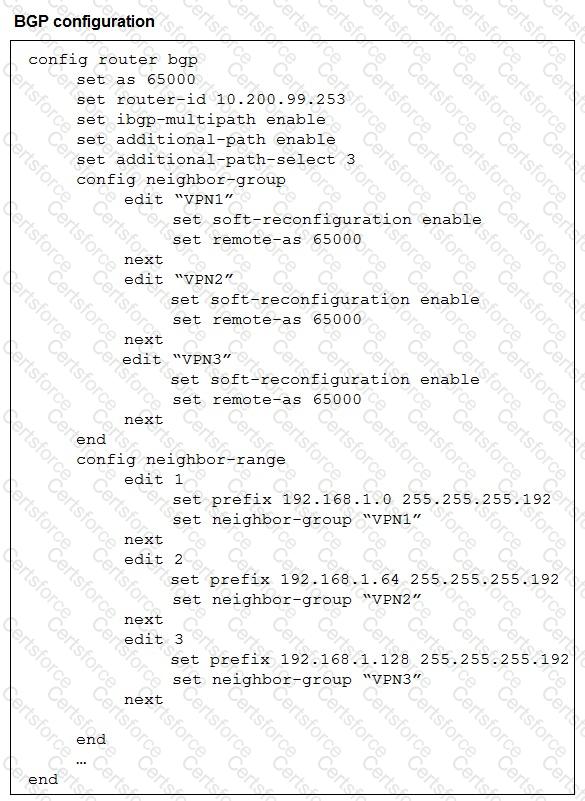
The exhibit shows the BGP configuration on the hub in a hub-and-spoke topology. The administrator wants BGP to advertise prefixes from spokes to other spokes over the IPsec overlays, including additional paths. However, when looking at the spoke routing table, the administrator does not see the prefixes from other spokes and the additional paths
Which three settings must the administrator configure inside each BGP neighbor group so spokes can learn the prefixes of other spokes and their additional paths? (Choose three.)
Refer to the exhibits.
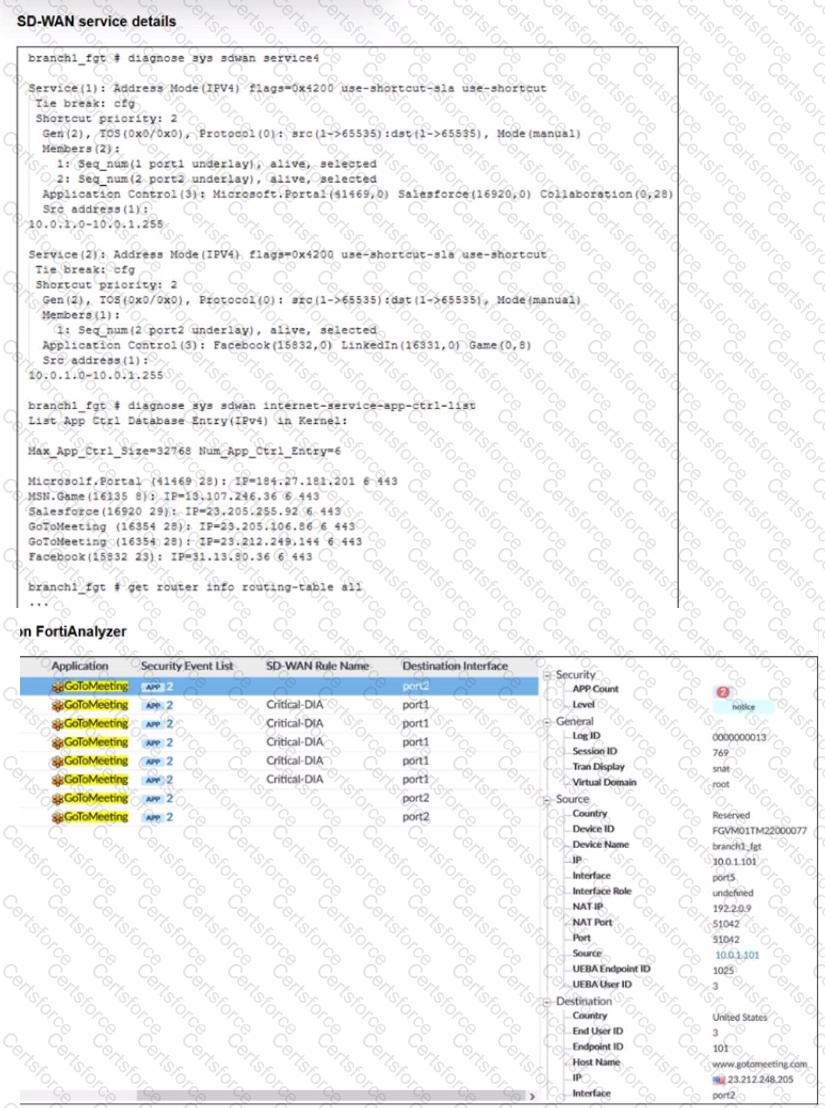
An administrator is testing application steering in SD-WAN. Before generating test traffic, the administrator collected the information shown in the first exhibit. After generating GoToMeeting test traffic, the administrator examined the corresponding traffic log on FortiAnalyzer, which is shown in the second exhibit.
The administrator noticed that the traffic matched the implicit SD-WAN rule, but they expected the traffic to match rule ID 1.
Which two reasons explain why some log messages show that the traffic matched the implicit SD-WAN rule? (Choose two.)
(Refer to the exhibits.
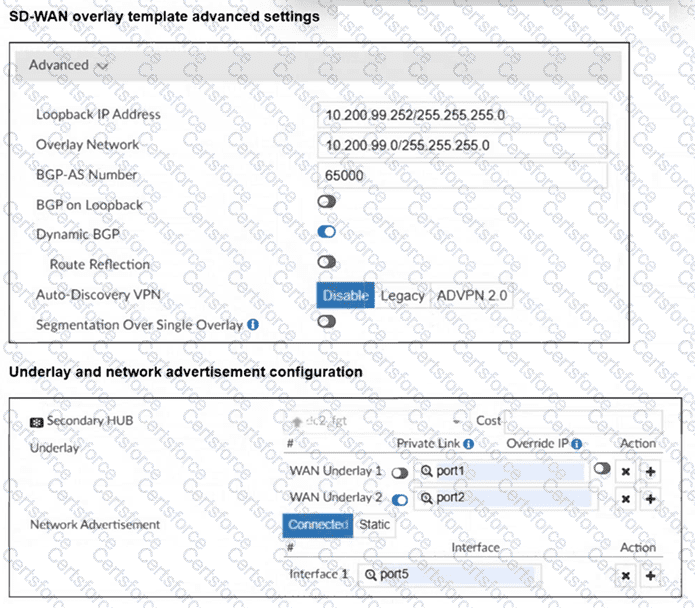
The SD-WAN overlay template advanced settings and the underlay and network advertisement settings are shown. These are the configurations for the secondary hub of a dual-hub SD-WAN topology created with the FortiManager SD-WAN overlay orchestrator.
Which two conclusions can you draw from the information shown in the exhibits? Choose two answers.)
Refer to the exhibits.
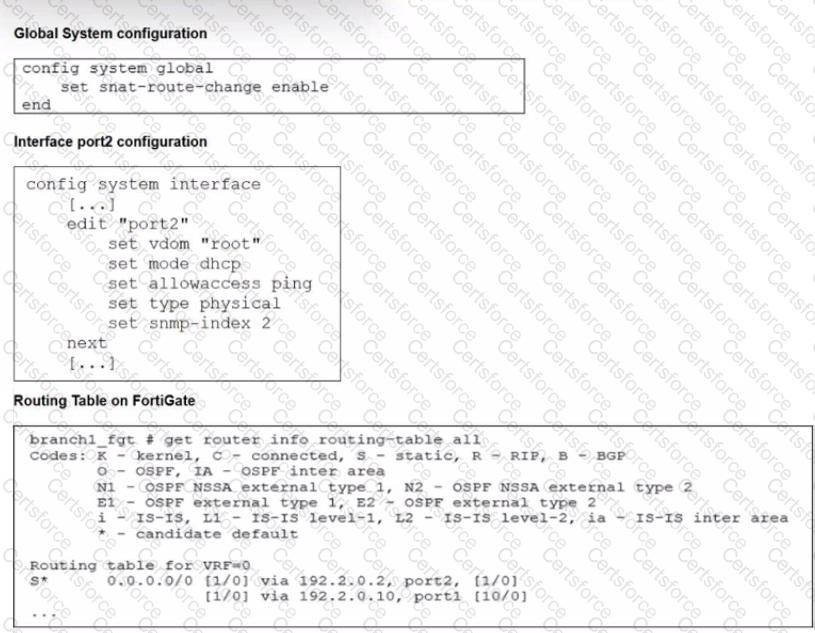
The exhibits show the source NAT (SNAT) global setting. port2 interface settings, and the routing table on FortiGate.
The administrator increases the member priority on port2 to 20.
Upon configuration changes and the receipt of new packets, which two actions does FortiGate perform on existing sessions established over port2? (Choose two.)
Refer to the exhibits.
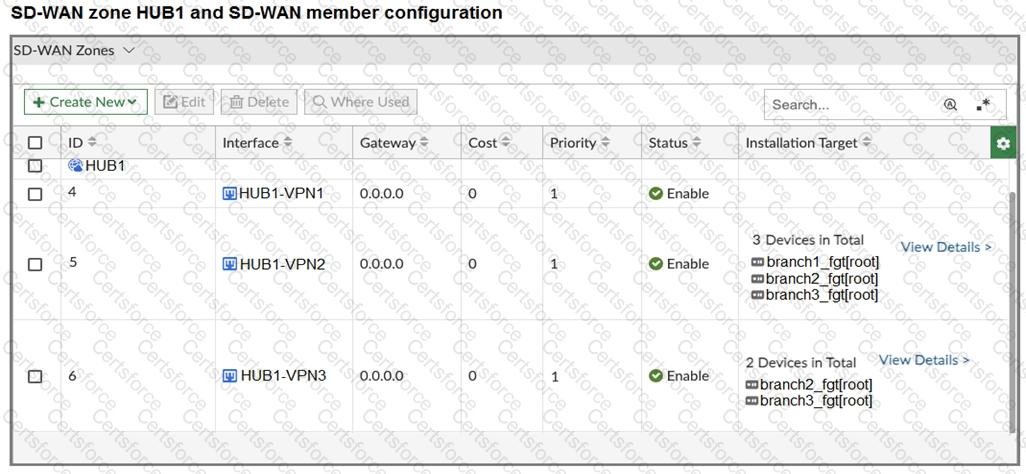
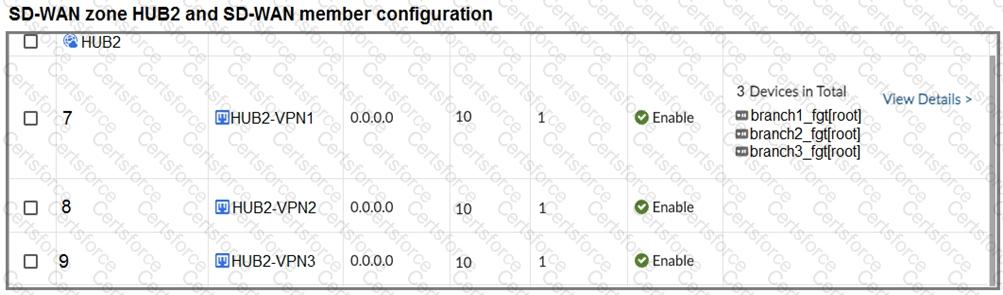
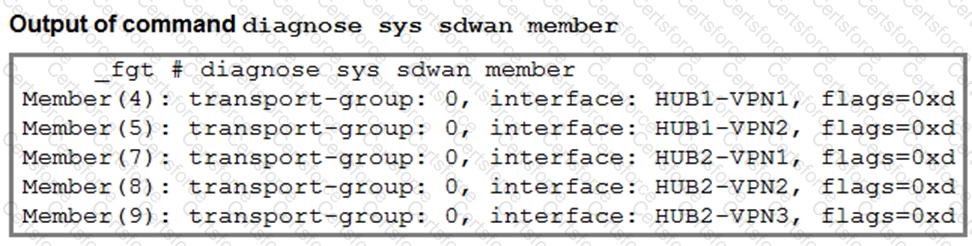
The first exhibit shows the SD-WAN zone HUB1 and SD-WAN member configuration from an SD-WAN template, and the second exhibit shows the output of command diagnose sys sdwan member collected on a FortiGate device.
Which statement best describes what the diagnose output shows?
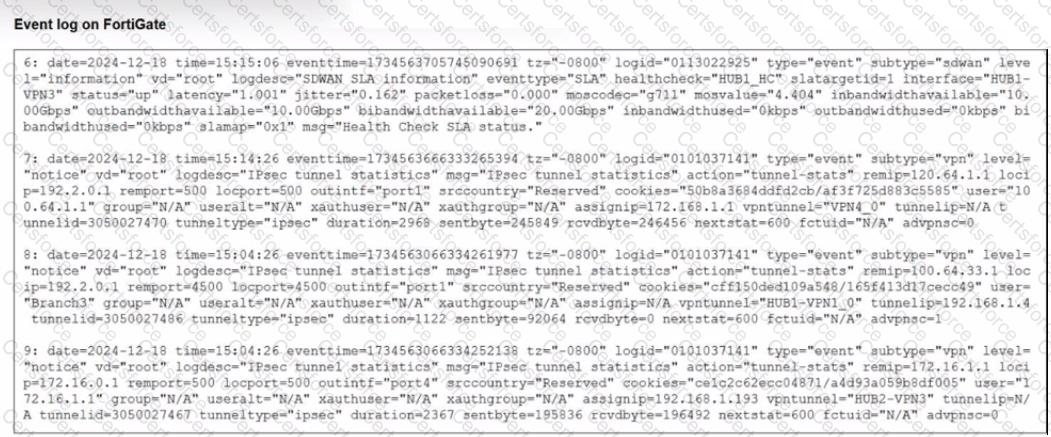
Refer to the exhibit that shows event logs on FortiGate.
Based on the output shown in the exhibit, what can you say about the tunnels on this device?
(You configure the overlay tunnels for an SD-WAN hub-and-spoke topology defined with IPsec tunnels, BGP on loopback, and dynamic BGP.
Which are two recommended IPsec settings for this topology? Choose two answers.)
As an IT manager for a healthcare company, you want to delegate the installation and management of your SD-WAN deployment to a managed security service provider (MSSP). Each site must maintain direct internet access and ensure that it is secure. You expected significant traffic flow between the sites and want to delegate as much of the network administration and management as possible to the MSSP.
Which two MSSP deployment blueprints best address the customer’s requirements? (Choose two.)
Refer to the exhibit.
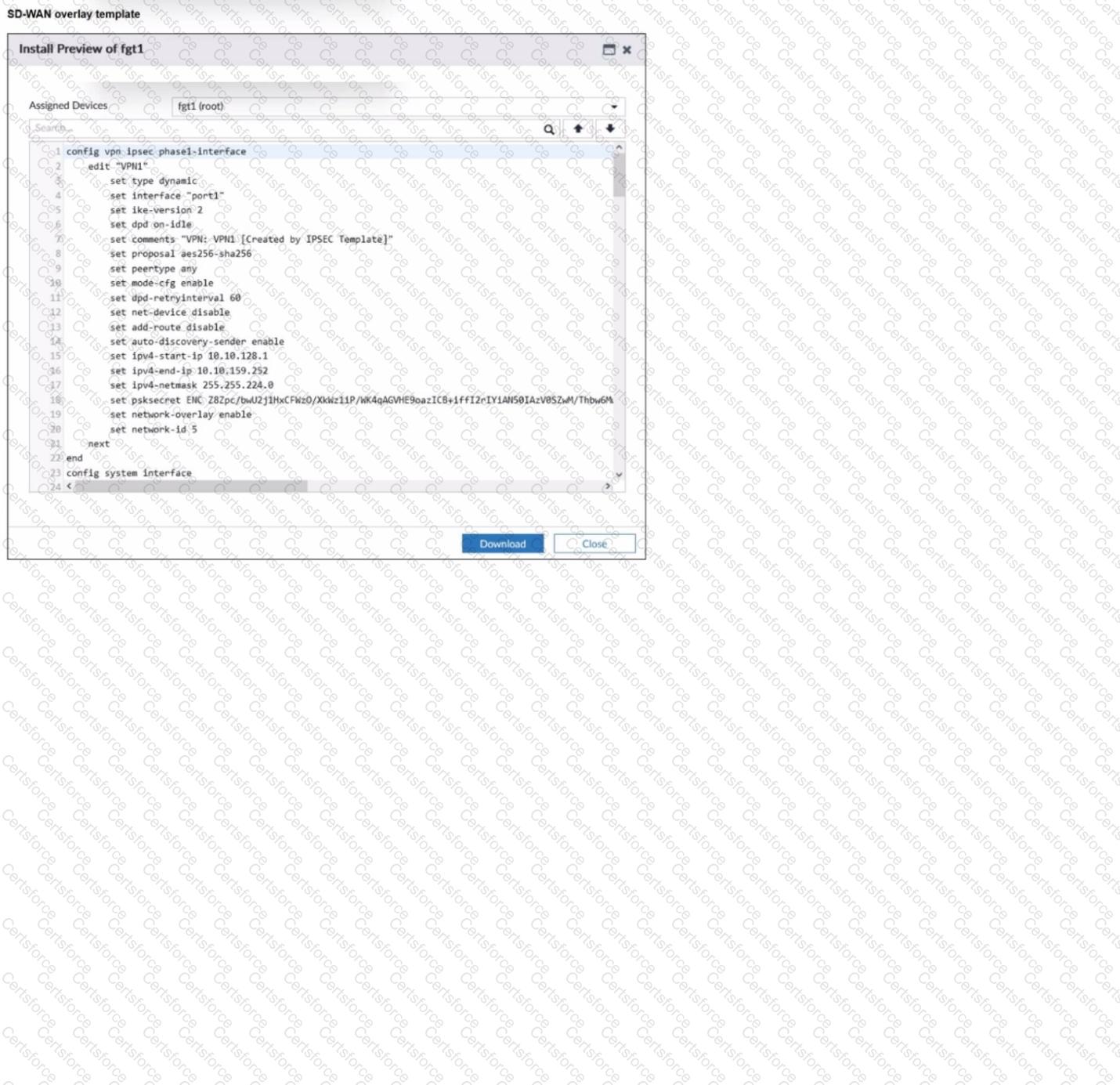
The administrator used the SD-WAN overlay template to prepare an IPsec tunnels configuration for a hub-and-spoke SD-WAN topology. The exhibit shows the FortiManager installation preview for one FortiGate device.
Based on the exhibit, which statement best describes the configuration applied to the FortiGate device?
