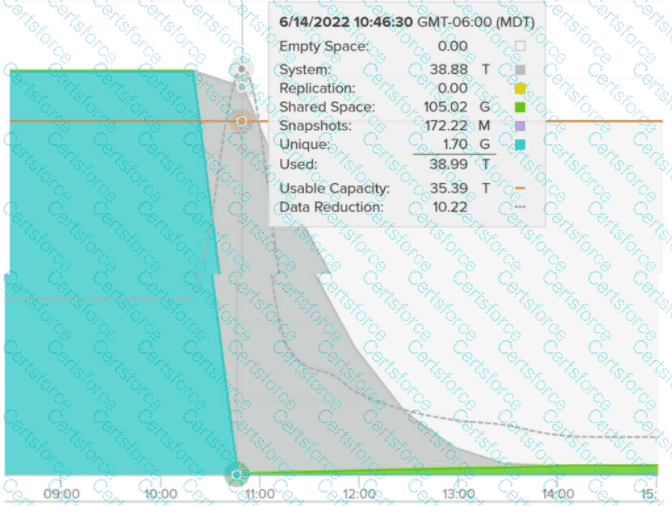
Analyzing the Graph: The provided capacity graph shows a sharp, vertical drop in Unique and Shared space (the teal/green sections) at approximately 10:45. Simultaneously, there is a massive spike in System space (the grey shaded area).
The "System" Space Spike: In Purity, when a volume is deleted and eradicated, the data isn ' t physically wiped from the flash modules instantly. Instead, the logical references are removed, and the blocks are moved into a " Pending Reclamation " state. In older versions of Purity reporting (or specific views), this pending work is often categorized under System space until the background Garbage Collection (GC) process can physically reclaim it.
The Decay Curve: Notice the grey " System " area gradually tapers down over the following hours (from 11:00 to 14:00). This is the visual representation of the array ' s Garbage Collection engine working in the background to physically free up those blocks.
Why Option C is incorrect: If SafeMode were enabled, the space would not move into " System " space in this manner; it would remain locked in the Snapshots or Destroyed bucket for the duration of the retention period, preventing the graph from dropping at all.
Why Option A is incorrect: If space reclamation stopped working, the grey " System " area would stay flat and would not decay over time. The fact that it is trending downward proves that reclamation is actively processing the deleted volume.
Contribute your Thoughts:
Chosen Answer:
This is a voting comment (?). You can switch to a simple comment. It is better to Upvote an existing comment if you don't have anything to add.


Submit