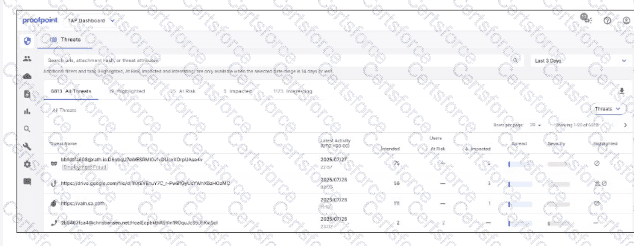
In Proofpoint-driven triage, threats are prioritized by likelihood of immediate compromise and blast radius. Credential phishing typically ranks highest because a single successful credential submission can lead to account takeover (ATO), which then enables follow-on attacks: internal phishing, mailbox rule abuse, OAuth consent abuse, wire-fraud/BEC escalation, and data access. Proofpoint TAP surfaces credential phishing with strong indicators (URL defense verdicts, rewritten URL clicks, campaign clustering, and known phishing kits/landing pages), making it actionable for containment. Compared to malware delivery, credential theft often bypasses endpoint controls and produces fewer immediate artifacts, so rapid response is critical: password reset, token revocation, MFA enforcement, and mailbox audit. TOAD and BEC can be high impact, but in many environments they require human interaction outside email controls (phone/social steps) and may not always show definitive technical IOCs early. The TAP “Threats” view is designed for quick pivoting (Intended/At Risk/Impacted) and credential phishing typically correlates strongly with “Impacted” activity (clicks/submissions), which is why it should be investigated first when competing items are present.
Contribute your Thoughts:
Chosen Answer:
This is a voting comment (?). You can switch to a simple comment. It is better to Upvote an existing comment if you don't have anything to add.


Submit