A project is just beginning, and management creates a long list of potential stakeholders. Which statement about identifying and engaging stakeholders is correct?
A.
The project manager should identify and deal with stakeholders only during the execution phase.
B.
Stakeholder satisfaction should be identified immediately and managed as a project objective.
C.
The project manager should focus on project objectives and deal with stakeholders as a secondary priority.
D.
Stakeholder satisfaction is the most important goal, and project objectives should be considered a secondary priority.
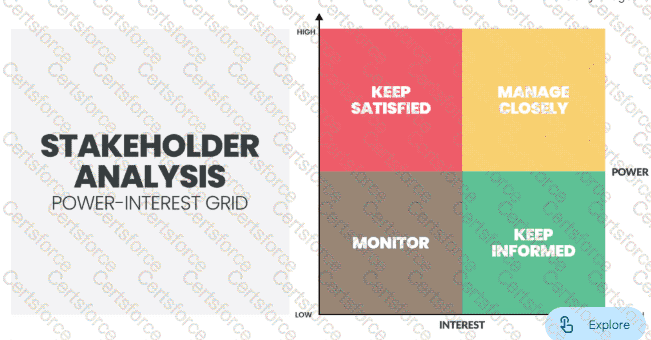
According to the PMBOK® Guide (6th and 7th Editions) and the Standard for Project Management, stakeholder engagement is a critical success factor that begins at the very start of the project. The process of Identify Stakeholders occurs in the Initiating Process Group, often concurrently with the development of the Project Charter.
The rationale for this answer is supported by several PMI principles:
Proactive Engagement: Stakeholders should be identified and engaged as early as possible to ensure their requirements, expectations, and influence are understood before major decisions are finalized.
Stakeholder Satisfaction as an Objective: Modern project management defines success not just by the " Iron Triangle " (Scope, Schedule, Budget), but by the satisfaction of key stakeholders. Therefore, managing their needs and expectations is a primary project objective.
Continuous Process: While identification starts early, the Identify Stakeholders and Monitor Stakeholder Engagement processes are iterative and continue throughout the entire project life cycle.
Analysis of Distractors:
A (Execution Phase Only): This is incorrect. Waiting until the execution phase to deal with stakeholders is a leading cause of project failure, as key requirements or risks held by those stakeholders would be missed during planning.
C (Secondary Priority): This is incorrect. Project objectives are often defined by the stakeholders. Ignoring stakeholders or making them a secondary priority leads to " scope creep " or the delivery of a product that does not meet the organization ' s actual needs.
D (Objectives as Secondary): This is incorrect because it represents an extreme imbalance. While stakeholder satisfaction is vital, it cannot be achieved by ignoring the project objectives (scope, quality, etc.). The project manager must balance these competing constraints; one does not make the other " secondary. "
Contribute your Thoughts:
Chosen Answer:
This is a voting comment (?). You can switch to a simple comment. It is better to Upvote an existing comment if you don't have anything to add.


Submit