Resource Reservation Protocol–Traffic Engineering (RSVP-TE) uses a soft-state signaling architecture in which established PATH and RESV states must be periodically refreshed.
PATH messages travel downstream from the ingress router toward the egress router. RESV messages travel upstream, establishing and refreshing reservation information along the LSP.
When the reservation state expires because the required refresh messages have not been received, RSVP can initiate reservation teardown processing.
A ResvTear message removes the relevant reservation state and propagates upstream toward the original sender.
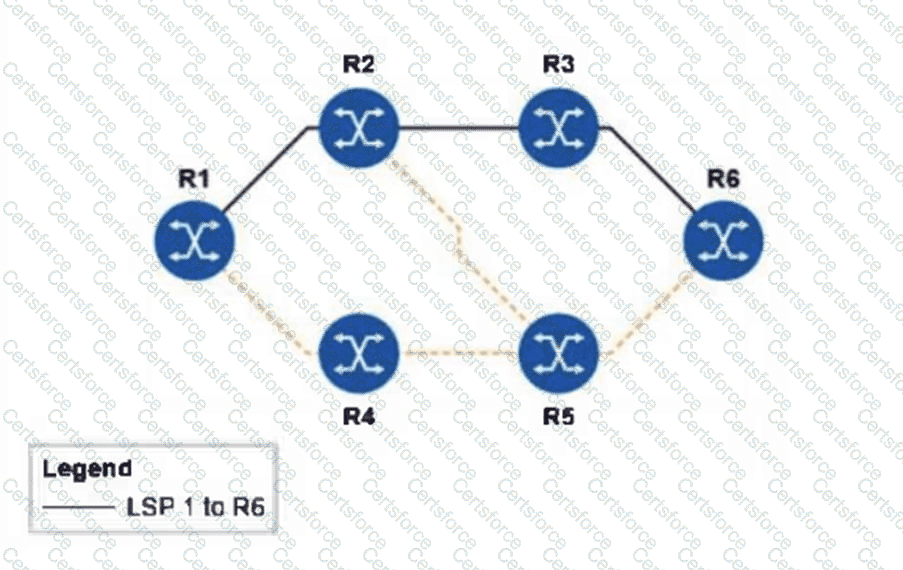
In the illustrated topology, the primary LSP follows:
R1 → R2 → R3 → R6.
The failure of the R3–R6 link prevents the normal receipt of downstream RESV refresh messages at R3.
Once the reservation state expires, R3 initiates a ResvTear message in the upstream direction:
R3 → R2 → R1.
A PathTear message operates in the opposite direction and is associated with removing path state downstream toward the receiver.
Because the question specifically identifies expiration of RESV state, the applicable teardown message is ResvTear, directed toward the ingress router R1.
[Reference:Nokia SR OS MPLS Guide — RSVP Signaling and Soft-State Maintenance; RFC 2205, Section 2.4 — Teardown Messages.]


Submit