Basic Concept: This question tests performance optimization for SQL workloads, including Query Store, automatic tuning, index/statistics maintenance, and engine-level resource behavior.
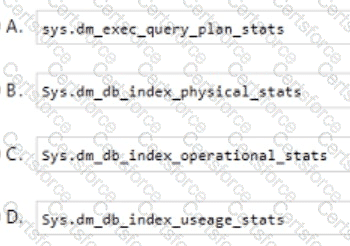
Why D is Correct: Option D is related to operational monitoring or tuning, but it must match the exact signal needed: query history, resource utilization, wait/blocking detail, or automatic remediation. This fits the case because the requested outcome is: You need to identify the operations that are being performed on the index. The selected feature addresses that outcome directly rather than relying on a workaround.
Why A is Wrong: Option A is related to operational monitoring or tuning, but it must match the exact signal needed: query history, resource utilization, wait/blocking detail, or automatic remediation. It does not expose the required metric, query history, wait/blocking signal, or tuning mechanism; using it would not give the administrator the evidence requested.
Why B is Wrong: Option B is related to operational monitoring or tuning, but it must match the exact signal needed: query history, resource utilization, wait/blocking detail, or automatic remediation. It is useful in other troubleshooting paths, but this scenario requires a more specific monitoring or optimization feature.
Why C is Wrong: Option C is related to operational monitoring or tuning, but it must match the exact signal needed: query history, resource utilization, wait/blocking detail, or automatic remediation. It would produce a different operational signal than the one needed to investigate, alert, or tune the workload in this question.


Submit