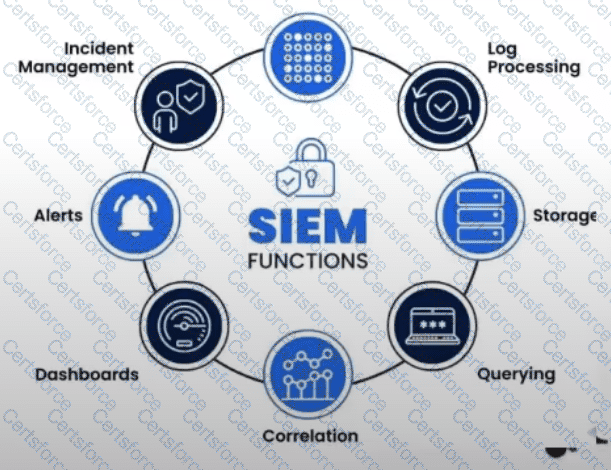
A Security Information and Event Management (SIEM) system is designed tocollect, correlate, analyze, and alert on security eventsgenerated across an organization’s IT environment. SIEM platforms aggregate logs from diverse sources such as servers, firewalls, endpoints, applications, and cloud services, providing centralized visibility into security activity.
The core value of a SIEM lies inevent correlation and contextual analysis. By correlating events across systems and over time, a SIEM can detect suspicious patterns that individual logs alone would not reveal—such as lateral movement, privilege escalation, or coordinated attacks. SIEMs also support real-time alerting, dashboards, querying, and incident investigation, enabling security teams to respond faster and more effectively.
SIEM systems donotencrypt files (that’s cryptography), block websites directly (that’s firewalls or secure web gateways), or manage passwords (that’s IAM). Instead, they serve as thecentral nervous system of a Security Operations Center (SOC), supporting monitoring, detection, compliance reporting, and incident response workflows as recommended by NIST and other security frameworks.


Submit