SIMULATION
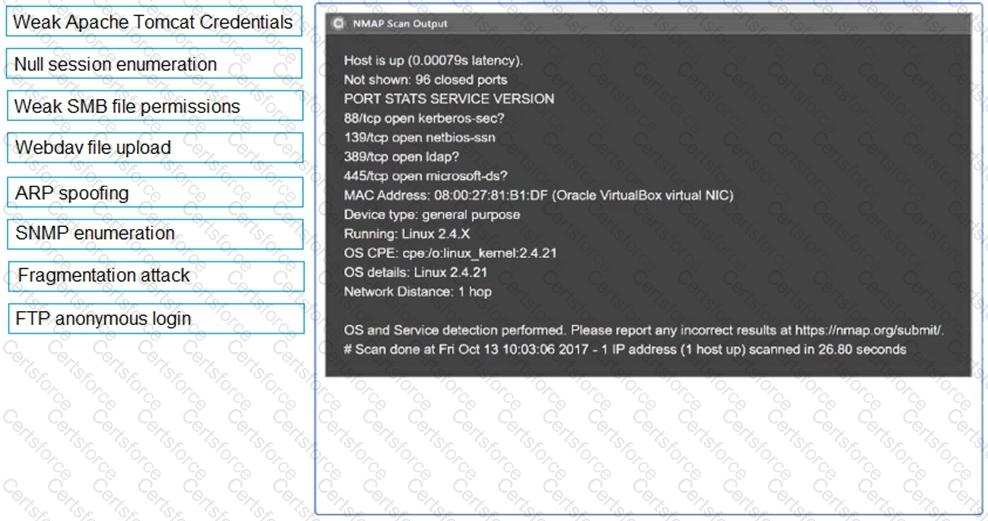
Using the output, identify potential attack vectors that should be further investigated.
See explanation below.
1: Null session enumeration
Weak SMB file permissions
Fragmentation attack
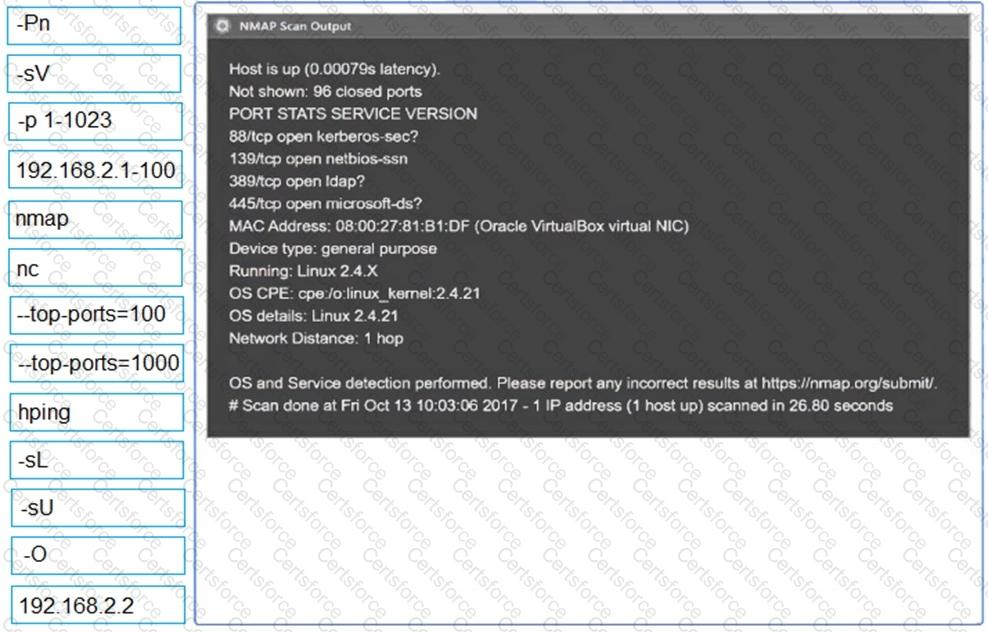
2: nmap
-sV
-p 1-1023
192.168.2.2
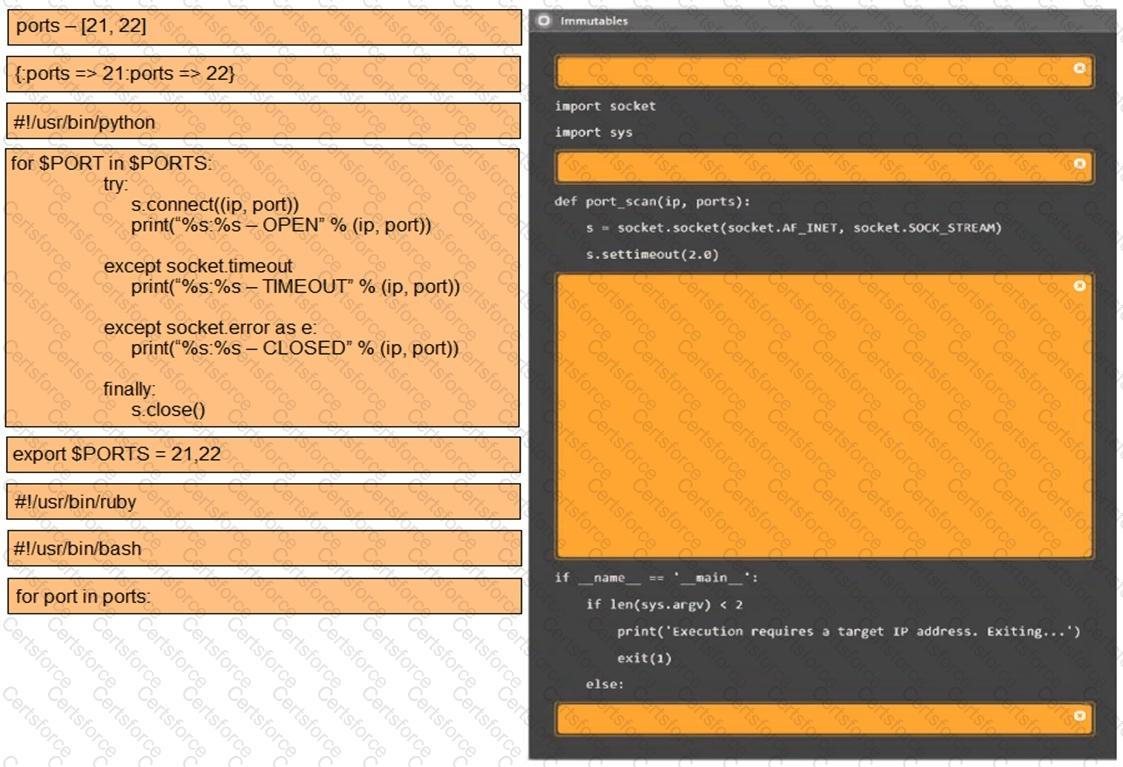
3: #!/usr/bin/python
export $PORTS = 21,22
for $PORT in $PORTS:
try:
s.connect((ip, port))
print(“%s:%s – OPEN” % (ip, port))
except socket.timeout
print(“%:%s – TIMEOUT” % (ip, port))
except socket.error as e:
print(“%:%s – CLOSED” % (ip, port))
finally
s.close()
port_scan(sys.argv[1], ports)


Submit