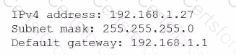
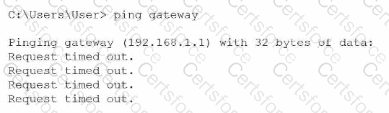
A loopback plug is specifically designed to test whether a network interface card (NIC) can successfully transmit and receive signals at the physical/data-link level. For an Ethernet NIC, the loopback plug connects the transmit (TX) pins back to the receive (RX) pins on the NIC’s port (or through an adapter), creating a closed circuit. When the NIC sends data, it should immediately “see” that data returned, confirming the NIC’s port electronics and basic send/receive functionality are working. This is a direct, controlled test that helps isolate the problem: if the NIC fails the loopback test, the issue is likely the NIC/port/driver configuration rather than the cabling or network infrastructure.
The other tools don’t validate NIC function in this way: a toner probe traces and identifies cables, a Wi-Fi analyzer evaluates wireless networks (not wired Ethernet NICs), and a punchdown tool terminates wires into patch panels or keystone jacks. Therefore, the best CompTIA A+ answer for verifying an Ethernet NIC’s functionality is a loopback plug.
Contribute your Thoughts:
Chosen Answer:
This is a voting comment (?). You can switch to a simple comment. It is better to Upvote an existing comment if you don't have anything to add.
Submit