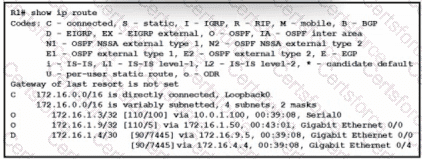
It load-balances traffic over 172.16.9.5 and 172.16.4.4.. Cisco routing logic is deterministic: a router first matches the most specific destination prefix, then uses administrative distance when competing route sources advertise the same prefix, and finally evaluates the protocol metric when multiple paths remain inside the same routing protocol. First-hop redundancy protocols add a separate default-gateway resiliency function for hosts on a LAN. The other choices in this question either point to the wrong route-selection rule, confuse a protocol metric with administrative distance, or apply a Layer 2 concept where a Layer 3 forwarding decision is required. In production, that mistake would create blackholing, asymmetric routing, or a backup path that never activates. Cisco CCNA 200-301 v1.1 tests this because route selection is fundamental to troubleshooting reachability. The selected answer matches the behavior Cisco routers use when forwarding traffic or maintaining gateway redundancy.
Contribute your Thoughts:
Chosen Answer:
This is a voting comment (?). You can switch to a simple comment. It is better to Upvote an existing comment if you don't have anything to add.


Submit