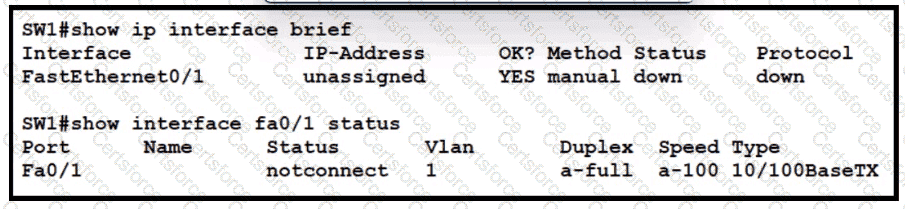
wrong cable type. Security questions require separating secure protocols, insecure management, authentication, authorization, accounting, and threat-prevention controls. Cisco CCNA 200-301 v1.1 includes this under Network Access, where the expected skill is selecting the feature that actually produces the requested network behavior. The wording normally gives the clue: protocol family, address scope, trunk state, route preference, security mode, API method, or controller role. The distractors either use weaker controls or protect a different part of the system. In production, choosing the wrong option would typically cause failed client access, a broken route, insecure management, or an automation workflow that targets the wrong interface. The selected answer is the Cisco-consistent behavior for this item.
Contribute your Thoughts:
Chosen Answer:
This is a voting comment (?). You can switch to a simple comment. It is better to Upvote an existing comment if you don't have anything to add.


Submit