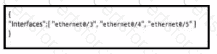
String. Automation and programmability questions test whether the engineer can separate data format, transport method, controller role, and API direction. REST commonly uses HTTP methods such as GET, POST, PUT, and DELETE. JSON represents structured data with objects, arrays, strings, numbers, Booleans, and null values. Northbound APIs allow applications to interact with a controller, while southbound APIs allow the controller to communicate with network devices. NETCONF and RESTCONF are configuration/management protocols, not generic forwarding behaviors. The incorrect choices often mix controller-to-device communication with application-to-controller communication or confuse a data format with a protocol. Cisco CCNA 200-301 v1.1 includes this area because modern network operations increasingly rely on APIs and centralized controllers. The selected answer matches the correct API direction, data representation, or HTTP operation for the scenario.
Contribute your Thoughts:
Chosen Answer:
This is a voting comment (?). You can switch to a simple comment. It is better to Upvote an existing comment if you don't have anything to add.


Submit