
Refer to the exhibit.
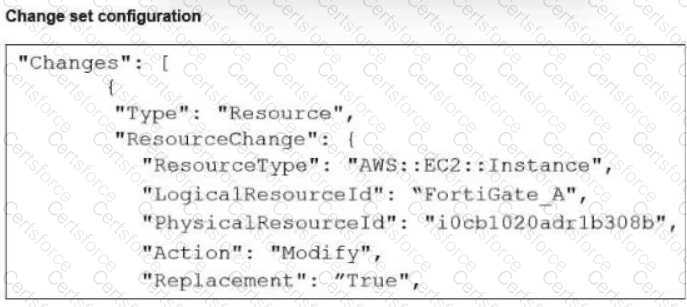
An AWS administrator created a change set to examine the effects of proposed changes to the current infrastructure.
Based only on the output shown in the exhibit, what will happen if the administrator applies these changes?
Refer to the exhibit.
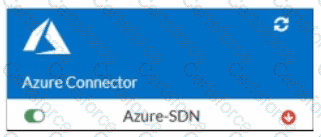
You are troubleshooting a Microsoft Azure SDN connector issue on your FortiGate VM in Azure.
Which command can you use to examine details about API calls sent by the connector?
Refer to the exhibit.
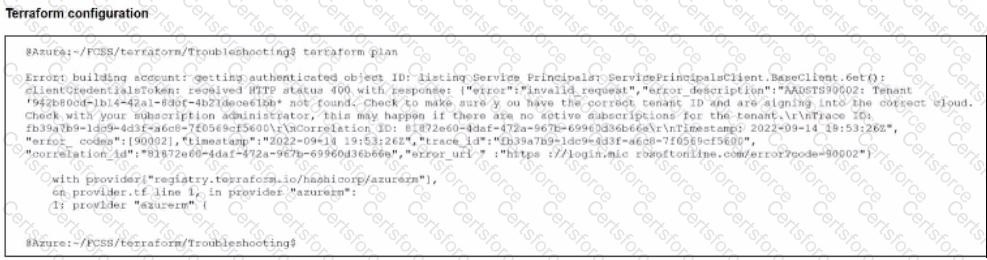
After the initial Terraform configuration in Microsoft Azure, the terraform plan command is run.
Which two statements about running the terraform plan command are true? (Choose two.)
Refer to the exhibit.
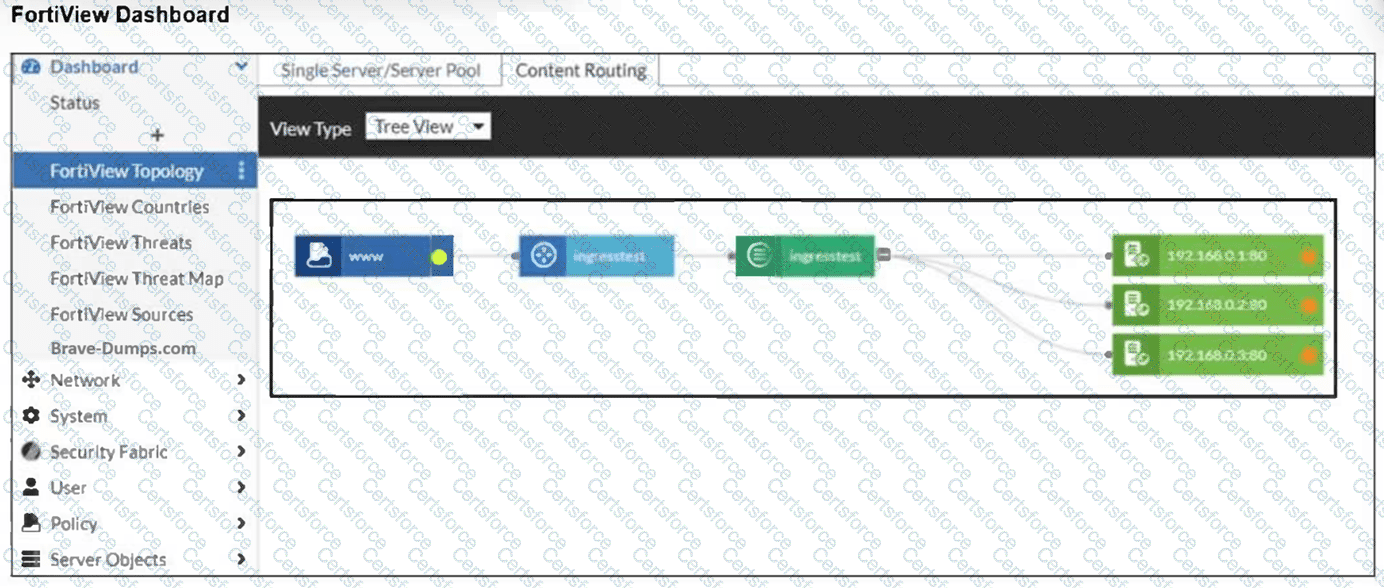
An administrator installed a FortiWeb ingress controller to protect a containerized web application. What is the reason for the status shown in FortiView? (Choose one answer)
Refer to the exhibit.
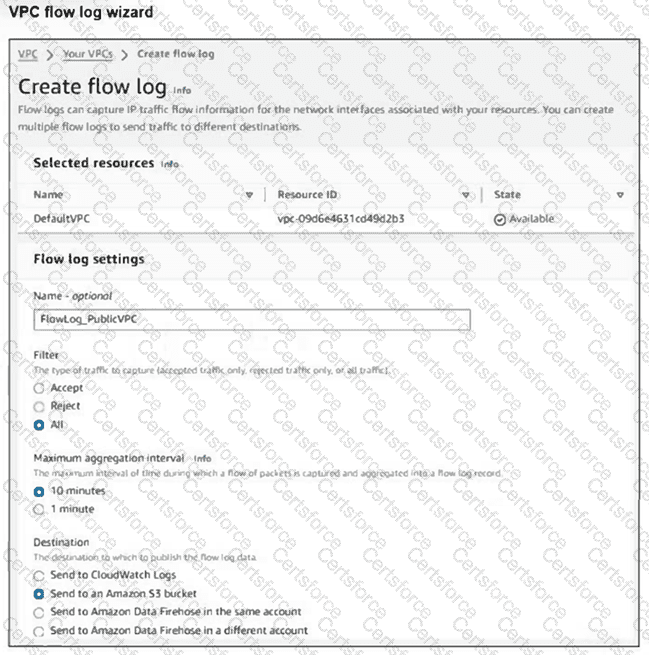
Your team notices an unusually high volume of traffic sourced at one of the organizations FortiGate EC2 instances. They create a flow log to obtain and analyze detailed information about this traffic. However, when they checked the log, they found that it included traffic that was not associated with the FortiGate instance in question.
What can they do to obtain the correct logs? (Choose one answer)
Which FortiCNAPP feature correlates findings into a single, contextualized view so that security teams can focus on addressing the most critical threats instead of chasing isolated alerts?
Refer to the exhibit.
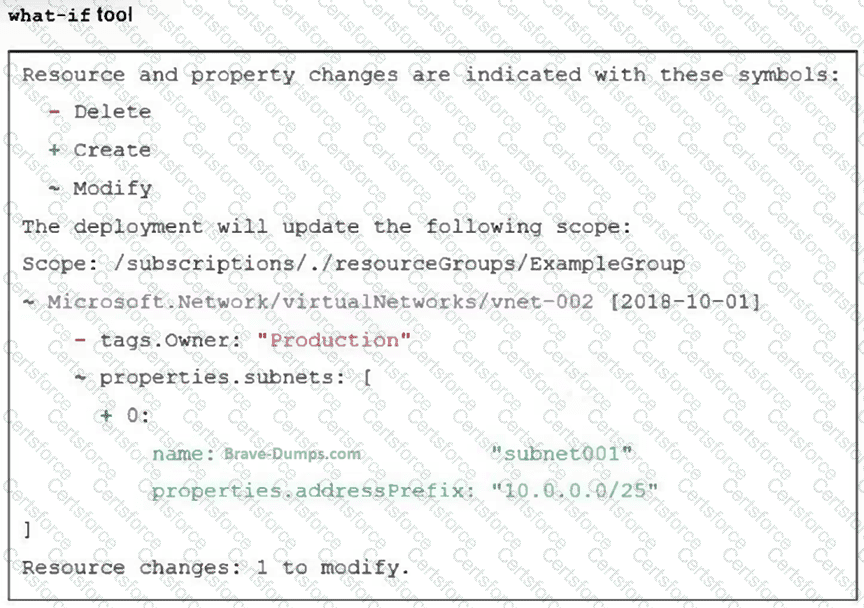
An administrator used the what-if tool to preview the changes to an Azure Bicep file. What will happen if the administrator applies these changes in Azure? (Choose one answer)
Refer to the exhibit.
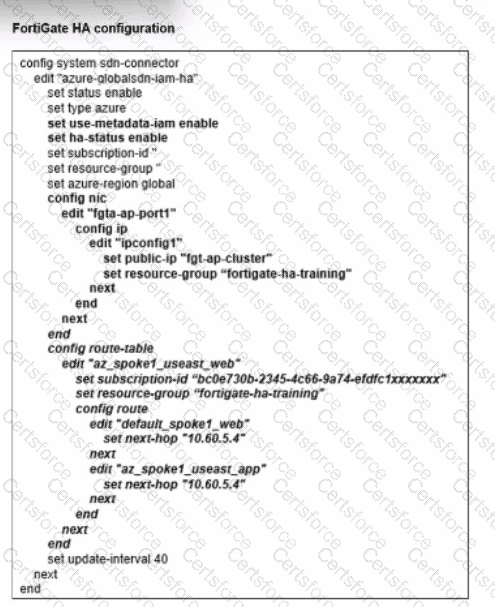
You deployed a FortiGate HA active-passive cluster in Microsoft Azure.
Which two statements regarding this particular deployment are true? (Choose two.)
Which statement about Transit Gateway (TGW) in Amazon Web Services (AWS) is true?
An administrator implements FortiWeb ingress controller to protect containerized web applications in an AWS Elastic Kubernetes Service (EKS) cluster.
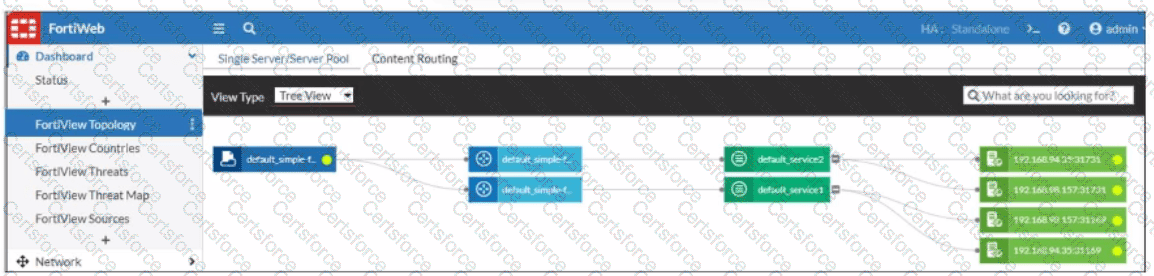
What can you conclude about the topology shown in FortiView?
