According to the PMBOK® Guide (7th Edition) and the PMI Standard for Project Management, leadership is not a " one size fits all " activity. While a directive approach (Command and Control) may be useful in a crisis, it often leads to decreased morale and stifled innovation in technical teams.
Why Choice A is correct: The Project Manager is currently experiencing a breakdown in Team Management. By applying Emotional Intelligence (EI), the PM can recognize the emotional state of the team (frustration) and regulate their own leadership style to be more collaborative.
Active Listening: This specific EI skill involves seeking to understand the " why " behind the team ' s recommendations. Even if the PM ultimately chooses a different path, making the team feel heard and valued significantly reduces friction and improves buy-in.
Relationship Management: This allows the PM to transition from a purely directive style to a more participative or servant-leadership style, which is essential for retaining high-performing technical talent.
Analysis of other options:
B (Instruct to self-organize): You cannot simply " tell " a team to self-organize if the current environment is strictly directive. Self-organization requires a foundation of trust and empowerment that the PM must first build through better interpersonal skills.
C (Lessons learned log): This is a passive-aggressive way to dismiss current concerns. Lessons learned are primarily for the end of a phase or project; the team ' s frustration is an active issue that requires immediate resolution to prevent project slippage.
D (Encourage following the plan): This ignores the human element of the problem. If the team feels their expertise is being ignored, simply pointing at a document will likely increase their frustration rather than solve it.
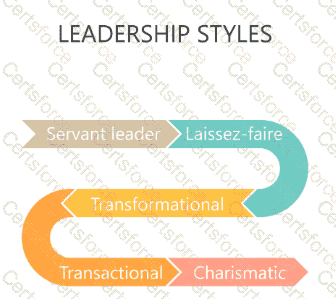
Key Concept: The Project Management Institute (PMI) emphasizes that modern Project Managers must balance technical skills with " Power Skills " (soft skills). In this scenario, the PM’s technical directive style has become a bottleneck. Using EI (Choice A) is the first step in diagnosing the conflict and adapting the leadership approach to meet the team ' s professional needs.


Submit