Comprehensive and Detailed Explanation From Exact Extract–Based NCC C-EFM References:
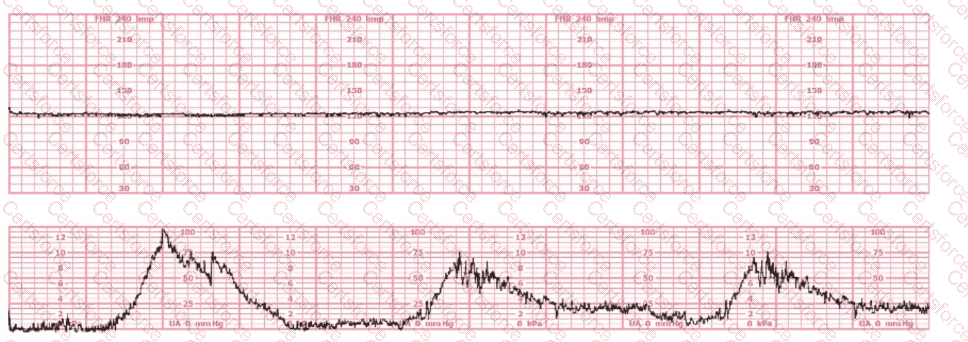
The fetal heart rate tracing shows:
This pattern is Category II, but in the context of:
28-week gestation
Immediate postoperative status after anesthesia
Maternal alertness and stability
NCC and AWHONN emphasize that maternal sedation, post-anesthesia effects, medications, and physiologic stress commonly cause temporary minimal variability without acidemia, especially at preterm gestations where baseline variability is normally lower.
Key NCC principle:
Minimal variability in a stable mother without decelerations does NOT require emergent delivery.
Instead, the fetus should be observed as anesthesia effects wear off.
Why other answers are incorrect:
A. Terbutaline – No tachysystole and no recurrent decels are present.
C. Cesarean birth – No bradycardia, no late decels, no absent variability, and no Category III criteria.
Thus, appropriate management is B. Continued monitoring.
[References:NCC C-EFM Candidate Guide; AWHONN FHMPP; Menihan EFM; Miller’s Pocket Guide; NICHD Definitions; Creasy & Resnik., ]


Submit