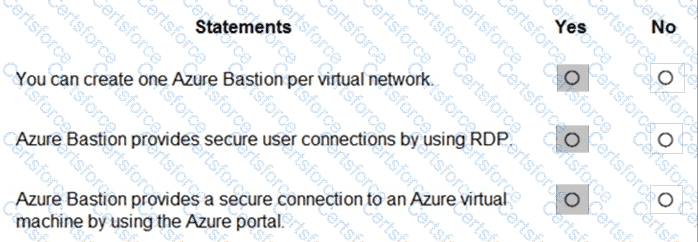
Microsoft documents describe Azure Bastion as a managed PaaS jump-host that’s deployed inside a virtual network to provide secure remote access: “Azure Bastion is deployed in your virtual network and provides seamless RDP and SSH connectivity to your virtual machines directly in the Azure portal over SSL.” The platform design is per-VNet, with the limit stated as: “One Bastion host can be deployed per virtual network,” ensuring a single managed entry point for that network. Connectivity is delivered using the native protocols while avoiding public exposure: “Bastion enables RDP and SSH sessions… without requiring a public IP on your virtual machines, using TLS (port 443).” Access is brokered through the web experience: “You connect to the VM directly from the Azure portal using your browser,” which provides an HTML5 client for RDP/SSH. These statements collectively validate that (1) deployment is one Bastion per VNet, (2) it provides secure user connections by using RDP (and SSH), and (3) it provides a secure connection to an Azure VM via the Azure portal, aligning with Zero Trust principles by eliminating inbound RDP/SSH exposure on public IPs.
Contribute your Thoughts:
Chosen Answer:
This is a voting comment (?). You can switch to a simple comment. It is better to Upvote an existing comment if you don't have anything to add.




Submit