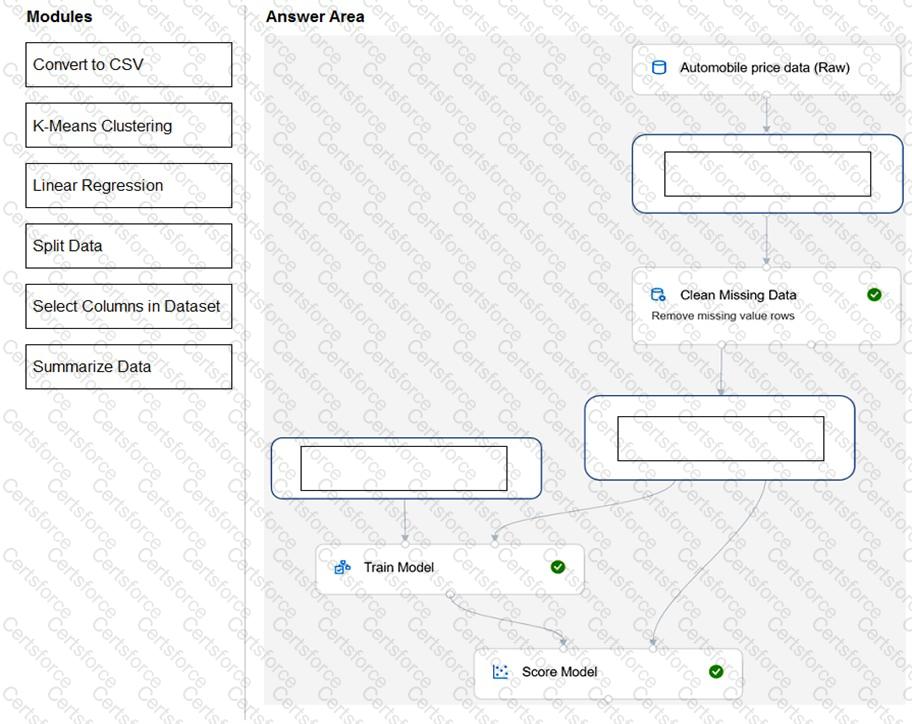
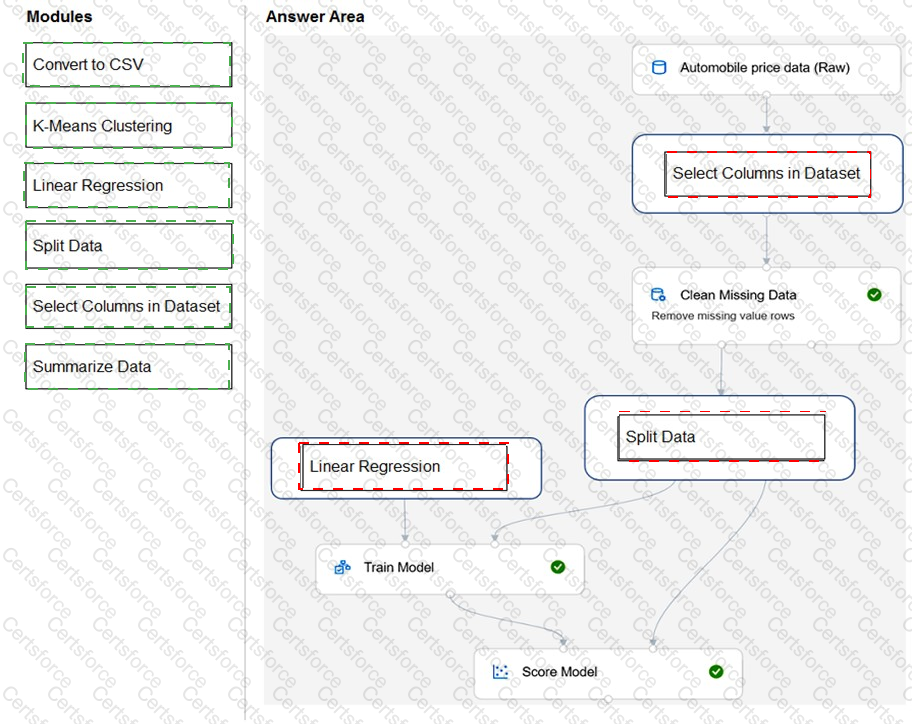
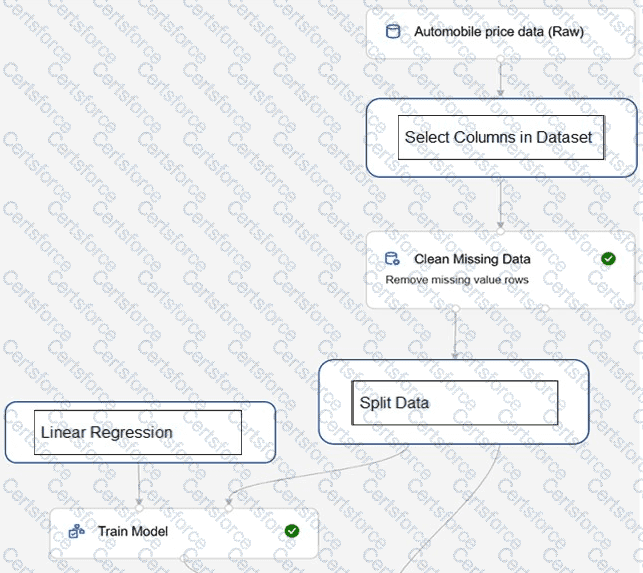
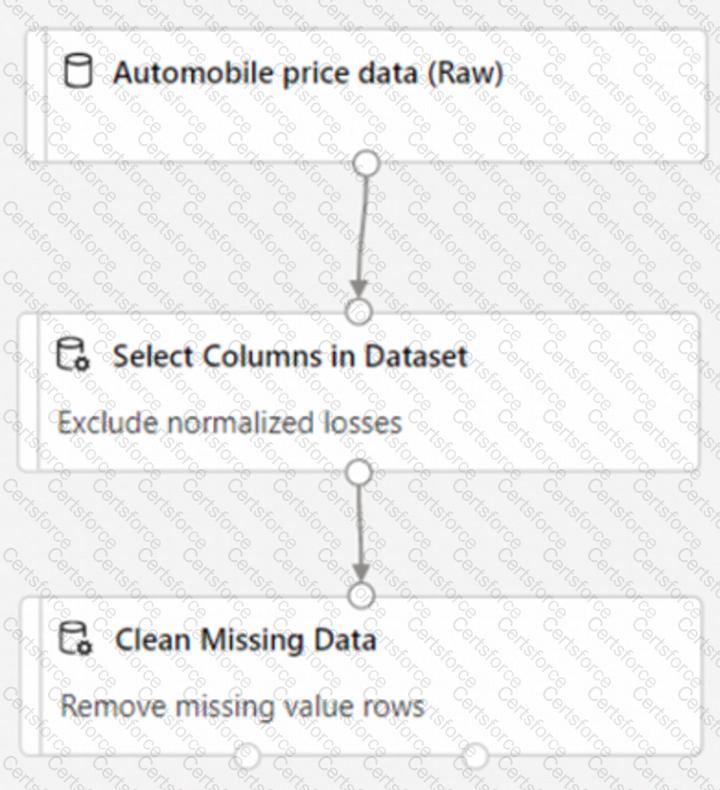
According to the Microsoft Azure AI Fundamentals (AI-900) official study guide and Microsoft Learn module “Identify features of common machine learning types”, regression is a supervised machine learning technique used to predict continuous numerical values based on one or more input features. In this scenario, the task is to predict a vehicle’s miles per gallon (MPG)—a continuous numeric value—based on several measurable factors such as weight, engine power, and other specifications.
Regression models learn the mathematical relationship between input variables (independent features) and a numeric target variable (dependent outcome). Common regression algorithms include linear regression, decision tree regression, and support vector regression. In the example, the model would analyze historical data of vehicles and learn patterns that map characteristics (like engine size, horsepower, and weight) to fuel efficiency. Once trained, it can predict the MPG for a new vehicle configuration.
The other options describe different problem types:
Classification predicts discrete categories (for example, whether a car is “fuel efficient” or “not fuel efficient”), not continuous values.
Clustering is an unsupervised learning method that groups data points based on similarities without predefined labels, not predictive modeling.
Anomaly detection identifies data points that significantly deviate from normal patterns, such as detecting engine sensor failures or fraudulent transactions.
Since predicting MPG involves estimating a numeric value within a continuous range, regression is the most appropriate model type.
In summary, per AI-900 training content, regression models are used when the output variable is numeric, classification for categorical outputs, and clustering for pattern discovery. Therefore, predicting miles per gallon based on vehicle features is a textbook example of a regression problem in Azure Machine Learning.
Submit