According to the Microsoft Azure AI Fundamentals (AI-900) official study guide and Microsoft Learn modules under the topic “Describe features of common AI workloads”, conversational AI solutions like chatbots are used to automate and enhance customer interactions. A chatbot is an AI service capable of understanding user inputs (text or voice) and providing appropriate responses, often integrated into websites, mobile apps, or messaging platforms.
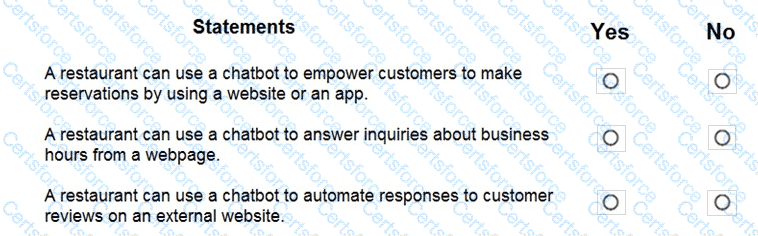
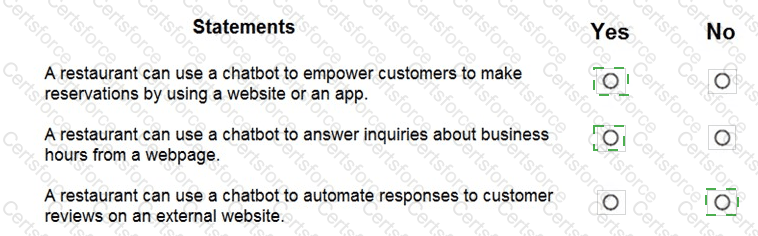
A restaurant can use a chatbot to empower customers to make reservations using a website or an app – Yes.This statement is true because conversational AI is designed to handle structured tasks such as booking, scheduling, and information retrieval. Chatbots built with Azure Bot Service can connect to backend systems (like a reservation database) to let customers make or modify reservations through a chat interface. The AI-900 study guide explicitly notes that chatbots can help businesses “automate processes such as booking or reservations” to improve efficiency and customer experience.
A restaurant can use a chatbot to answer inquiries about business hours from a webpage – Yes.This is also true. Chatbots can be trained using QnA Maker (now integrated into Azure AI Language) or Azure Cognitive Services for Language to answer common customer questions. FAQs such as opening hours, menu details, and directions are ideal for chatbot automation, as outlined in the AI-900 modules discussing customer support automation.
A restaurant can use a chatbot to automate responses to customer reviews on an external website – No.This is not a typical chatbot use case taught in AI-900. Chatbots are meant for direct interactions within controlled channels, such as a company’s own website or messaging app. Managing and posting responses to reviews on external platforms (like Yelp or Google Reviews) would involve policy restrictions, authentication issues, and reputational risk. The AI-900 course specifies that responsible AI usage requires maintaining human oversight in public-facing communications that influence brand image.
Contribute your Thoughts:
Chosen Answer:
This is a voting comment (?). You can switch to a simple comment. It is better to Upvote an existing comment if you don't have anything to add.


Submit