The correct answers are B and D .
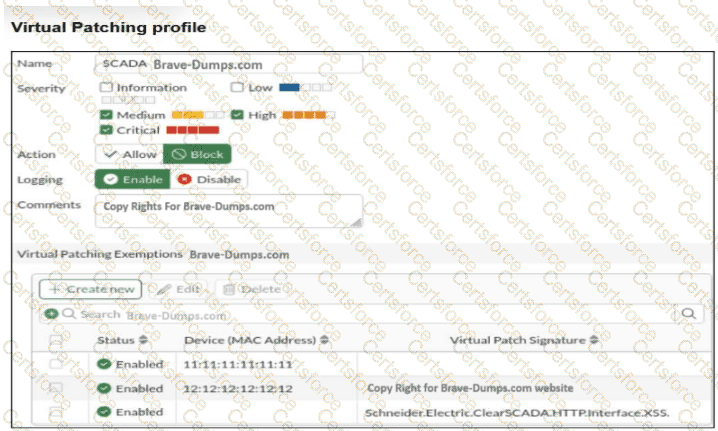
Option B is correct because the profile has Medium , High , and Critical selected, while Low severity is not selected. That means low-severity virtual patching signatures are not enforced by this profile. So for the device with MAC address 12:12:12:12:12 , low-severity signatures are not blocked. The study guide explains virtual patching as device-specific protection where “FortiGate caches the signatures and mitigation rules that apply to each device” and applies them when the related traffic matches the firewall policy.
Option D is correct because the Virtual Patching Exemptions table shows a row with the MAC address 11:11:11:11:11 and no specific signature listed. The study guide states that in the Virtual Patching profile you can “Exempt a specific device with the MAC address or a specific signature.” A MAC-only exemption means that specific device is excluded from virtual patching enforcement, so in practical terms it is treated as having no applicable vulnerabilities in this profile.
Option C is incorrect because the profile does not block critical signatures for all devices. The exemptions list proves that at least one device can be excluded by MAC address, and a specific signature can also be exempted. Therefore, enforcement is not universal across all devices.
Option A is incorrect because the entry Schneider.Electric.ClearSCADA.HTTP.Interface.XSS appears as a specific signature exemption , not as the only remaining vulnerability. The profile display is showing exemptions, not a statement that only one vulnerability is still present.


Submit