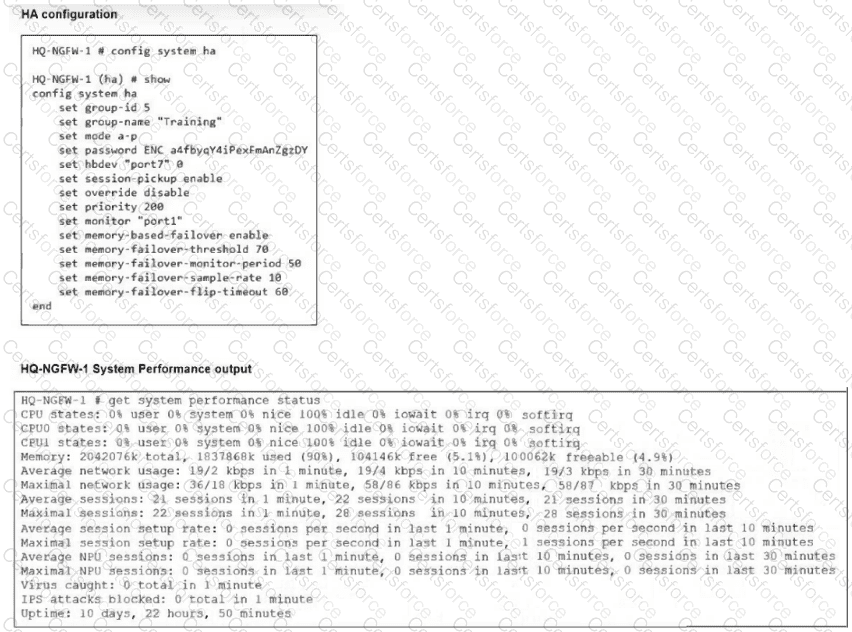
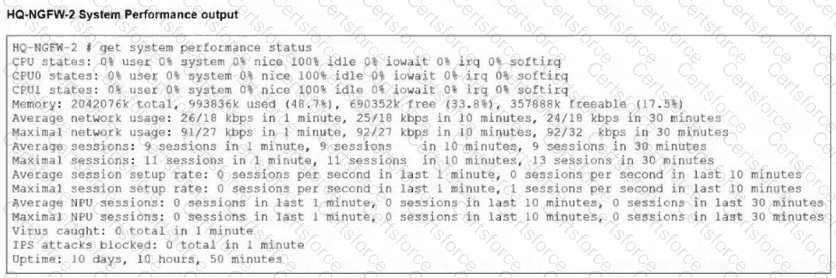
The correct answer is A . This conclusion comes from the HA settings shown in the exhibit plus Fortinet’s HA behavior. In the exhibit, HQ-NGFW-1 has memory-based-failover enabled , memory-failover-threshold 70 , memory-failover-monitor-period 50 , and its memory usage is about 90% , while HQ-NGFW-2 is about 48.7% . Fortinet’s official documentation states that memory-failover-threshold is the memory percentage that triggers failover, and memory-failover-monitor-period is the duration high memory must persist before failover occurs. It also states that if utilization stays above the threshold for the entire monitor period, a failover is triggered , and the peer becomes primary. ( Fortinet Document Library )
Because the condition was observed for 55 seconds , which is longer than the configured 50-second monitor period , the cluster would fail over from HQ-NGFW-1 to HQ-NGFW-2 due to the memory-failover-threshold condition. The priority setting does not explain this result here, because override is disabled , and flip-timeout governs subsequent memory-based failovers, not the initial trigger. ( Fortinet Document Library )
=========
Contribute your Thoughts:
Chosen Answer:
This is a voting comment (?). You can switch to a simple comment. It is better to Upvote an existing comment if you don't have anything to add.


Submit