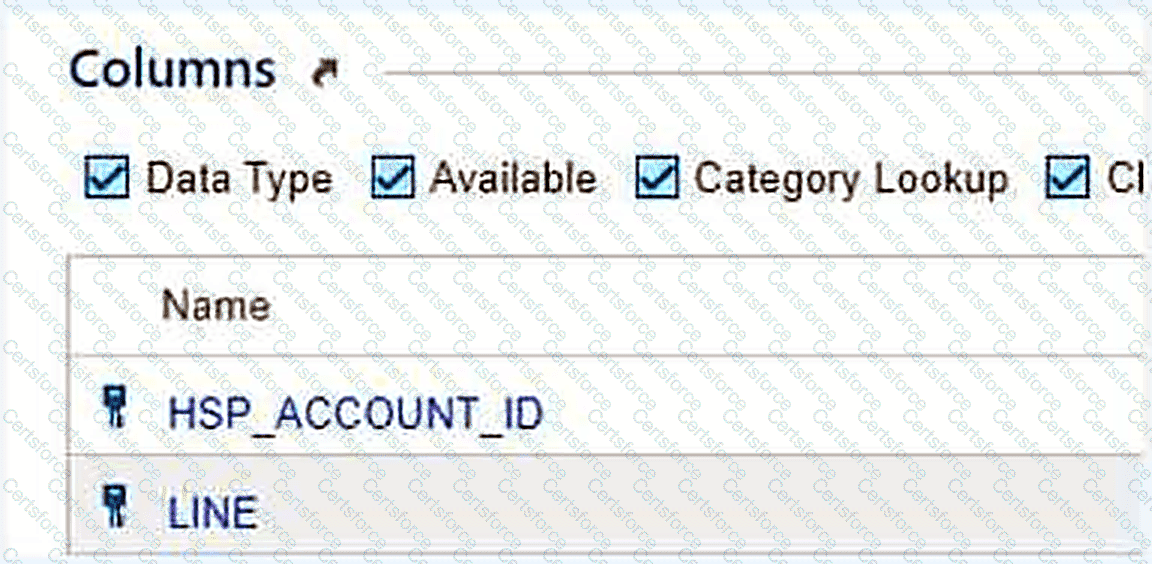
The exhibit is the Columns section of a Data Dictionary table entry. Two columns are listed, HSP_ACCOUNT_ID and LINE, and each is preceded by the key icon that the Data Dictionary uses to flag primary key columns. Both columns carry the icon, so the primary key is composite: HSP_ACCOUNT_ID together with LINE identifies a unique row. The presence of LINE is the telling feature. In Clarity, LINE appears in the primary key of multiple response and related group tables, where a single record contributes several rows and the line number distinguishes them. HSP_ACCOUNT_ID alone is therefore not unique and cannot be described as the primary key; it is one of two columns in it, and it also represents the parent record that all lines share. The terms surrogate key and durable key are data warehousing concepts associated with Caboodle dimensions, where a generated surrogate key identifies each row and a durable key persists across changes. They are not used to describe Clarity tables, which use natural identifiers drawn from Chronicles. A join to a table keyed solely on HSP_ACCOUNT_ID would return multiple rows per account, a point to consider when determining the grain of a query.
[Reference: Cogito Fundamentals – Clarity Data Model: Primary Keys; Data Dictionary Column Details, ===============, ]
Contribute your Thoughts:
Chosen Answer:
This is a voting comment (?). You can switch to a simple comment. It is better to Upvote an existing comment if you don't have anything to add.


Submit