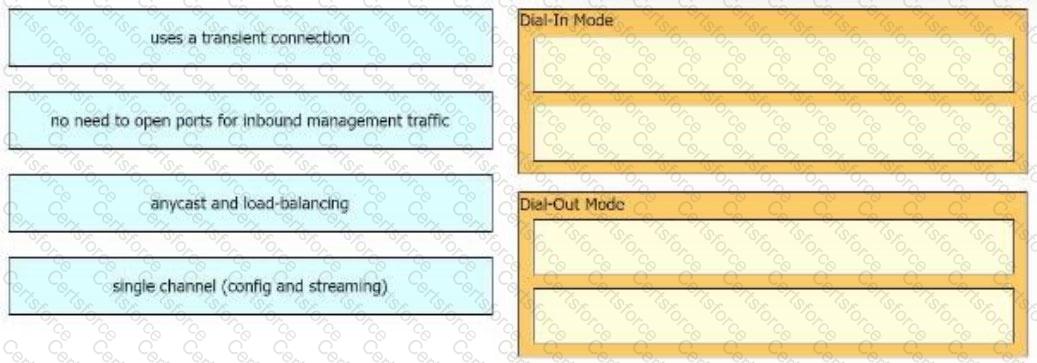
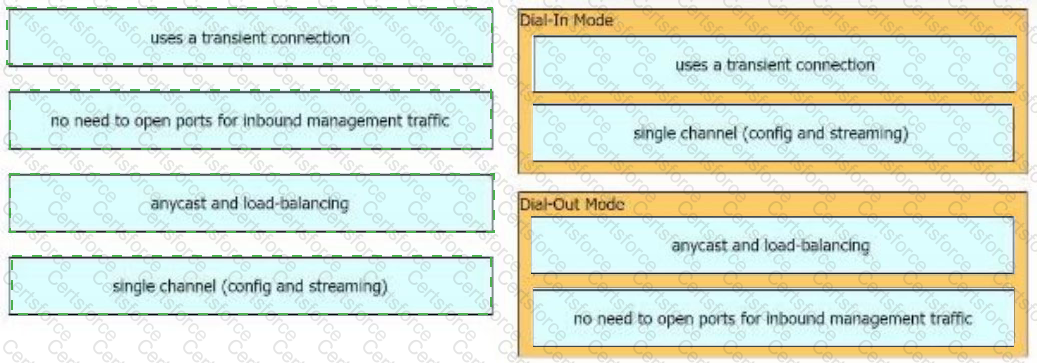
The telemetry mapping separates dial-in and dial-out behavior. In dial-in telemetry, the collector initiates the session toward the network device and subscribes to the data that it wants streamed. This model gives the collector direct control over the subscription lifecycle, but it requires the collector to reach the device and manage each session. In dial-out telemetry, the network device initiates the session toward the collector based on a configured subscription. This is useful when devices must stream telemetry to a centralized destination through firewalls or controlled management paths. Cisco model-driven telemetry can stream structured data from YANG models using subscription behavior rather than relying on repeated CLI polling. The selected drag-and-drop answer matches each consideration to the mode that owns the connection initiation and subscription handling. In design work, the architect must consider reachability direction, security policy, NAT traversal, collector scale, subscription persistence, and whether subscriptions should be configured on the device or created by the collector. Reference topics: model-driven telemetry, dial-in mode, dial-out mode, YANG subscriptions, gRPC telemetry, operational data streaming.
Contribute your Thoughts:
Chosen Answer:
This is a voting comment (?). You can switch to a simple comment. It is better to Upvote an existing comment if you don't have anything to add.


Submit