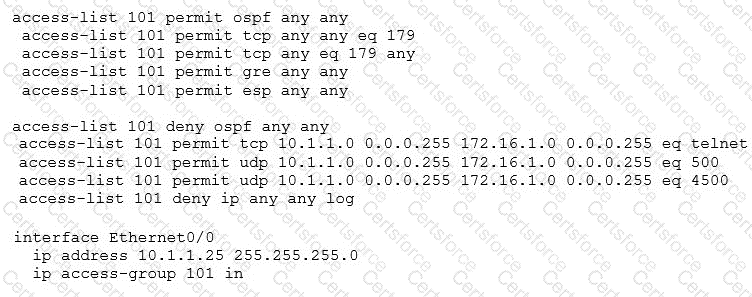
access-list 101 permit tcp 10.1.10 0.0.0.255 172.16.10 0.0.0.255 eq ssh. Cisco routers select forwarding paths by longest-prefix match first, then administrative distance and metric when comparable routes compete. Cisco CCNA 200-301 v1.1 includes this under Security Fundamentals, where the exam expects engineers to recognize the device behavior that actually produces the required outcome. The question is best solved by reading the operational clue rather than choosing a familiar acronym. The wrong choices either do not match the destination, use the wrong next hop, or fail to provide the intended primary/backup behavior. In a production network, the wrong choice would normally create an outage, leave a management or security gap, or send troubleshooting toward the wrong subsystem. The selected answer is the one that matches the control-plane, data-plane, wireless, security, services, or automation mechanism described in the question. That is why it remains the verified answer for this item.
Contribute your Thoughts:
Chosen Answer:
This is a voting comment (?). You can switch to a simple comment. It is better to Upvote an existing comment if you don't have anything to add.


Submit