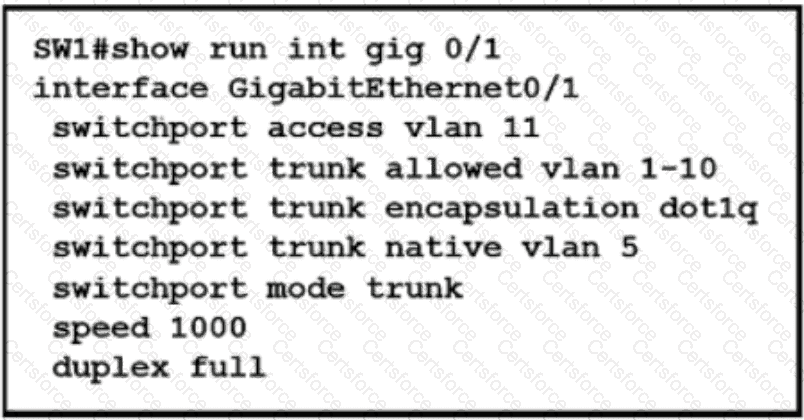
The frame is processed in VLAN 5.. The scenario should be solved by matching the described behavior to the Cisco feature that actually performs it. Cisco CCNA 200-301 v1.1 includes this topic under Network Access, so the answer must be validated against normal Cisco device behavior and the operational wording of the scenario. The key is not simply recognizing a familiar acronym; it is identifying what the feature does, where it is configured, and what result it produces. The other options are real networking terms or plausible phrases, but they operate at a different layer, solve a different problem, or do not create the outcome described. In a real network, selecting the wrong option would either leave the feature nonfunctional, create a forwarding or security gap, or send troubleshooting in the wrong direction. The selected answer is the only one that matches the stated requirement and the way Cisco switching, routing, services, security, wireless, or automation functions are expected to operate. This is why the verified answer remains the best technical choice for the question.
Contribute your Thoughts:
Chosen Answer:
This is a voting comment (?). You can switch to a simple comment. It is better to Upvote an existing comment if you don't have anything to add.


Submit