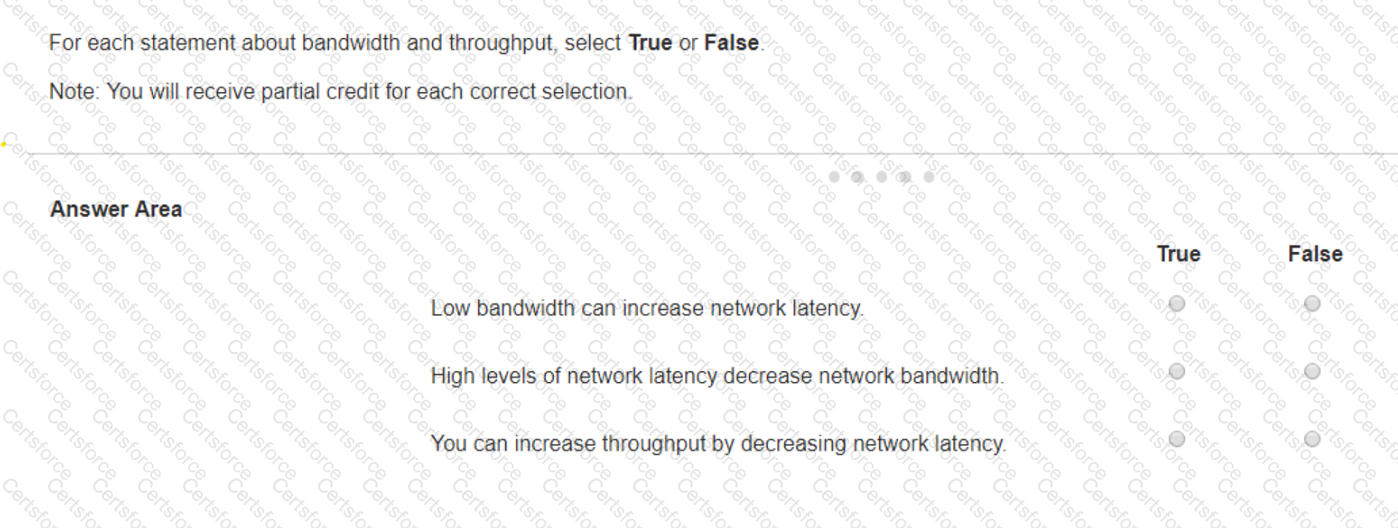
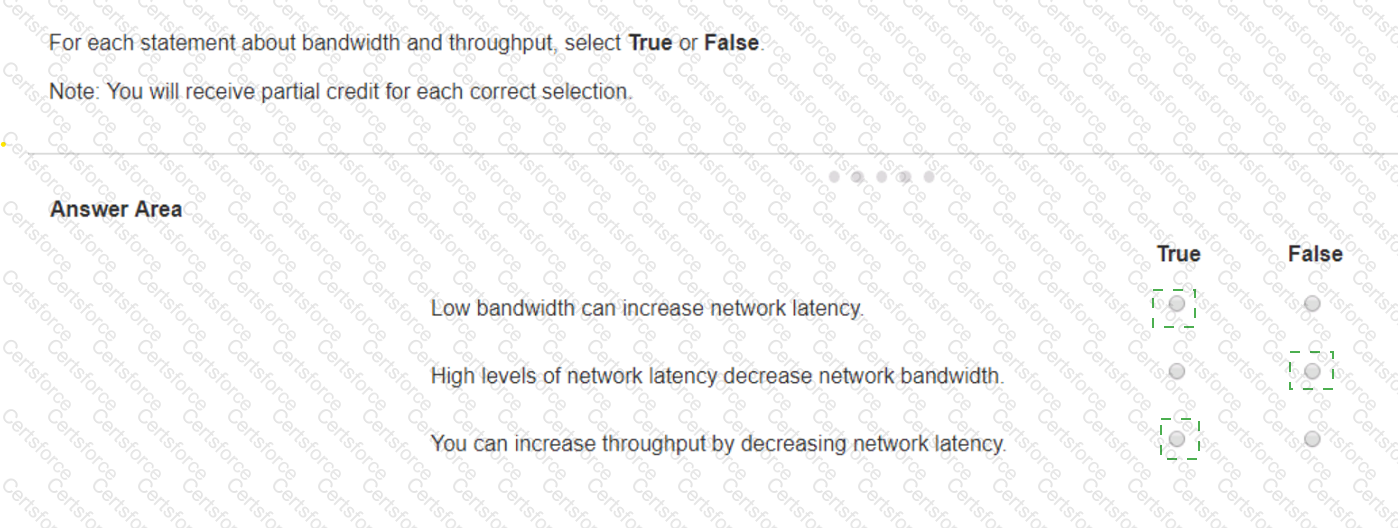
Statement 1: Low bandwidth can increase network latency.
True: Low bandwidth can result in increased network latency because the network may become congested, leading to delays in data transmission.
Statement 2: High levels of network latency decrease network bandwidth.
False: High levels of network latency do not decrease the available network bandwidth, but they do affect the perceived performance and throughput of the network.
Statement 3: You can increase throughput by decreasing network latency.
True: Decreasing network latency can increase throughput because data can be transmitted more quickly and efficiently without delays.
Bandwidth vs. Latency: Bandwidth refers to the maximum rate at which data can be transferred over a network path. Latency is the time it takes for a data packet to travel from the source to the destination.
Low bandwidth can cause network congestion, which can increase latency as packets wait to be transmitted.
High latency does not reduce the actual bandwidth but can affect the overall performance and efficiency of data transmission.
Reducing latency can lead to higher throughput because the network can handle more data in a given period without delays.
Understanding Bandwidth and Latency: Bandwidth vs. Latency
Contribute your Thoughts:
Chosen Answer:
This is a voting comment (?). You can switch to a simple comment. It is better to Upvote an existing comment if you don't have anything to add.


Submit