Which dimension of the Fiedler contingency model is associated with the degree of influence a leader has over variables such as hiring, firing, discipline, promotions, and salary increases?
The Fiedler contingency model proposes that effective group performance depends on the proper match between the leader’s style and the degree to which the situation gives control to the leader. Fiedler identified three contingency dimensions that define the situational favorableness: Leader-member relations, Task structure, andPosition power.
Image of Fiedler's Contingency Model
Position power is specifically defined as the degree of influence a leader has over power variables such as hiring, firing, discipline, promotions, and salary increases. A leader with high position power has significant structural authority, which makes it easier to influence the behavior of subordinates through formal rewards and sanctions. In contrast, a leader with low position power must rely more heavily on personal influence or rapport to achieve goals. Understanding these dimensions is crucial because Fiedler argued that a leader's style is essentially fixed; therefore, to improve effectiveness, one must either change the leader to fit the situation or change the situation (such as increasing or decreasing the leader's position power) to fit the leader.
Contribute your Thoughts:
Chosen Answer:
This is a voting comment (?). You can switch to a simple comment. It is better to Upvote an existing comment if you don't have anything to add.

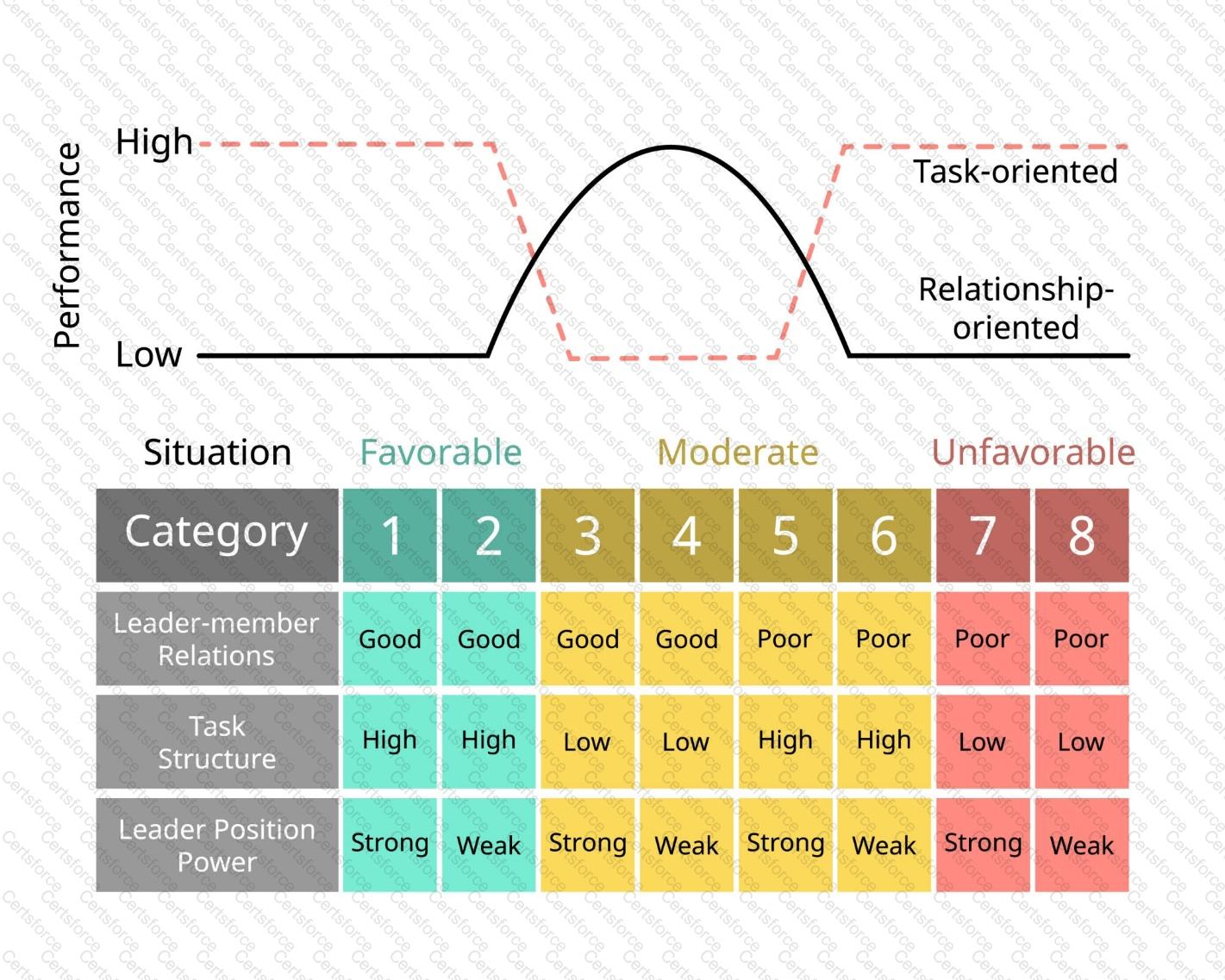 Image of Fiedler's Contingency Model
Submit