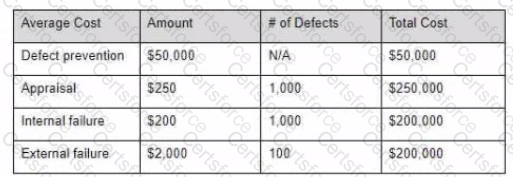
The given table lists costs for defect prevention, appraisal, internal failure, and external failure.
Defect prevention cost is $50,000, while costs for appraisal, internal failures, and external failures are $250,000, $200,000, and $200,000, respectively.
The combined cost of internal and external failures is significantly high compared to defect prevention costs.
Defect Detection and Prevention (DDP):
DDP measures the effectiveness of defect prevention activities and early detection mechanisms.
In this case, 1,000 defects were caught before release (appraisal) and 100 defects escaped to production.
DDP = (Defects found before release / Total defects) = 1000 / (1000 + 100) = 90.91%.
While this DDP is relatively high, the costs of appraisal and failures indicate that prevention strategies need more investment.
Key Cost Drivers:
High internal and external failure costs indicate inefficiencies in earlier stages of quality assurance.
Shifting investments from appraisal and failure costs towards defect prevention would reduce the overall cost of quality.
Evaluating Options:
Option A ("More testing needed because DDP < 90%") is invalid since DDP is above 90%.
Option C ("The cost of testing is justified") does not address the imbalance between high failure costs and low prevention spending.
Option D ("More effort on appraisal") contradicts the cost-benefit focus of investing in prevention.
Option B is correct because enhancing defect prevention strategies will reduce downstream costs.
References and Syllabus Alignment:
This conclusion aligns with the ISTQB Advanced Test Management syllabus section on "Cost of Quality" and strategies to optimize testing investments. Specifically, prevention is emphasized as more cost-effective than appraisal and failure management.
Contribute your Thoughts:
Chosen Answer:
This is a voting comment (?). You can switch to a simple comment. It is better to Upvote an existing comment if you don't have anything to add.


Submit