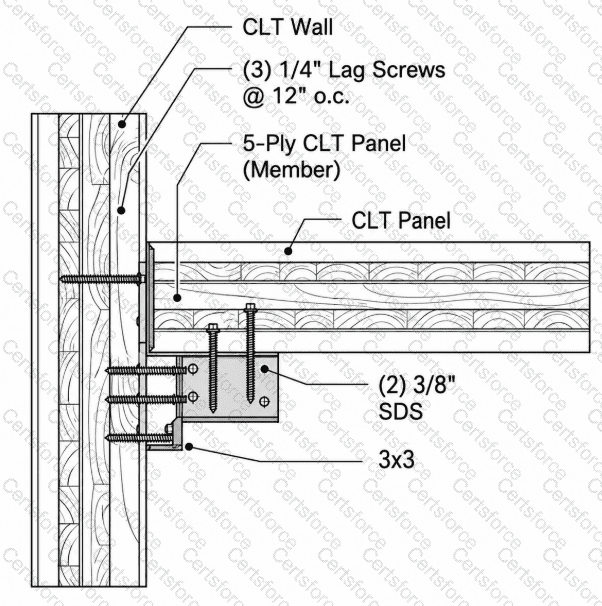
The 2 × 2 block is intended to protect the abutting wood edges from the effects of char contraction. Therefore, option D is correct.
During fire exposure, wood chars and the char layer can shrink or contract. At an interface between two abutting timber components, that contraction can create a gap that allows heat and flames to penetrate deeper than predicted for a continuous exposed surface. AWC connection-fire-design methodology therefore requires additional protection at susceptible joints and interfaces. The block shields the abutting edges and maintains the sacrificial wood-cover path around the protected connection.
Its primary function is not decorative, nor is it simply an air-sealing component. Although limiting airflow can be a secondary consequence of closing the interface, the design purpose addressed by the technical guidance is control of premature fire penetration caused by char contraction. The block also should not be interpreted independently as a generic one-hour protective membrane for the steel ledger; the connection’s total rating depends on the complete approved protection assembly.
The inspector should confirm the block’s dimensions, species or product designation, fastening, continuity, and tight installation before the connection is concealed.
References/Topics: AWC Technical Report 10; AWC Fire Design Specification provisions addressing char contraction and gaps between abutting wood members.
Contribute your Thoughts:
Chosen Answer:
This is a voting comment (?). You can switch to a simple comment. It is better to Upvote an existing comment if you don't have anything to add.


Submit